
Şarap dünyasının kronolojisi tutulurken “1976 öncesi” ve “1976 sonrası” diye bir ayrım yapmak yanlış olmaz. Ama bu keskin ayrımın sebebi, ne bir savaş ne de bir doğal afet; sadece dokuz Fransız jüri üyesinin önüne konulan isimsiz kadehler ve bu kadehlerin değerlendirilmesinden çıkan sonuç.
Judgement of Paris Neden Şarap Tarihini Değiştirdi?
Bugün 50. Yılını kutladığımız 1976 yılında düzenlenen “Judgement of Paris” (Paris Tadımı), şarabın sadece bir içecek değil, aynı zamanda bir güç dengesi ve kültürel bir hiyerarşi meselesi olduğunu ve sorgulanmayan yerleşik algıların değişimi nasıl engellediğini görmemizi sağladı. Kör tadım olarak yapılan bu yarışma sayesinde şarabın Fransız hegemonyasından çıkıp daha demokratik bir görünüme kavuştuğunu yarışma sonrasındaki gelişmeler hepimize gösterdi.
Judgment of Paris’in en önemli mirası, Fransız şaraplarının değerini azaltması değil, kaliteli şarabın yalnızca belirli coğrafyalarda üretilebileceği yönündeki yerleşik inancı sorgulatmasıydı. Kör tadım, etiketi değil, kadehi konuşturdu.
Let us trace the process now known as the Judgement of Paris, from the inception of the idea.
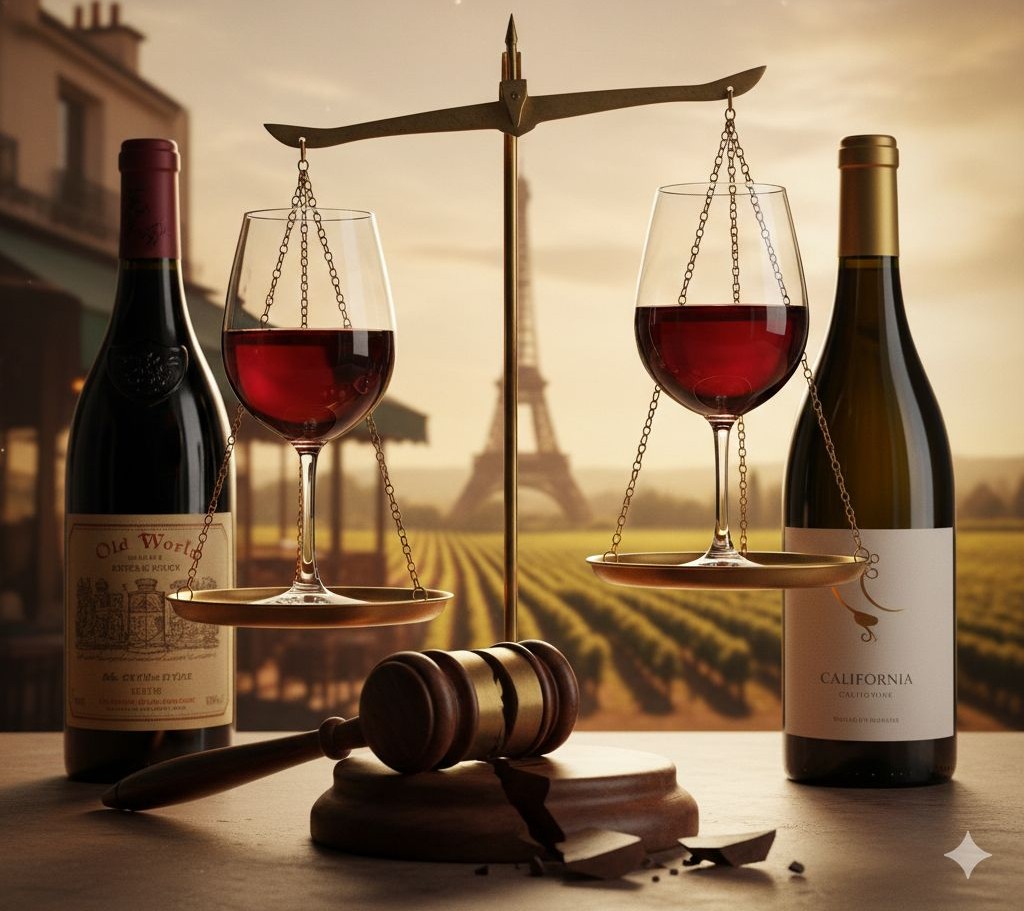
Chapter 1: A Shockwave in Paris – The Day the Impossible Happened
In the spring of 1976, Steven Spurrier, a British wine merchant who owned a shop called Les Caves de la Madeleine in Paris, planned an event to coincide with the bicentennial of American independence. Although Spurrier lived in the heart of the French wine world at the time, he had been impressed by the quality of certain boutique wines coming out of California. His goal was to introduce these "upstart" American wines to French masters and perhaps politely confirm the undisputed superiority of the French.
On May 24th, the jury convened at the InterContinental Hotel—a group that was, quite literally, the "Aristocracy of French Wine." Among them were owners of Michelin-starred restaurants, editors of prestigious wine journals, and heads of state-affiliated institutes. The tasting was conducted "blind," meaning the jurors had no idea which wine was in which glass.
When the results were announced, the air in the room turned cold instantly. In the whites, California’s Chateau Montelena (1973) took first place, and in the reds, California’s Stag’s Leap Wine Cellars (1973) emerged victorious. The pride of the French—the "untouchable" Meursaults, Batard-Montrachets, and legendary Bordeaux estates like Mouton-Rothschild and Haut-Brion—had been outperformed. The only journalist present that day, George Taber of Time magazine, broke the story to the world, ensuring the wine world would never be the same again. It is rumored that one French juror, upon learning the results, said, "I want my scores back, you can't do this!" But the arrow had already left the bow.
Chapter 2: The World Before the Tasting – The Absolute Reign of the Old World
To understand the magnitude of the impact created by the Judgement of Paris, one must look at the wine map of the early 1970s. At that time, the wine world was split into "France and the others". While Italy and Spain had deep-rooted traditions, France was the absolute authority when it came to quality and prestige.
Terroir kavramı, Fransızların elinde mistik bir silaha dönüşmüştü. Onlara göre kaliteli şarap sadece belirli bir toprakta, belirli bir iklimde ve yüzyılların birikimiyle üretilebilirdi. Amerika, Avustralya veya Güney Afrika gibi ülkelerden gelen şaraplar ise “endüstriyel içecekler” veya “meyve suyu benzeri alkollü sıvılar” olarak görülüyordu. Kaliforniya şarapları o dönemde Avrupa’da ciddiye alınmıyordu, “kovboyların yaptığı içecekler” muamelesi görüyordu.
Distribution channels also reinforced this hierarchy. The wine lists of the world's finest restaurants were entirely under French hegemony. There was an unshakeable belief that for a wine to be expensive, it had to have a French label. This is precisely why the Judgement of Paris was not just a tasting; it was the collapse of a centuries-old belief system.
Chapter 3: The Last Fifty Years – The Rise of the New World and Globalization
The shockwave of 1976 did more than just boost the confidence of Californian winemakers; it sent a message to the entire world: "Exceptional wine can be made anywhere." This realization triggered the most significant investment surge in modern winemaking history.
The transformations in the wine world over the last 50 years have been breathtaking:
Science and Technology:
Processes that the French once deemed "mystical" were analyzed through scientific methods in the New World. Vineyard management, controlled fermentation, and the strategic use of oak were modernized.
The Emergence of New Players:
Following the path cleared by California, countries like Australia (Shiraz), New Zealand (Sauvignon Blanc), Argentina (Malbec), and Chile (Cabernet Sauvignon) took the stage. Each created its own "iconic" grape and style.
Rising Quality Standards:
Paradoxically, this competition forced the French to reinvent themselves. While the Old World adopted the clean, fruit-forward techniques of the New World, the New World began to emulate the depth and complexity sought by the Old World.
Today, New World countries control nearly half of global wine production and trade. The quality of a wine is no longer determined by its passport, but by the merit found inside the bottle.
Conclusion: The Democratization of Wine and the End of Prejudices
Looking back on the 50th anniversary of the Judgement of Paris, we see that the greatest achievement was the democratization of wine. This historic event liberated the "authority to define quality" from the hands of an elitist few.
If a wine produced in a village in Thrace, an ancient vineyard in Anatolia, or the cool slopes of England can win a gold medal in an international competition today, it is because of the brave individuals who tore down the walls of prejudice in Paris in 1976. The Judgement of Paris taught us that while geography may be a legacy, quality is a choice.
Judgment of Paris’in en önemli mirası, Fransız şaraplarının değerini azaltması değil; kaliteli şarabın yalnızca belirli coğrafyalarda üretilebileceği yönündeki yerleşik inancı sorgulatmasıydı. Kör tadım, etiketi değil kadehi konuşturdu.
Ellinci yılında Judgment of Paris, bize hâlâ aynı şeyi hatırlatıyor: ”Önyargılarını kadehinin dışında bırak; çünkü gerçek, sadece şarabın içindedir.”
Judgment of Paris (1976) Kimlik Kartı
📅 Tarih: 24 Mayıs 1976
📍 Yer: Paris
👤 Organizatör: Steven Spurrier
🍷 Format: Kör tadım
🏆 In the End Kaliforniya şarapları hem beyaz hem kırmızı kategorisinde birinci oldu.
🌍 Etkisi: Yeni Dünya şaraplarının uluslararası kabulünü hızlandırdı.
Bu yazımız ilginizi çektiyse aşağıdaki yazılarımızın da üzerlerine tıklayarak göz atabilirsiniz.
Bordeaux Nasıl BORDEAUX Kalacak?
“Judgment of Paris” konusunu işleyen Bottle Shock filmiyle ilgili bir videomuz var. WAYANA Wine Bar YouTube kanalında izleyebilirsiniz.