1960’lı ve 1970’li yıllarda izlediğimiz filmler arasında Fransız filmlerinin payı, bugünkünden çok daha fazlaydı. Özellikle Fransız komedilerinde karşımıza çıkan sanatçılar arasında Louis de Funès başı çekerdi. Fantoma dizisi, Funes’in canlandırdığı Komiser Juve karakteriyle farklı bir polisiye kimliği kazanmıştı.
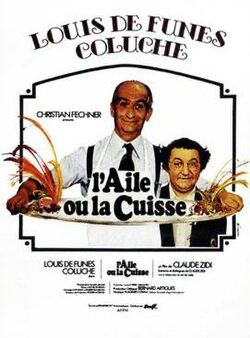
1976 yapımı L’aile ou la cuisse (Kanat mı, but mu?) filmi, ilk bakışta Louis de Funès’in son dönem filmlerinden birisidir ve Funès’in alışıldık hızlı temposuna yaslanan bir komedi gibi görünür. Oysa Kanat mı But mu (L’aile ou la cuisse) filmi, yemek kültürü üzerinden modernleşmeye, endüstriyel üretime ve “lezzetin seri üretimi” fikrine yöneltilmiş şaşırtıcı derecede bilinçli bir eleştiridir.
Charles Duchemin, played by de Funès, is the editor of France’s most influential gastronomic guide. His reviews can make or break restaurants. But Duchemin does not see this power as a status symbol. For him, it is a responsibility: a means of defending what he calls “real cuisine.” Food, in his view, is not merely sustenance. It is labor, ingredients, locality, and cultural continuity.
“Kanat mı, But mu?” filmi ne anlatır?
The story unfolds through Duchemin’s confrontation with Tricatel, a fictional food conglomerate that supplies restaurants with frozen, standardized meals. Tricatel represents a new industrial kitchen model driven by efficiency, scale, and profit. To many, it looks modern and practical. To Duchemin, it is nothing less than a betrayal of gastronomy itself. As he attempts to expose the artificial mechanisms behind this system, the film reaches the heights of physical comedy while quietly posing a disarming question:
Are we eating food, or merely something that imitates food?
Duchemin’s son Gérard (played by Coluche) introduces the human and social dimension of this conflict. While his father wants him to inherit the mission of defending haute gastronomy, Gérard remains distant from this elite culinary world. Their tension reflects more than a generational gap. It mirrors the friction between “high cuisine” and everyday eating, between cultural prestige and ordinary life. It is here that the film becomes most interesting: it questions both refined gastronomy and mass consumption at once.
By the final act, the artificiality of Tricatel’s idea of “taste” is laid bare. Yet the film never falls into a nostalgic call to “return to the past.” Its message is more demanding and far more relevant:
If progress is built by erasing what is human, local, and rooted in labor, can it truly be called progress?
Dönemin film eleştirmenleri filmde yer alan ve Louis de Funès’in canlandırdığı karakterin adıyla anılan Duchemin Rehberi’nin Michelin Rehberi’ne gönderme yaptığı konusunda fikir birliği içindedir.
The People Behind the Film
Claude Zidi (Director)
One of the most prolific directors of French popular cinema, Claude Zidi became widely known in the 1970s and 80s for comedies that reached vast audiences. What distinguishes his work is his ability to embed social observation within genres often dismissed as “light.” L’aile ou la cuisse exemplifies this approach: entertaining, fast, accessible—yet carrying a sharp cultural critique beneath the surface.
Louis de Funès
An iconic figure of French comedy, de Funès is remembered for his exaggerated expressions, physical acting, and explosive nervous energy. But his true strength lies in how he embodies authority figures, small power-holders, and characters obsessed with order, exposing the anxieties of modern society. In films such as The Gendarme of Saint-Tropez, Fantômas, and La Grande Vadrouille, he reached millions. Here, he treats gastronomy not merely as pleasure, but as a field of cultural identity.
Coluche
Coluche represents the most powerful voice of “popular” humor in French cinema. His style, rooted in stand-up, is marked by directness and sincerity. As Gérard, he provides a grounded, worldly counterpoint to de Funès’s high-energy performance, restoring social balance to the film and preventing its critique from becoming purely elitist.
Reception and Relevance
Film, 1976’da gösterime girdiğinde gişede büyük başarı yakaladı ve geniş bir izleyici kitlesine ulaştı. Dönemin eleştirileri ise ikiye bölünmüştü. Bir kısım eleştirmen filmi “klasik bir de Funès komedisi” olarak görüp hafif bulurken; bazıları, özellikle gastronomi ve tüketim kültürü üzerinden yaptığı eleştiriyi dikkat çekici buldu.
Over time, L’aile ou la cuisse has come to be seen not merely as a comedy, but as an early reflection on the industrialization of food. In today’s world—where fast-food culture, artificial flavors, mass production, and the erosion of local cuisines dominate global debates—the film feels uncannily current.
Kanat mı, But mu, Filmi Bir Yemek Filmi mi, Bir Kültür Filmi mi?
Fransa çok yönlü, derin ve köklü bir gastronomi kültürüne sahip. Şarabı da gastronominin en önemli parçalarından biri olarak gören ve bunu günlük yaşama güçlü bir biçimde entegre etmeyi başarmış bir toplumsal kimliğe sahip. “Kanat mı? But mu?”, gastronomi dünyasındaki endüstriyel dönüşümü erken sorgulayan filmlerden birisi.
Bizim filmin içinden çekip paylaştığımız bölüm, elbette şarapla ilgili olan müstesna bir parça. Oğlunun katıldığı televizyon programında sıkıntı yaşadığını görünce imdadına yetişen babası rolündeki Louis de Funès, seyretmeye doyamayacağınız bir kırmızı Médoc analizi yapar. Ama filmin bütünü gıda sektöründeki değişimin neler pahasına gerçekleştiğini elli yıl öncesinden bize hatırlatmış.
Kanat mı But mu filmi elli yıl önceden bugüne ayna tutmayı başarmış bir film. Filmin ne yönetmeni Claude Zidi ne de oyuncuları Louis de Funès ve Coluche artık aramızda değiller. Hepsini sevgiyle anıyoruz.