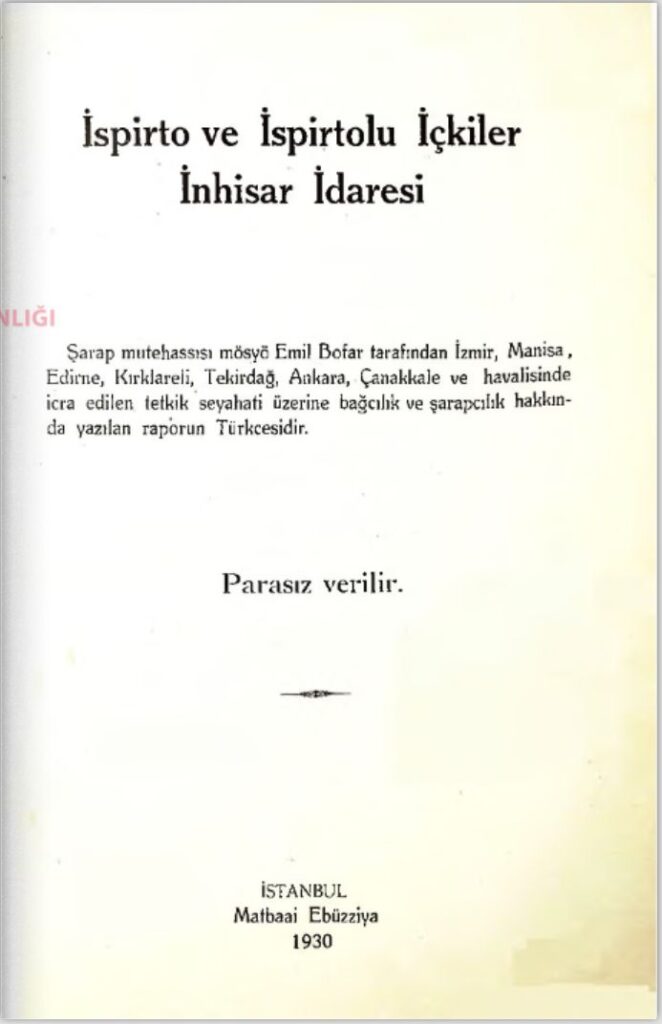
Türk şarapçılığı Türkiye Cumhuriyeti’nin kuruluşunun öncesinde ve ilk yıllarında ağır travmalar yaşadı. 1915 yılında başlayan Ermeni tehciri ve 1923-24 yıllarındaki Mübadele uygulamaları sonucunda, Osmanlı Devleti’nin hükümranlığı boyunca gayrimüslim ahali tarafından sürdürülen bağcılık ve şarapçılık faaliyetleri kesintiye uğradı. Anadolu köylüsünün önemli geçim kaynaklarından birisi olabilecek bağcılığın canlandırılması ve yeni tekniklerin ülkeye kazandırılması için atılan adımların ilki, Fransa’dan bir uzmanın getirilerek durum tespiti yapmasıyla oldu. Emile Bouffard, 1930 yılında Türkiye’ye geldi ve Emile Bouffard’ın hazırladığı raporla Türkiye Cumhuriyeti modern bağcılığın ve şarapçılığın gereklerini yerine getirmeye hazır olduğunu beyan etmiş oldu.
The first concrete step taken to revive viticulture, which could have become a major source of income for Anatolian farmers, and to introduce modern techniques into the country, was the invitation of a French expert to assess the situation on site. During his stay in Türkiye, Emile Bouffard compiled his observations, conclusions, and recommendations into a detailed report. We have summarized the Turkish edition of this report. We owe special thanks to our dear academic colleague Yusuf Can İndibay, who guided us in accessing this valuable document.
Yazar:
Şarap Uzmanı Mösyö Emile Bouffart
Yayımlayan:
İspirto ve İspirtolu İçkiler İnhisar İdaresi (Tekel)
INTRODUCTION
During our long journeys through Türkiye’s vineyard regions, we had the opportunity to gather a great deal of valuable information. I would like to express my gratitude to the Monopoly Administration, to agricultural and municipal officials, to winemakers and winegrowers who assisted us in fulfilling our mission. In particular, vine growers may rest assured that I shall always work with sincere dedication for the improvement of their conditions.
Our investigations were conducted under the following headings:
İklim:
Bölgedeki bitki örtüsü, sıcaklık değerleri, yağış ve nem durumu.
Toprak Yapısı:
Alt ve üst tabakanın mineralojik yapısı ve nem derecesi.
Bağcılık:
Üzüm cinsleri, karakterleri ve şarapçılık bilimi (enoloji) açısından değerleri.
Şarapçılık:
Mevcut üretim yöntemleri ve gelecekte uygulanması gereken modern usuller.
REGIONAL STUDIES
İZMİR AND MANİSA
Bornova:
Şarkta Hacılar, güneyde Işıklar ve batıda deniz ile çevrili bereketli bir vadidir. Toprağı çok zengin ve su boldur. Bornova Mektebi bağlarını incelediğimizde, bağlara iyi bakılmadığını gördük. Kütüklerde çatlaklar vardır ve budama işlemleri yetersizdir.
Buca:
Fransa’nın kireçli tepelerine benzer. Toprağı kahverengiye çalan kırmızı renktedir. Burada yetişen Misket üzümünden çok kıymetli tatlı şaraplar yapılabileceğine kaniyim.
Siyah Üzümler:
Dimrit, Tokmak ve İri Kara gibi cinsler kırmızı şarap imaline uygundur. Ancak bağlara bakım usulü ıslah edilmelidir. Bağları istila eden yabani otlar (ayrık ve kanyaş), insana bazen terk edilmiş bağlarda dolaşıyormuş hissi vermektedir.
Manisa ve Kasaba (Turgutlu):
Gediz vadisinin sol tarafı tamamen bağlıktır. Bağlar mükemmel ürün vermektedir. Burada Thompson Seedless üzümü üzerine yaptığımız incelemelerde, bu cinsin Türk bağcılarının elindeki en mükemmel türlerden biri olduğunu gördük.
BURSA
The soil of the Bursa Agricultural School consists mainly of infertile sand. Due to climatic influence, grapes ripen late. However, Misi Village resembles an oasis with its greenery, and its growers are highly eager to modernize. The white “Şıralık” grape yielded promising results in our trials.
TEKİRDAĞ AND MÜREFTE
Marmara Sahili boyunca uzanan bu bölge, şarapçılık için büyük bir geleceğe sahiptir.
Karalahna:
Şarap üretiminden başka bir şeye yaramayan bu üzüm, “kan gibi kırmızı” rengiyle ihracat ve kupaj (harman) için eşsizdir.
Mürefte:
Mevcut şaraplar acı ve ekşimsidir, ancak üretim tarzı düzeltilirse altın renginde nefis şaraplar elde edilebilir.
EDİRNE AND KIRKLARELİ
Sabuncu Tepeleri:
Eskiden bağlarla kaplı olan bu vadilerin bugün harabe halinde olması üzücüdür.
Papas Karası:
Bottle Closure: Natural Cork – Technical Corkarap imali için fevkalade bir üzüm olmasına rağmen, Amerikan anacı üzerine aşılanmadığı için yok olma tehlikesiyle karşı karşıyadır. Filoksera hastalığı bölgedeki bağları her geçen gün daha fazla tüketmektedir.
BOZCAADA
The island’s most important grape is Kuntra. It produces garnet-colored, soft, fruity wines. The island is ideally suited for producing high-alcohol, high-quality sweet wines.
ANKARA
Wines produced by Monsieur Saksenberg in Ankara are free from foreign and bitter flavors, exceptionally clean and successful. Ankara’s white wine possesses a delicate aroma.
GENERAL ASSESSMENT AND RECOMMENDATIONS
Modernization in Viticulture
Amerikan Anaçları:
Türkiye’de filoksera (bağ biti) hastalığı yayılmaktadır. Yeni bağlar mutlaka toprağa uygun Amerikan anaçları (Riparia, Rupestris, Richter vb.) üzerine aşılanarak kurulmalıdır.
Toprak İşleme:
Türkiye’de toprak el ile işlendiği için maliyet çok yüksektir. Fransız bağcılığında olduğu gibi sapan, hayvan veya traktör kullanımı yaygınlaştırılmalıdır.
Hastalıkla Mücadele:
Külleme ve mildiyö gibi mantar hastalıklarına karşı yapılan ilaçlamalar yetersizdir. İlaçlama zamanlaması bilimsel verilere (kelebek sayımı vb.) göre yapılmalıdır.
Hygiene and Technique in Winemaking
Temizlik:
Pek çok imalathane ne yazık ki toz, örümcek ağları ve sızdıran fıçılarla dolu, sağlıksız durumdadır. Bu durum tüketicide “iğrenme hissi” (hissi istikrah) uyandıran kötü tatlara sebep olmaktadır.
Modern Ekipman:
“Ayakla ezme” gibi ilkel yöntemler terk edilmeli; yerine modern makineler ve temizliği kolay betonarme sarnıçlar kullanılmalıdır.
Katkı Maddeleri:
Şaraba asla su katılmamalıdır; bu hem hiledir hem de şarabın dengesini bozar. Kükürt ve saf maya kullanımı şarabın bozulmasını önlemek için şarttır.
Economic Objectives
Halkın Şarabı:
Şarap bir lüks tüketim maddesi (ziynet içkisi) değil, sağlıklı bir “halk içkisi” olarak kabul edilmelidir. Fiyatlar halkın alabileceği seviyeye çekilmelidir.
Damak Tadının Eğitilmesi:
“Lezzet tadım merkezleri” kurularak ve reklamlar yapılarak halkın damak zevki (zaikası) terbiye edilmelidir.
Kalite Kontrolü:
Şaraba hile karıştıranlara şiddetli cezalar verilmeli, üretim laboratuvar ortamında sıkı şekilde denetlenmelidir.
Yeni Pazarlar:
Sadece sofra şarabı değil; konyak benzeri, köpüklü şarap (şampanya usulü) ve likör şarapları da üretilerek ihraç edilmelidir.
In the End
Türkiye, iklimi itibarıyla mükemmel bir bağ memleketidir. Bağcılık nankör bir ziraat olmaktan çıkarılmalı ve memleket için büyük bir servet kaynağı haline getirilmelidir.
Emile Bouffard’ın Raporuyla İlgili Son Söz
Following Emile Bouffard’s visit, French varieties such as Semillon, Gamay, Cinsault, and Silvaner were planted in Türkiye. Only a small fraction of these vineyards has survived to this day.
Bouffard’ın gelişinden on yıl sonra bu kez Marcel Biron Türkiye’ye davet edildi. Yerel üzüm çeşitlerinin ıslahı ve yaygınlaşmasına büyük katkısı olan Biron zamanında Türkiye OIV-Uluslararası Bağcılık ve Şarapçılık Örgütü’ne üye oldu. Bu dönem, ayrı bir yazının konusu.
Şu tespiti yapmamız ve hatırlamamızda fayda var: Cumhuriyet’in önceliği bağcılığın kalkınmasıyla köylünün gelirinin yükseltilmesiydi. Devlet politikalarının uygulayıcısı TEKEL, köylüye alım garantisi vererek bağcılığın devam etmesini sağladı. Türkiye bu sayede, bütün olumsuzluklara karşın, dünyanın altıncı üzüm üreticisi. Ancak TEKEL, hiçbir zaman nitelikli şarap üretme önceliğiyle hareket etmedi. Bu da nitelikli şarap üretiminin ülkede hayat bulmasının çok sonraları ve özel sektör eliyle gerçekleşmesiyle sonuçlandı.
Emile Bouffard’ın Türkiye’ye davet edilmesi ve sonrasında benzer donanıma sahip uzmanların da gelmesi, Türkiye’de modern bağcılık tekniklerinin yerleşmesi açısından büyük önem taşır. Eş zamanlı olarak Ziraat Fakülteleri’nin kurulmasıyla nitelikli eleman yetişmesi konusunda ilerlemeler kaydedildi.
The idea of viewing wine as a high value-added and foreign-currency-generating product gained prominence in the 1940s. After participating as an observer in the 1947 OIV Conference, Türkiye later hosted the conference in Istanbul. These were the years when Turkish winemaking came closest to real transformation. Yet the policies of the new government elected in 1950 prevented this momentum from continuing.
Türkiye’de bağcılıkla, şarapçılıkla ve alkol yasaklarıyla ilgili gelişmeleri ele aldığımız çeşitli yazılarımız var. Bunlardan ilginizi çekenlere göz atabilirsiniz.
Türkiye’de Alkol Düzenlemelerinin Yüzyıllık Anatomisi: Yasaklar mı? Ekonomi mi?