
takku GIŠGEŠTIN-aš
When you follow the traces of wine through Anatolia, you encounter much more than vines, vineyards, grapes, and the wines made from them. Surrounding wine is an extraordinary cultural heritage, intricately woven together, revealing another layer every time you look at it. It is precisely this heritage that gives substance to our vision of TÜRKİYE: The World’s Largest Open-Air Wine Museum The articles we have selected for the museum are already beginning to form a rich tapestry. With this article, we add another piece to it. This time, however, we will approach the world of wine from an entirely different direction: laws inscribed in cuneiform on clay tablets some 3,500 years ago.
The texts we know as the Hittite Laws consist of two main series. The first begins with the Hittite words:
takku LÚ-aš — "If a man..."
The second series opens with something far more intriguing for our purposes:
takku GIŠGEŠTIN-aš — "If a vine..."
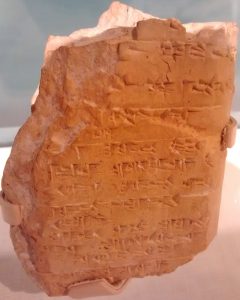
This second series contains the provisions traditionally numbered from 101 to 200. The structure of Hittite law is remarkably familiar: first, a particular situation is described; then the corresponding penalty or compensation is specified.
But how is it that the very first line of the second major section of Hittite law introduces us to a vine? Because in Hittite law, a vine was more than a plant that bore fruit. It was an economic asset, planted, cultivated, and cared for by someone who had invested labour in the expectation of future harvests. Damage to a vine therefore affected not only the grapes of a particular year but also the harvests of years to come. This understanding of economic value lies behind the attention Hittite law devoted to vines and vineyards.
The Price of Damaging a Vine
The Hittite Laws are surprisingly specific when it comes to viticulture. Burning a vineyard, allowing sheep into a productive vineyard, stealing vine shoots from an enclosed vineyard, or cutting down a vine: each of these situations finds its place in the legal texts.
Perhaps what we would really like to discover in the Hittite Laws is how wine was made at the time, or whether a grape such as Narince, still cultivated around Tokat today, was already being used for winemaking. Unfortunately, the tablets do not provide such information. But they tell us something equally important: a vineyard was an economic asset that deserved legal protection.
When we examine these provisions, we discover that the vine itself, not merely its fruit, had value. The reasoning is straightforward. If you steal grain from someone's granary, you take away that year's harvest. But if you cut down a mature vine, you destroy not only the present harvest but also the harvests of future years. The fact that Hittite law treated damage to vines as a distinct matter suggests that the law recognised the long-term labour and investment required by viticulture. The vineyard that emerges from these legal provisions is therefore more than a piece of agricultural land. It is property with an owner, capable of generating economic value, and whose destruction or damage calls for compensation.
How Much Was a Vineyard Worth?
Surprisingly, the Hittite Laws allow us to answer this question. One of the provisions listing prices assigns a value of 40 shekels of silver to a vineyard covering approximately 3,600 square metres. Compare this with the value of an irrigated field of the same size, given in the law code as 3 shekels of silver, and the difference is striking.
Naturally, attempting to calculate how much a Hittite vineyard would cost in today's currency would be rather pointless. Converting an economic system in which money, labour, land, and production operated under entirely different conditions into modern prices would tell us little about history. At best, it would produce an entertaining currency conversion exercise. But we do have the figures needed to compare the relative values of different types of agricultural land.
One likely reason why the laws protected vines so carefully was the recognition that bringing a vineyard into production required years of work. A vineyard represented not merely the value of the land itself, but also the investment accumulated in that land over time.
How Many Litres of Barley Was One Litre of Wine Worth?
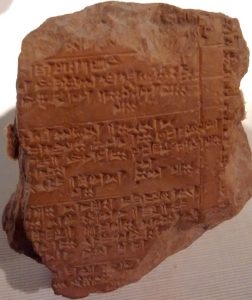
The Hittite Laws tell us not only the value of vineyards but also the price of wine. Article 183 lists the prices of several essential commodities. To make the quantities easier to compare, we can express the ancient measures in approximate modern equivalents: 150 litres of wheat cost one shekel of silver, 200 litres of barley cost half a shekel, and 50 litres of wine also cost half a shekel.
Using these comparative values, the same amount of silver could buy either 200 litres of barley or 50 litres of wine. Measured by volume, wine was therefore approximately four times as valuable as barley.
Does this mean that wine was a luxury reserved for the privileged classes of Hittite society? We should be cautious about drawing such a conclusion. Rather than interpreting its higher price as evidence that wine was consumed exclusively by society's upper ranks, it would be more accurate to describe it as an agricultural product of considerable economic value.
Besides, wine was not simply something people drank. It was also part of the palace economy, religious ceremonies, ritual offerings, and the circulation of goods between political centres. At this point, we need to lift our eyes from the legal tablets and look at the geography of the Hittite world.
Where Were the Hittite Vineyards?
Because the Hittite Laws were discovered at Hattusa, it is tempting to imagine that the wine consumed by the Hittites came from vineyards surrounding their capital. But the available evidence points to a more complex geography. One particularly revealing example is Maşat Höyük, near present-day Tokat, known during the Hittite period as Tapikka.
Royal correspondence discovered at Tapikka shows that the central administration took a close interest in the region's vineyards. In letters sent by the king to his officials, the condition of vineyards is questioned, grape harvests are monitored, and officials receive explicit warnings concerning the harvest. These documents take Hittite viticulture out of the abstract world of legal provisions and place it within a real landscape of agricultural production.
On the one hand, we have a legal text from Hattusa establishing what should happen if someone damages a vine. On the other, we have state officials at Tapikka responsible for overseeing the grape harvest.
Placed side by side, these sources suggest that viticulture was not simply a matter for farmers and vineyard owners. It was also an economic activity that attracted the attention of the central administration.
Where Did the Wine in the King's Cup Come From?
Yet there is no reason to assume that all the wine consumed in the Hittite world was produced in the central regions of the Hittite kingdom. As the Hittite Empire expanded, important agricultural and commercial centres in southern Anatolia and northern Syria became integrated into its political and economic system. Among them was Ugarit, one of the most important ports and wine centres of the Late Bronze Age.
The archives of Ugarit reveal that vineyards were recorded, wine was delivered to central authorities, stored, and subsequently redistributed by the palace. However, during the period of Hittite supremacy, Ugarit was not simply an independent trading partner. It was a vassal kingdom under the authority of the Hittite Great King. For this reason, describing the movement of goods between Ugarit and the Hittite centre merely in terms of modern “imports” and “exports” would be misleading. What we encounter instead is a very different economic system in which trade, tribute, taxation, transfers between palaces, and redistribution were closely intertwined.
Merchants from Ura, operated in Ugarit and participated in the movement of goods between the Hittite world and the eastern Mediterranean. In one Hittite text, merchants from Ura appear transporting wine along the road to Zallara, alongside workers, animals, grain, metals, and precious stones. Consequently, we cannot always determine where the grapes used to make the wine poured into the king's cup during a ceremony at Hattusa were grown.
Did they come from a vineyard at Tapikka? From southern Anatolia? Or perhaps from the vineyards of northern Syria, under Hittite rule?
Today, we do not possess documents that can consistently answer these questions. But the questions themselves reveal that the wine world of the Hittites extended across a much wider geography than we might initially imagine.
Did the Hittites Have a “Wine Law”?
There is an important distinction worth making here. When we speak of wine legislation today, we think of regulations governing production regions, grape varieties, winemaking methods, labelling, and geographical indications. The Hittites had no such legislation, at least not in the documents that have survived. We have no provisions stating that wine must be made from a particular grape variety or that wine from a certain region may only be sold under a specific designation.
The questions addressed by Hittite law were much more fundamental:
- What happens if you damage someone's vineyard?
- What compensation must you pay if you cut down their vine?
- How much is a vineyard worth?
- What is the price of wine?
When we speak of the “vineyard and wine laws of the Hittites”, therefore, we are not referring to wine legislation in the modern sense. We are referring to legal provisions that treated vineyards, vines, and wine as assets possessing economic and legal value. In a sense, these provisions tell us more about Hittite society than any surviving winemaking recipe could.
Why Does a Clay Tablet Belong in an Open-Air Wine Museum?
When we began imagining Turkey as the world's largest open-air wine museum, the first things that came to mind were vineyards, ancient cities, amphorae, and winemaking installations. But a society's relationship with wine cannot be measured solely by how it produced it. How that society protected its vines matters, too. So does the way it calculated compensation for damage to vineyards, the economic value it assigned to wine, how it supervised production, and how it transported wine from one end of its territory to another. All these elements belong to the same story.
That is why a clay tablet discovered at Hattusa, inscribed some 3,500 years ago with the words “If a vine…”, also belongs among the exhibits of our museum. Because, ultimately, to understand a society's wine culture, we must look not into its glass, but into its laws.