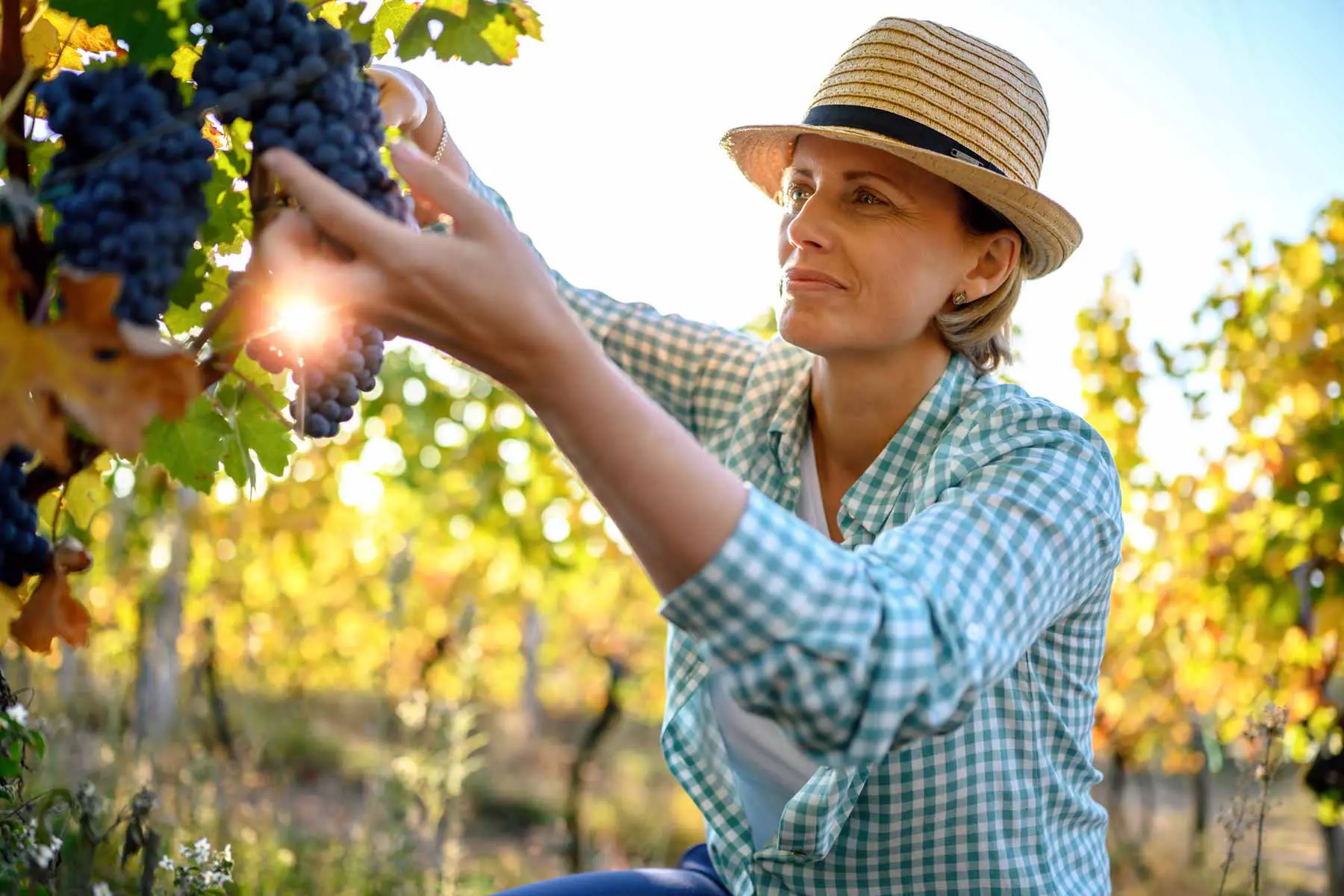
There is a folk saying in Turkish: when a piece of property was asked, “Who do you belong to?”, it replied, “Even I don’t know whose I am.” We might ask much the same question of grapevines: how do we decide where a grape comes from? Do we look at where it is grown? Its name? The memory of the people who cultivate it? Or its DNA, which today can tell us entirely different stories? When it comes to Horoskarası, none of these answers seems sufficient on its own.
Today, we know Horoskarası as a local grape of Kilis. So much so that it is widely known locally as Kiliskarası. This is hardly surprising when we consider how many Turkish grape varieties take their names from a place followed by karası, meaning “the black grape of”. But the name whose trail we will follow here is Horos(z)karası.
The grape’s recent history repeatedly takes us back to Kilis. Horoskarası was used for winemaking during the Republican period, but later largely lost that identity and survived thanks to its value as a high-quality drying grape. That remained the case until, many years later, it began to be considered once again as a wine grape in Kilis. Now, however, DNA test results suggest that the story of Horoskarası may extend far beyond Kilis.
Horoskarası or Antepkarası?
A new chapter in the story began in 2025. Our dear friend, wine expert and writer Göknur Gündoğan, brought a question raised by Ni&Ce Vineyards in Kilis to José Vouillamoz, one of the world’s leading experts in grape genetics:
Is Horoskarası really a distinct grape variety, or is it the same grape as Antepkarası, grown in neighbouring Gaziantep?
The question is hardly surprising. Two neighbouring regions, two black grapes with similar names, and communities that have been in contact with one another for centuries... In 2025, Bestami Gün of Ni&Ce sent samples from both grapes to Vouillamoz for DNA profiling. The results provided a fairly clear answer to the original question:
Horoskarası and Antepkarası are not the same grape.
According to Vouillamoz, the official name of Antepkarası is Sergikarası, and the two varieties have different DNA profiles. But the real surprise comes next.
From Kilis to Hebron
The DNA profile of Horoskarası was compared with grape samples analysed in previous studies, revealing that the grape we call Horoskarası in Kilis shares the same DNA profile as samples previously recorded under the names Darawishi and Marawani. Suddenly, the genetic twins of a variety we had thought of as native to Kilis appeared hundreds of kilometres to the south. But this finding immediately raises another question:
When and how did the same grape spread across such a wide geography?
Vouillamoz stresses that we do not yet know the answer. He also describes the finding, for now, as a new and unpublished result, which brings us to the story behind the name Horoskarası.
Not Horoz, but Horos
In Türkiye, the name of this variety is often written as Horozkarası. At first glance, this seems perfectly plausible: horoz, meaning “rooster”, combined with kara, referring to a black grape. Vouillamoz, however, points us elsewhere. Historical records tell us that the ancient city of Cyrrhus, just south of Kilis within the borders of present-day Syria, was also known as Kyrrhos/Khoros. Vouillamoz puts forward the hypothesis that the name Horos may be connected with this historic city. It is important to stress that, for now, this remains only a hypothesis.
From Kilis to Ankara: Feridun Topaloğlu
When we look at the recent history of Horoskarası, we encounter two different stories. The first unfolds in the grape’s own region. Old purchasing records from the TEKEL Wine Factory in Kilis, together with contemporary press reports, show that Horoskarası was specifically purchased for winemaking and was regarded as a grape of economic value.
The second story takes place some 700 kilometres away, at the Atatürk Forest Farm in Ankara. And Feridun Topaloğlu appears in both.
Originally from Kilis, Topaloğlu studied winemaking in France and became one of the important figures in viticulture and winemaking during the Republican era in Türkiye. It would be unfair to explain his commitment to the grape of his home region merely as local loyalty. Topaloğlu believed in Horoskarası’s value as a wine grape and worked with it both at the TEKEL Wine Factory in Kilis and at the Atatürk Forest Farm Wine Factory, which he managed.
Horoskarası Takes to the Skies
Feridun Topaloğlu’s memoirs add another surprising stop to the journey of Horoskarası: for a period, wine produced at the Atatürk Forest Farm was served in small bottles on Turkish Airlines flights. A local grape from Kilis travelled to Ankara, became wine at the Atatürk Forest Farm and from there made its way onto Turkish Airlines aircraft. Considering that we are talking about a grape that is almost being rediscovered today, the place Horoskarası had reached half a century ago is quite remarkable. Then that connection disappeared.
How Does a Grape Disappear?
As the structure of wine production in Kilis and its surroundings changed, state-owned production facilities disappeared and demand for wine grapes declined, the fate of Horoskarası changed as well. It gradually lost its identity as a wine grape, yet survived thanks to consumer demand for it as a drying grape.
If there is a lesson to draw from this, it is that a vine does not necessarily have to be uprooted for a grape to disappear. The grape itself may survive while the culture of production surrounding it vanishes. The vineyard remains, the grapes are dried, but a few generations later even the memory that they were once made into wine can be lost. Something like this happened to Horoskarası.

Feridun Returns to Kilis
The present-day chapter of the story brings us back to Kilis. Ni&Ce Vineyards is once again making wine from Horoskarası. The resulting wine bears a name deliberately chosen to connect past and present: Cuvée FRDN. FRDN is a reference to Feridun Topaloğlu. The 2024 vintage Cuvée FRDN is the first wine made from 100% Horoskarası, with a total production of just 532 bottles.
The two ends of the story are thus joined together. Decades later, Feridun Topaloğlu’s name has returned to Kilis on the bottle of a wine once again made from Horoskarası.
So, Where Does Horoskarası Come From?
For now, we cannot give a definitive answer.
Kilis? The historic Khoros and northern Syria, immediately to the south of Kilis? A broader Eastern Mediterranean geography extending as far as present-day Palestine? Or is Horoskarası the shared heritage of a much older world, one in which people, goods, vines and grape varieties circulated continuously across lands that today belong to different countries?
DNA tells us that grapes with the same genetic identity are found across a geography extending far beyond Kilis. But it does not tell us the direction in which they travelled. Did Darawishi move south from Kilis? Did Horoskarası arrive in Kilis from the south? Or did these grapes, which we now know by different names, spread from a much older common source? We do not know.
Perhaps this is the most fascinating part of the Horoskarası story. In trying to understand a grape, we began with its name. The name took us from Horoz to Horos. Horos took us just across the border to Khoros/Cyrrhus DNA took us farther south still, all the way to Hebron.
When we look at its more recent past, however, the journey runs in the opposite direction: from Kilis to Ankara, to the Atatürk Forest Farm, and from there onto Turkish Airlines aircraft.
And after all this, one of the most interesting things we know about Horoskarası is still something we do not know: Where does Horoskarası come from?