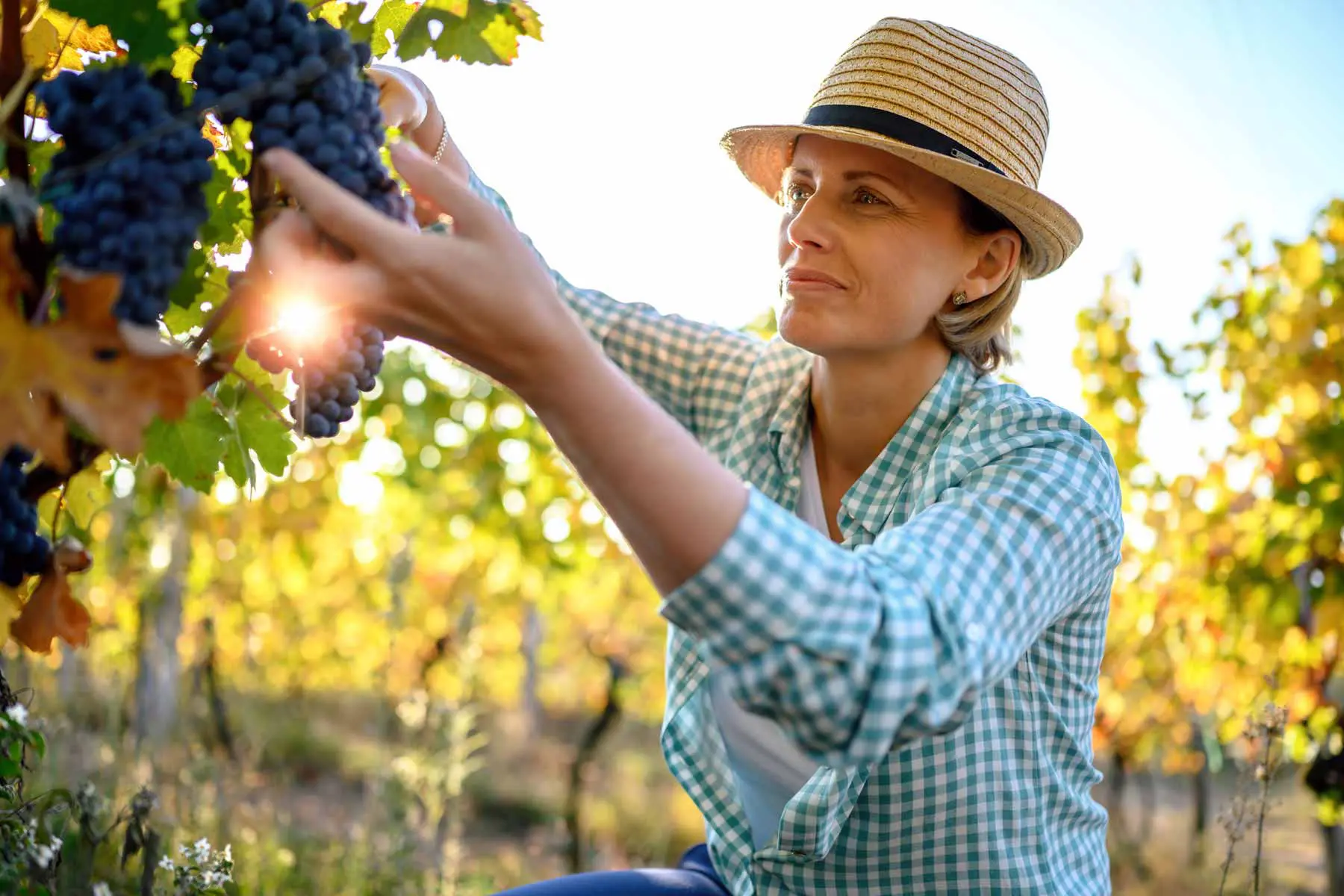
From Lost Vineyards to a Revival of Viticultural Culture
My earliest encounter with İzmir's vineyards probably goes back to a song that became etched in my memory during childhood. I later learnt that this composition, in the Acemaşiran mode of Turkish classical music, was the work of Tahsin Karakuş. Its opening lines evoke the hills and vineyards of İzmir, where nightingales sing.
Şu İzmir’in dağlarında, dağlarında,
Bülbül öter bağlarında.
In our article tracing the vanished vineyards of Istanbul, we explored how a city can lose its viticultural heritage. But Istanbul is hardly alone in this story. Other cities in Türkiye have also lost vineyards that were once an integral part of their lives, economies and cultures. İzmir is one of them.
Yet there is something that sets İzmir's story apart. Here, we find producers working to revive the region's viticultural heritage, initiatives aimed at preserving indigenous grape varieties, and support for these efforts from both İzmir Metropolitan Municipality and district municipalities.
Moreover, İzmir's viticultural heritage extends well beyond wine. Table grapes, raisins, grape molasses and the trade associated with grape growing played an important role in the region's agricultural and economic life for centuries.
For all these reasons, to understand what is happening in İzmir today, we must first look at the vineyards it has lost.
İzmir Was Once a City of Vineyards
It is not easy to imagine nineteenth-century İzmir through the geography of today's city. Buca and Bornova were country retreats surrounded by extensive agricultural land. The mansions, gardens and vineyards of Levantine families were among the defining features of these settlements.
Buca and Kızılçullu, today's Şirinyer, were separated from İzmir by vineyards, gardens and olive groves. Buca's Razakı grape was one of the region's well-known agricultural products. The development of railway connections during the nineteenth century strengthened Buca's links with the port of İzmir and the city's commercial life.
Karabağlar and Bozyaka were also part of İzmir's historic viticultural landscape. Local historical records indicate that vineyards around Bozyaka survived into the 1970s.
We can also trace this transformation through historical maps of İzmir. Nineteenth-century railway maps reveal the connection between Kızılçullu and Buca, as well as Bornova's relationship with the city, while twentieth-century topographical maps allow us to trace the geography of former rural settlements. Although we have yet to establish precisely where individual vineyards were located or how much land they occupied, looking at İzmir today makes it abundantly clear that much of this agricultural landscape has disappeared as the city has expanded.
Why Did the Vineyards Disappear?
It would be misleading to attribute the disappearance of İzmir's vineyards solely to urbanisation. In Buca, Bornova and Karabağlar, the rapid expansion of urban development, particularly during the second half of the twentieth century, reduced the amount of agricultural land. Former vineyards and gardens gave way to housing, roads and new neighbourhoods.
In rural areas, however, a different transformation was taking place. As the economic conditions of agricultural production changed, some crops gained importance while others declined. Growers turned to crops that were easier to sell or offered higher returns. The Kozak Plateau near Bergama is a particularly striking example. Indigenous grape varieties once cultivated in the region gradually lost ground as the stone pine became increasingly important to the local economy.
İzmir's viticultural heritage was therefore affected by two distinct processes. In urban areas, vineyards gave way to buildings, while in rural areas, changing agricultural priorities undermined the cultivation of certain grape varieties.
A New Chapter Begins in Urla
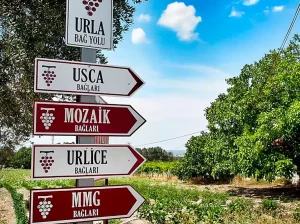
Against the backdrop of these losses, a different development began to emerge, particularly in Urla, from the 1990s onwards. New vineyards were established, investments were made in wine production, and the region's viticultural past began to attract renewed interest. These initiatives not only led to the establishment of new wineries but also helped bring Urla's historic viticultural identity back into focus.
One tangible example is the Mestan Vineyards in Kuşçular. According to the history shared by Çakır Winery, the land on which grapes are grown today was formerly known as the Mestan Vineyards. The old vines had been uprooted, the land had been used for tobacco cultivation for a period, and it was subsequently left unused. In 2001, grape growing returned with the establishment of a new vineyard on the same land. Could this be a sign of a transformation we have all been eagerly awaiting: the return of former vineyard land to viticulture?
Over time, the initiatives undertaken by producers in Urla also contributed to the emergence of a shared regional identity. The Urla Wine Route brought different producers together, connecting viticulture with gastronomy, rural tourism, and cultural heritage.
Not every newly established vineyard represents the continuation of a historic one. We also see that international grape varieties predominate in many of the new vineyards. In other words, the revival of viticulture and the preservation of indigenous grape heritage are two distinct processes. Looking at Urla, however, we can see that indigenous varieties are gradually finding their way back into the vineyards.
And this brings us to the grapes being rediscovered.
Rediscovered Grape Varieties
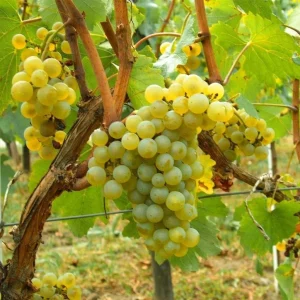
Bornova Misketi deserves a prominent place among them. Thanks to dedicated grape detectives and the support of local authorities, both Muscat of Bornova and Foçakarası have regained recognition. Efforts to bring Urlakarası back into the vineyards have also yielded encouraging results.
Another grape variety whose revival is still underway is Gaydura. Believed to be the same white grape variety known as Gaidoura on the island of Santorini, across the Aegean, Gaydura has been the subject of efforts to re-establish its cultivation in Urla since before 2010. When we spoke to Can Ortabaş while preparing this article, he explained that work on developing Gaydura was still ongoing and that several more years would be needed.
However, keeping the name of an indigenous grape variety alive is not the same as securing its agricultural future. This requires identifying the variety, obtaining healthy propagation material, determining suitable growing conditions, and ensuring that growers can continue cultivating it. We have left the most important condition until last: the grape variety must provide a source of income for those who grow it, thereby securing its own economic future.
An example of a process that has yet to achieve the desired results can be found in the work of İzmir Metropolitan Municipality on the Kozak Plateau.
Kozak Beyazı and Kozak Siyahı: A Conservation Initiative
Kozak Beyazı and Kozak Siyahı, historically cultivated on the Kozak Plateau near Bergama, are among the indigenous grape varieties whose cultivation has declined over time. To encourage their revival, İzmir Metropolitan Municipality launched an initiative in collaboration with the Manisa Viticulture Research Institute. According to information released by the municipality in June 2024, a total of 4,035 young vines were distributed to three growers in the villages of Demircidere and Aşağıbey, and new vineyards were established across 12.5 decares (1.25 hectares).
The initiative was not limited to the distribution of young vines. Soil analyses, training in cultivation techniques and technical support were also provided to encourage growers to return to indigenous varieties. This initiative represents an important step towards preserving indigenous grape heritage. After all, keeping viticultural culture alive means protecting not only wine grapes but also table grapes and varieties traditionally grown for other purposes.
Yet these efforts face a significant challenge.
Is Preserving the Grape Enough?
During our conversation with the Head of the Agricultural Services Department of İzmir Metropolitan Municipality, we learnt about one of the fundamental challenges facing efforts to preserve indigenous grape varieties. The municipality's attempts to support growers have not met with the level of interest anticipated. One of the principal reasons is the difficulty growers face in finding markets for the indigenous grape varieties they cultivate.
From a grower's perspective, this is entirely understandable. It is hardly surprising that someone unable to sell their grapes or earn a sufficient income should turn to varieties that are easier to market. This situation reveals a reality that is often overlooked in efforts to preserve indigenous grape varieties.
Producing young vines and establishing vineyards may be necessary to protect a grape variety. But for that variety to survive, it must also have economic value. Without a market in which growers can sell their grapes and consumers can recognise and choose them, conservation efforts become difficult to sustain.
Nor should we imagine that this problem is unique to İzmir. Across many regions of Türkiye, the future of indigenous grape varieties is shaped by similar economic considerations. Preserving indigenous grape heritage is therefore not merely an agricultural matter. It is an economic and cultural issue that growers, researchers, hospitality businesses, consumers, and local authorities must address together.

From Producers' Initiatives to Municipal Policy
Efforts to safeguard İzmir's viticultural heritage have acquired a new dimension in recent years. In October 2025, İzmir Metropolitan Municipality joined Iter Vitis, one of the certified routes of the Council of Europe's Cultural Routes programme. This international network, which brings together viticultural culture, historical heritage and tourism, has provided a new framework for İzmir's initiatives.
The İzmir Wine Route, developed under the coordination of the municipality's Tourism Department, was introduced in May 2026. Extending beyond Urla, the project adopts a regional approach encompassing districts such as Seferihisar, Menderes, Selçuk, Kemalpaşa, Çeşme, Torbalı and Karabağlar. Viticulture is thus being considered not merely as a productive activity, but in connection with rural settlements, gastronomy, archaeological heritage and tourism.
In October 2026, at the Iter Vitis General Assembly held in Ilok, Croatia, the Urla Wine Route received the Best Wine Route award, further enhancing the international visibility of the region's initiatives. At the same meeting, it was announced that the 2027 Iter Vitis General Assembly and International Conference would be held in İzmir.
The conference theme, From Grape to Heritage: Archaeology of Taste, reflects an approach that seeks to explore İzmir's viticultural past in conjunction with archaeology, gastronomy and cultural heritage.
All these developments demonstrate that the rediscovery of İzmir's viticultural heritage is no longer confined to individual producers' initiatives. With the involvement of local authorities and international cultural networks, a broader field of activity is emerging. However, we must remember that developing wine tourism and preserving indigenous grape varieties are not the same thing. International recognition for a wine route does not automatically create the economic conditions that allow growers to continue cultivating indigenous grapes.
A City Embracing Its Viticultural Heritage
When we explored Istanbul's vanished vineyards, we were searching for traces of the past. In İzmir, alongside those traces, we encounter people and institutions working to bring that heritage back to life.
The old vineyards of Buca, Bornova and Karabağlar may have largely disappeared. Yet new vineyards are being established in Urla, indigenous grape varieties are being studied anew, efforts are underway to revive nearly forgotten grapes on the Kozak Plateau, and İzmir is making its viticultural heritage part of an international network of cultural routes.
These are important developments. But İzmir's story is not yet a completed success story. True success in preserving viticultural heritage cannot be measured solely by the establishment of new vineyards or the renewed cultivation of forgotten grape varieties. Those vineyards must continue to thrive, growers must receive a fair return for their labour, and the grapes they cultivate must find a place in the lives of future generations.
Perhaps this is the most important question facing İzmir today:
We can return a grape variety to the soil. But can we also create the economic and cultural conditions that will carry it into the future?
The true success of İzmir's journey towards rediscovering its vineyards lies in the answer to that question.