
Anadolu’nun kadim bağcılık mirasını ve yerel şarap kültürünün küresel ölçekteki potansiyelini anlamak için, doğru kaynaklarla örülü bir kitap incelemesi her meraklıya eşsiz bir kapı açar. 2024 yılının serin bir Ağustos akşamüstü saatlerinde WAYANA’dan bir mesaj aldık: Konuk masamıza gelmek ve bizimle tanışmak istiyorlardı. O sırada Türk şarap dünyasına dair bir kitap hazırlığında olan Mehtap Turan’la tanışmamız böyle gerçekleşti. Sohbetimize, Mehtap Hanım’ın kitap görselleri için iş birliği yaptığı fotoğraf sanatçısı ve WAYANA’nın operasyonel yükünü üstlenen Sina Kuzuoğlu da katıldı. Biz de Mehtap Hanım’dan henüz ulaşamadığımız bazı üretici dostlarımızın iletişim bilgilerini aldık; karşılığında sektörle ilgili bilgi ve deneyimlerimizi keyifle paylaştık.
2025 yılı haziran ayının ilk günlerinde Mehtap Hanım, kitabın basılmış bir nüshasıyla geldiğinde oldukça şaşırdık. Bir kitabın ortaya çıkma sürecinin ne kadar meşakkatli olduğunu bildiğimiz için, bu kapsamda bir içeriği böyle kısa sürede tamamlamış olmak gerçekten takdire şayandı. Bu duygularımızı Mehtap Hanım’la paylaştık ve kitabın şaraba değer veren insanlara ulaşması için elimizden gelen tüm desteği sağlayacağımıza söz verdik.
This article is a fulfillment of that promise. Yet even if we hadn’t given our word, we would still have been pleased to write this piece—rest assured.
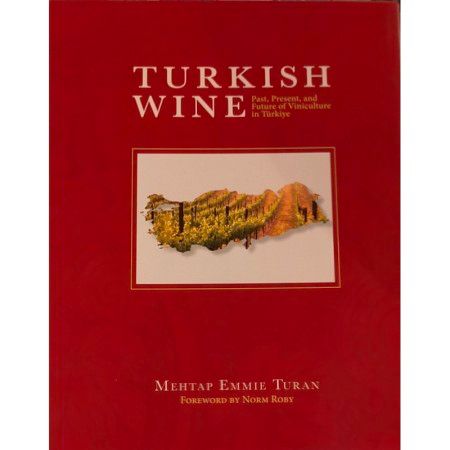
Kitabın Hedef Kitlesi
Given that the book is published in English, it’s clear that its primary audience is international wine lovers. However, the depth of the content shows that it is specifically aimed at wine enthusiasts with a high level of intellectual curiosity.
The opening pages provide a swift but effective orientation to Türkiye and the Turkish language. The foreword, penned by Norm Roby—a seasoned voice in the global wine world—is particularly noteworthy. With elegance, he articulates what we have long known: that Türkiye is a region worthy of attention and appreciation in the world of wine.
Anadolu Bağcılık Tarihi ve Kitap İçeriği
The book is composed of four main chapters:
- Digging Deeper for the Roots
- A Tough Road to Hoe
- Exploring the Regions
- Charting a Course
Digging Deeper for The Roots
This roughly ten-page chapter covers nearly 10,000 years of history in a way that feels like a fast-moving film reel. Turan masterfully blends academic and popular sources to present a rich and layered narrative. It reminds us of a critical truth: that Türkiye has yet to fully embrace the vast cultural wealth it sits upon in terms of winemaking heritage.
For decades, the interest of social wine communities in Türkiye focused primarily on foreign wines. Fortunately, this has started to shift over the past 25 years. In this content-dense section, the author’s carefully chosen titles are a quiet but urgent call to recognize the richness of her homeland.
This chapter also delves into wine’s cultural dimension, the very quality that transformed it into more than just a beverage. Wine’s roles in religious and ceremonial life are highlighted, with references to the stories of Noah, Gilgamesh, and Homer—where wine is an ever-present symbol.
A compelling anecdote involving Sultan Mahmud II illustrates the paradoxes surrounding wine in Ottoman culture. The author also explores how the rise of wine production during the early Republican era was closely linked to agricultural development initiatives, and how political shifts later altered its trajectory.
She succinctly summarizes how global changes in wine culture throughout the late 20th century influenced Türkiye, especially from the 1980s onward. Turan assesses the developments of the past 25 years with calm realism, avoiding Orientalist despair, and instead adopting a cautious optimism grounded in present realities.
A Tough Road to Hoe
Bu bölümde hem küresel hem de Türkiye’ye özgü makro değişkenlerin şarap dünyasına etkileri ele alınıyor. İklim değişikliği bu başlık altında en geniş şekilde işlenmiş. Türkiye bu değişimin etkilerini çoktan yaşamaya başladı. Kısa vadeli siyasi hedefler uğruna yapılan uygulamaların uzun vadede sektörü daha da zorlaştıracağına dikkat çekiliyor.
Other topics include Türkiye’s current economic landscape, the high taxation burden on wine, collateral obligations placed on producers, the decline in purchasing power, and trade imbalances. The section also includes a comparison of wine tourism between Türkiye and its neighbors, Greece and Georgia, which brings Türkiye’s potential and missed opportunities into sharper relief.
The book further discusses difficulties in sourcing qualified personnel, comparative industry benchmarks with other wine-producing nations, and how Türkiye’s symbolic wine exports are unlikely to improve without broader policy support.
Immediately following this section is a thoughtful spotlight on the Tekirdağ Viticulture Research Institute and the potential for implementing an appellation system in Türkiye. These inclusions reflect both a sense of gratitude and a desire to engage with deeper structural conversations, adding another layer of richness to the book.
Exploring The Regions
This is the book’s most expansive chapter, offering a region-by-region guide to Türkiye’s viticultural geography. For each region, Turan presents a combination of general characteristics, local grape varieties, potential wine routes, notable wineries, and personal observations.
As someone well aware of how labor-intensive such data collection is, I deeply admire the author’s efforts. Türkiye’s dynamic landscape poses a particular challenge for wine literature—data becomes outdated quickly, requiring constant updates.Nonetheless, the care and detail in this chapter make it an invaluable resource for understanding the diversity and potential of Türkiye’s wine regions.
Charting A Course
This final section is shaped by the author’s personal experiences and industry insight. It touches on the paradigm shift in tourism following the COVID-19 pandemic, the importance of distribution channels for the future of the sector, and the potential for cross-industry collaborations.The author advocates for pairing local names with accessible English equivalents, promoting indigenous grape varieties on the global stage, and elevating the role of women in the wine industry. She emphasizes the need to grow the number of trained wine professionals and supports the continued success of boutique producers within wine tourism.
Final Word
Mehtap Turan’s book is the product of extraordinary dedication. She has addressed nearly every essential topic in Türkiye’s wine sector with clarity, nuance, and precision.As noted earlier, the chapter on regional viticulture reflects a key challenge: keeping pace with Türkiye’s fast-evolving dynamics. While future editions may include necessary updates, integrating digital annexes could be a cost-effective way to preserve the book’s long-term relevance and accuracy.
We wholeheartedly congratulate Mehtap Hanım for her courage and commitment in completing such a comprehensive and meaningful work. This book is a much-needed addition to Türkiye’s sparse wine literature. On behalf of the wine community to which we proudly belong, we extend our deepest gratitude.
Anadolu bağcılığının geçmişine ve geleceğine ayna tutan bu rehber eser incelemesi, yerel gen kaynaklarımızın korunması ve şarap kitaplığı kültürümüz ilginizi çekiyorsa, blogumuzdaki diğer entelektüel içeriklerimize da göz atabilirsiniz:
Şarap dünyasının didaktik sınırlarından sıyrılıp, yeni başlayanların zihnindeki tüm karmaşık soruları büyük bir yalınlıkla çözen bir diğer temel başvuru eseri incelememiz için Şarap 101: Temel Bir Şarap Kitabı İncelemesi yazımıza göz atabilirsiniz.
Bu kitapta teorik olarak anlatılan o binlerce yıllık şarap kültürünün felsefe, mitoloji ve edebiyatla harmanlandığı o derinlikli klasik eserleri Türkçe literatüre kazandırma hikâyemizi incelemek için WAYANAKİTAP: İçinde Arap Geçen Eserler Dizisi manifestomuzu ziyaret edebilirsiniz.
Anadolu’nun bu zengin gen mirasını korumak adına sarsıcı bir ampelografik inatla canlandırılan, yok olmanın eşiğinden dönen asil yerel kırmızı üzümlerimizin üretici öyküleri için Likya Şaraplarının Türk Üzüm Dünyasına Kattıkları and [Vinkara Kalecik Karasının İzinde] analizlerimizi okuyabilirsiniz.
Kitapta bahsedilen o modern Türk şarapçılığının geleceğine yönelik yasal kısıtlamaları, ekonomik bariyerleri ve üreticilerin karşısına çıkan kurumsal prangaları tartıştığımız iki bölümlük çalışmamız için Türk Şarapçılığının Geleceği: Ufukta Işık Var mı? – 1 and Türk Şarapçılığının Geleceği: Yerel Çözümler ve Umut – 2 manifestolarımızı inceleyebilirsiniz.