Türk şaraplarını İngilizce olarak bütüncül biçimde tanıtan kaynakların sayısı hâlâ oldukça sınırlı. Andrea Lemieux’nün The Essential Guide to Turkish Wine kitabı ise bu alandaki en önemli başvuru eserlerinden biri hâline geldi.
Birinci baskısıyla 2021 yılında karşılaştığımızda “Sonunda böyle bir kitabımız oldu” diye ne kadar mutlu olduğumuzu unutmadık. Kitabı bir Amerikalının kaleme alması İngilizce olmasını anlamamızı sağlasa da, aynı içerikte Türkçe bir kitabımız olmaması da o kadar içimizi acıtmıştı doğrusu. Ama diller arası geçişin artık çok daha kolay olduğu bugünün teknolojik ortamında, bunu sadece bir hayıflanma olarak kayıtlara geçirelim. Yoksa The Essential Guide to Turkish Wine kitabının değerini azalttığı için değil.
The Essential Guide to Turkish Wine İkinci Baskısında Neler Yenilenmiş:
- Yeni üzüm çeşitleri
- Daha fazla üretici
- Güncellenmiş İstanbul şarap rehberi
- Genişletilmiş bağ rotaları
- Yeni fotoğraflar ve grafikler
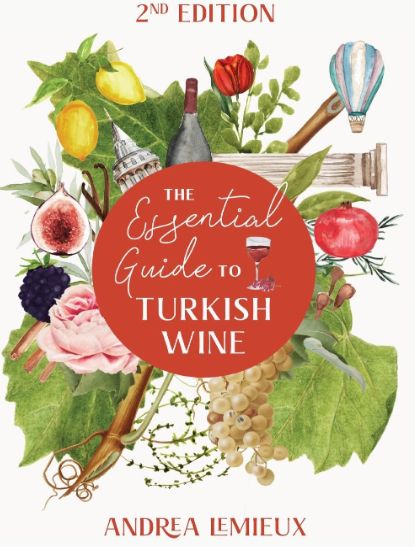
Kitabın Yapısı
Kitabın Birinci Bölümü
Neolitik Dönemden başlayarak günümüze kadar Anadolu’da yaşayan uygarlıkların şarapla ilişkilerine ayrılmış.
Kitabın İkinci Bölümü
The second chapter starts with a snapshot of the current state of wine in Turkey. After a brief look at the wine styles produced today, the book moves into the wine regions.
Under the heading of wine regions, it’s interesting to see Trakya, Urla, Çal, and the Lydia Wine Route alongside categories like Inner Aegean and South Izmir. One hopes these areas will gain more structure in the years to come.
This chapter also includes country-specific explanations such as the Wine Regulation, wine-label rules, and wine-related taxes.
A short reflection on the role of women in the wine world and a section on Wine Culture in Turkey bring the second chapter to a close.
Kitabın Üçüncü Bölümü
Bu bölüm yerel üzüm çeşitlerine ayrılmış. Bu bölümün giriş yazısından sonra beyaz ve siyah üzümler iki ayrı bölüm halinde gruplanmış ve her üzüm kendisine ayrılan bir sayfada okurların bilgisine sunulmuş. Beyaz üzümler altında 21 çeşit, siyah üzümler altında da 26 çeşit üzüme yer verildiğini görüyoruz.
Dördüncü Bölümden On Birinci Bölüme Kadarki Kısım
Kitabın bu kısmında her bölüm ayrı bir şarap bölgesine tahsis edilmiş. Her bölgenin özelliklerinin özetlendiği girişten sonra bölgenin varsa alt bölgeleri, iklimi, toprak yapısı, bağların genel yapısı ve üzümlerinin sıralandığı bir kimlik kartına yer alıyor. Sonrasında da üzerinde şaraphanelerin ve bölgenin öne çıkan yerleşim noktalarının ve ören yerlerinin bulunduğu harita var. Bu genel bilgilendirme sayfalarından sonra bölgenin üreticilerine ayrılan sayfaları görüyoruz.
Trakya bölgesinde 11, Marmara Bölgesi’nde 8, Ege Bölgesi’nde 49, Karadeniz Bölgesi’nde 3, İç Anadolu’da 12, Akdeniz Bölgesi’nde 5, Doğu Anadolu’da 3, Güneydoğu Anadolu’da 2 üreticiye, toplamda 93 üreticinin çeşitli yanlarıyla tanıtıldığı sayfalar yer alıyor. Üreticiler farklı yanlarıyla ele alınmış, ama karşılaştırmaya elverişli bir grup başlığı yapısı tercih edilmemiş. Bu yönüyle kitap daha çok anlatıya dayanan bir görüntüye sahip. Belki daha sonraki baskılar planlanırken yeni bir yaklaşımla bilgi akışını sağlamak, kitabı daha işlevsel kılabilir.
Kitabın On İkinci Bölümü
İstanbul’da şarap satan ve servis eden yerlere ayrılmış. Türkçe telaffuza rehberlik eden bir rehber sayfa, bibliyografi ve indeks sayfalarıyla kitap tamamlanıyor.
Final Word
Türkiye’nin şarap kültürü son yıllarda büyük bir dönüşüm yaşıyor. Bu dönüşümün kalıcı olabilmesi için yalnızca iyi şarap üretmek yetmiyor; o hikâyeyi dünyaya doğru anlatan kitaplara da ihtiyaç var. Andrea Lemieux’in çalışması bu nedenle yalnızca bir kitap değil, aynı zamanda Türk şaraplarının uluslararası hafızasına yapılmış önemli bir katkıdır.
Andrea Lemieux’in kitabı şarap kitapları açısından talihsiz bir durumda olan ülkemiz için önemli bir kazanım. Yazarın, hemen her şeyin elektronik ortamda yayınlandığı yeni dünya düzeninde, geleneksel bir kitap yayınlama yükünü göze alması bile doğrusu büyük cesaret.
Böyle bir yükü göze aldığı için Andrea’yı kutluyoruz ve teşekkür ediyoruz. Türkiye’nin şaraplık üzüm çeşitlerindeki artış daha uzun süre devam edeceğine göre, bu kitabın yeni baskılarının yapılması da kaçınılmaz olacak.
Dileriz ki tez zamanda kitapların satışını gerçekleştirsin, biz de güncellenen yeni kitaplara kavuşabilelim.
Eline sağlık, Andrea.
Bu yazımız ilginizi çektiyse, aşağıdaki yazılarımıza da üzerlerine tıklayarak göz atabilirsiniz.
Ayrıca WAYANA’nın “İçinde Şarap Geçen Eserler Dizisi” içindeki eserler de ilginizi çekebilir.
WAYANAKİTAP: İçinde Şarap Geçen Eserler Dizisi
Eşekle Seyahat: Robert Louis Stevenson’da Şarap, Teruar ve Sofra
Into the Heart of France with Henry James: History in a Traveller’s Glass
George Saintsbury: Akademinin Zirvesinden Mahzenin Derinliklerine