Likya Şarapları’yla ilişkimiz, şarap dünyasına adım attığımız ilk günlere kadar geri gidiyor; on yıldan biraz daha eskiye, yani. Bizim servis etmeye başladığımız ilk şaraplar arasında Acıkaranın yer aldığını düşünürsek, Likya Şarapları’yla gönül bağımızın neden güçlü olduğunu anlamak zor değil.
2025’in ilk yarısında Elmalı’ya yaptığımız gezide, 10 Aralık’ta Likya Master Class’ta yer alan şarapları tatma fırsatımız olmuştu. Gerçi o zaman henüz tank numunelerinden tatmamız gerekmişti ve DNA sonuçları belli olmadığı için üzümlerin kimlikleri henüz kesin değildi, ama şarapların potansiyelleri kendilerini belli ediyordu. Ziyaretimizden üç ay sonra DNA sonuçları açıklandığında Burak Özkan’ın telefonla heyecanını paylaşması unutulur gibi değildi bizim için. Şimdi gelelim Master Class’a ilişkin gözlemlerimize.
Göknur Gündoğan’ın “Likya Şarapları Master Class” Giriş Konuşması
Likya’s corporate communications are now helmed by an experienced wine professional, Göknur Gündoğan. Her opening remarks focused on summarizing the platform on which Burak Özkan’s twenty-plus years of work stands, and the direction it will follow from here on.
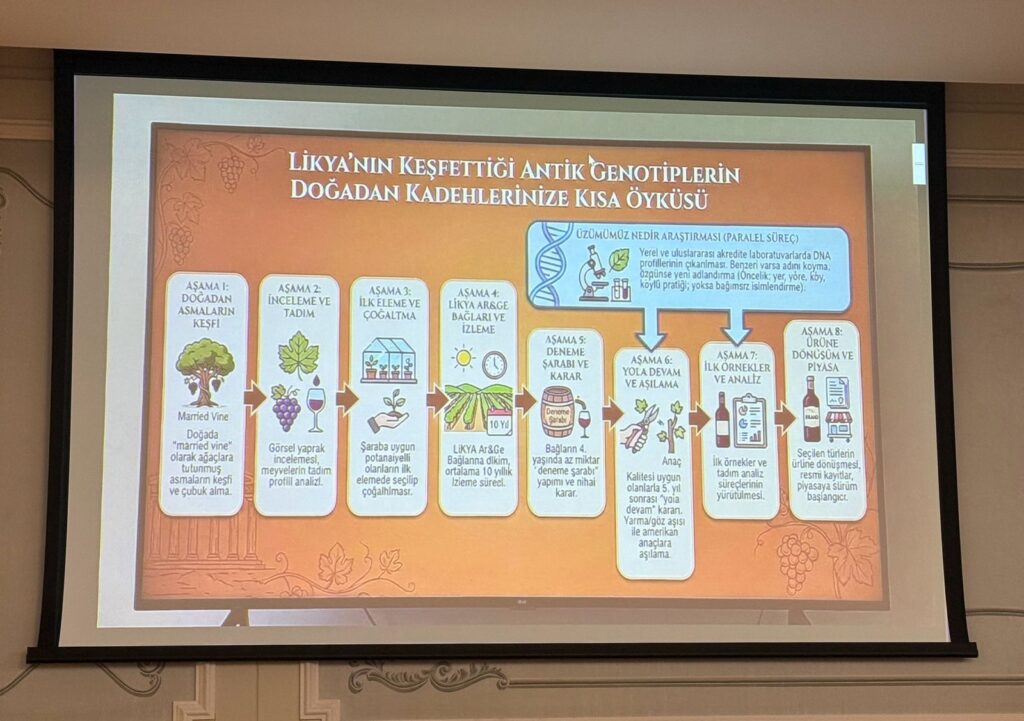
Anlatıma eşlik eden sunumun ilk slaydı bir infografik olarak tasarlanmıştı ve hayata döndürülen asmaların ürüne dönüşme sürecini çok güzel özetliyordu. İnfografik anlatımda yer alan sekiz aşamalı süreci aşağıda inceleyebilirsiniz:
Discovering the Vines in Nature:
Finding scattered vines or married vines climbing trees, and collecting cuttings for grafting.married vine.
Observation and Berry Tasting:
Visually examining the leaves and identifying tasting profiles of the grapes.
Selection and Propagation:
Choosing and propagating vines with real winemaking potential.
Cultivation in R&D Vineyards:
The longest part of the process. Likya’s experience shows this stage alone can take about ten years.
Trial Wine and Decision:
Producing a trial wine in the fourth year and deciding on its suitability for winemaking.
Grafting Suitable Vines:
Grafting grape varieties with proven potential onto American rootstocks.
Analysis and Tastings:
Conducting laboratory and sensory analyses to evaluate wine quality.
Becoming a Product and Reaching the Market:
Meeting wine lovers and facing the realities of the marketplace.
Göknur also emphasized a parallel process. Once a trial wine is produced and a continuation decision is made, the grape variety undergoes DNA and ampelographic analysis in internationally accredited laboratories. If a genetic match is found, the historical name is confirmed. If not, a new name must be given to this unique variety.
Eğer üzümün dünyadaki gelişmiş veritabanlarında (en zenginleri Fransa’da Montpellier’de ve İsviçre’de José Vouillamos’ta) kaydına rastlanmamışsa, ad verilmesi aşamasına geliniyor. Adlandırma işlemi şöyle yürüyor:
- Öncelikle asmaya bulunduğu yörede ayırt edici bir ad yakıştırılmışsa ve başka yörelerde benzer bir kullanım yoksa, o ad veriliyor. Örneğin, Likya’nın Acıkara üzümünün adı böyle bir ad.
- Eğer asmanın yörede adı yoksa, bu kez bulunduğu yörenin ad olarak kullanılmasına öncelik veriliyor. Likya’nın Fersun üzümünün adı böyle verilmiş.
- Eğer bu süreçlerle bir yere varılmamışsa, bu kez asmayı keşfedip geliştiren bir isim veriyor. Likya’nın verdiği isimlerden bazıları böyle: Likya Işığı, Vera Özkan, Arda Özkan.
Likya Şarapları Bilgi Kutusu:
- 20 yılı aşkın araştırma
- 13 yerel asmanın kayıt altına alınması
- Genetik doğrulama çalışmaları
- Arkeo serisinin oluşturulması
- Kaybolmaya yüz tutmuş üzümlerin yeniden şaraplaştırılması
In the Words of the Discoverer, Burak Özkan
Likya Şarapları bir aile işletmesi. Ağabey Burak Özkan, yirmi yılı aşkın süredir asmaların peşinde koşan ve üretim tarafını sırtlayan Likya Şarapları’nın kurucusu. Doruk Özkan’ın bu iş bölümündeki rolü, şirket faaliyetlerini yürütmek. (Bugünkü koşullarda Allah Doruk’a kuvvet versin.)
Burak Özkan konuşmasına bağlarını Elmalı’da kurma kararını nasıl verdiğini anlatarak başladı. 1990’larda bağ bölgesi olarak bilinmeyen Elmalı’yı geçmişe doğru giderek incelediğimizde, Anadolu’nun birçok yöresi gibi, bağcılık ve şarapçılık bölgesi olduğunu görüyoruz. Hatta Likya’nın şimdi bulunduğu yerin 1900’lerin başında çizilen maden haritasındaki yöre adı “Manastır Bağları”, komşusu da “Avşar Bağları”. Yani bölgenin geçmişinde zaten bağcılık var.
When Burak realized how rich the endemic diversity of the Taurus Mountains was, his first clue came from a local resident working at Likya who mentioned a particular vine. That discovery eventually led to Acıkara. From that point on, unearthing lost vines first became a mission, then a full-fledged business model for Likya. Hearing Burak tell this story himself was something special.
İşin özeti şu: Likya Şarapları’nın bu yirmi yılı aşkın emeğinin sonucunda 13 özgün asma yok olmaktan kurtarılıp kayıt altına alındı. Artık bu asmalar Dünya Kültür Mirası’nın parçaları.
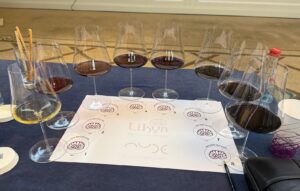
The Eight Wines
The tasting was led, with her usual elegance, by Tuba Işık. Only one of the wines was white: Likya Işığı, which we all agreed has a very bright future.
The first red, Likya Ateşi, is a strong contender in the light-bodied red category.
İkinci kırmızı, daha önceden Altıncı His olarak geçici isim verilen üzümün genetik analizleri sonucunda Gemre Siyahı üzümü olduğu anlaşılınca, yeni adıyla kullanılan şarap. Üçüncü kırmızı şarap Fersun ve dördüncü kırmızı da daha önceden Likya Bilgesi geçici adıyla bildiğimiz ama tetkikler sonucu Oğlakkarası olarak kayıtlı olduğu anlaşılan üzümün şarabı. Gemre Siyahı, Fersun ve Oğlakkarası orta seviyeli alkole sahip olan ve serin tüketilebilecek kırmızılar. Düşük alkol oranları, değişen iklim koşulları için avantaj sağlayabilir.
Vera Özkan, Acıkara, and Arda Özkan are powerful reds with near-maximum alcohol, firm tannins, and strong aging potential.
Final Word:
The event carried two important dimensions.
Birincisi, 25 yıllık bir serüvenin özet raporunu sektör paydaşlarına aktarmak. Böylece bizler Likya Şarapları’nın bir ticari işletme olarak varlığını korumak ve geliştirmek için harcadığı emeklerin, kaybolmaya yüz tutmuş asmaların hayata döndürülmesiyle entegre olmasının sağladığı kazanımları görme ve birinci ağızdan dinleme fırsatına sahip olduk.
İkincisi, işin asmaları bulmaktan belki de daha zor olan kısmının kayıtlarının tespiti ve tescili aşaması olduğunu, bu sürecin sağlıklı yürütülmesi için Likya Şarapları’nın nasıl bir yol izlediğini ve Türkiye’de bu işi yapmanın kendine özgü sıkıntılarını yaşayanların ağzından dinledik.
Son günlerde karşımıza gelen ve şarap etiketlerinde üzüm adlarının yer alması konusundaki kısıtlayıcı kararın hayata döndürülen asmalar konusunu olumsuz etkileyeceğinden çok endişeliyiz. Sektörün örgüt, kurum ve birey olarak tüm bileşenlerinin bu ortak sorunun çözülmesi konusunda öncelikle mücadele etmesi gerektiğinin bir an önce farkına varmalıyız. Hepimize bu konuda görev düşüyor.
Likya Şarapları’nın yürüttüğü çalışmalar, yalnızca yeni şaraplar üretmekten çok daha büyük bir anlam taşıyor. Her yeniden keşfedilen üzüm çeşidi, Anadolu’nun binlerce yıllık bağcılık mirasının eksik kalmış bir sayfasını yeniden görünür hâle getiriyor. Bu nedenle bu çalışmalar, ticari başarının ötesinde, kültürel ve bilimsel bir sorumluluğun da ifadesi olarak değerlendirilmeyi hak ediyor.
Bu yazımız ilginizi çektiyse, aşağıdaki yazıların üzerlerine tıklayarak göz atabilirsiniz.
Tekirdağ Bağcılık Araştırma Enstitüsü: Üzümlerimiz ve Asmalarımız Emin Ellerde
Unutulmuş Bir Teruarın Yeniden Canlanışı: Elmalı