
Wine, Terroir, and the Table in Robert Louis Stevenson
The author of Treasure Island and Dr. Jekyll and Mr. Hyde, Robert Louis Stevenson, was a Scottish writer. When we consider that Stevenson passed away at just forty-four, we better grasp how remarkably productive his short life was.
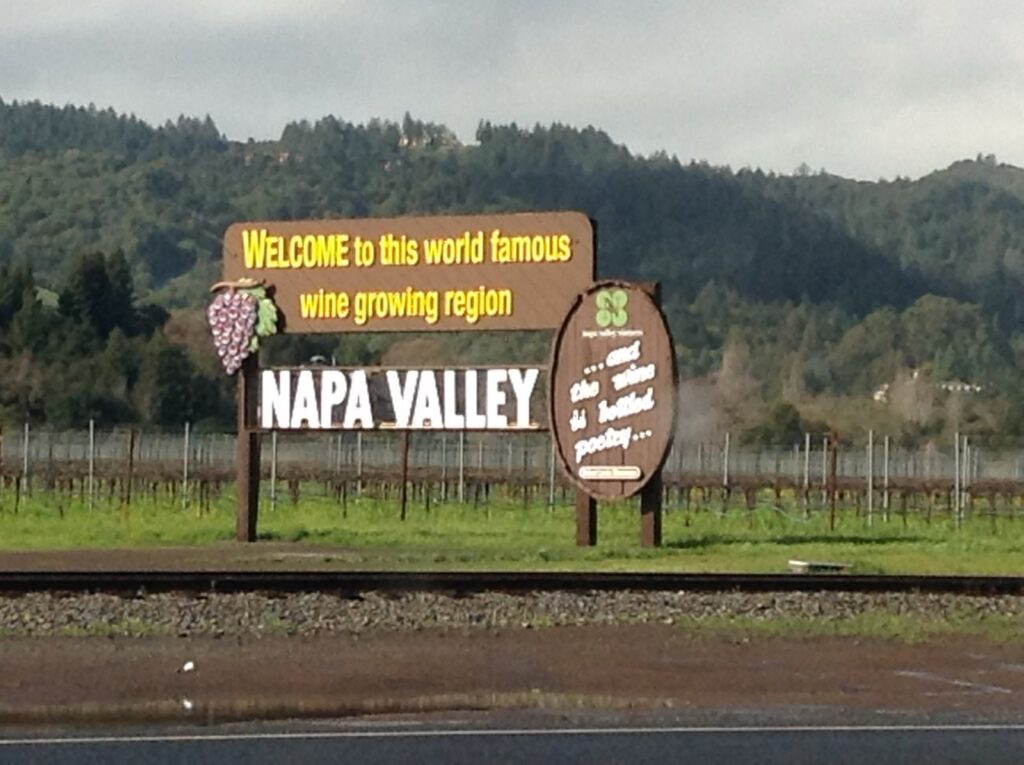
From the perspective of wine culture, we believe Stevenson occupies a special place. Long before “wine writing” existed as a genre, he frequently gave space to wine in his travel narratives, weaving it naturally into his observations. In this sense, he becomes a keen observer of wine as part of everyday life. The famous sign in California’s Napa Valley that reads “Bottled Poetry” is said to have emerged in reference to the identity Stevenson ascribed to the region long before the wine world itself took notice. This phrase, which we might render in Turkish as “Şişedeki Şiirsellik” (“Poetry in the Bottle”), later became a defining epithet for Napa Valley and was widely embraced.
Wine in Stevenson’s Travel Writing
Robert Louis Stevenson’s travel books often read like records of landscapes, walks, and the people he encounters. Yet a closer look reveals another element that returns again and again: what is eaten and what is drunk. For Stevenson, the glass or the plate is not a secondary detail of the journey; it is another way of understanding a place, of attempting to “read” the land. Wine here is not merely a beverage but the imprint geography leaves on the palate, a brief summary of local life. Long before the concept of “terroir” was given a technical framework, Stevenson grasped it through literary intuition: a place has a taste, and this taste reveals itself most clearly through wine and table culture.
When Stevenson stops at inns in the French countryside to taste local wines, these are not simple scenes of rest. They are moments in which his relationship with place becomes most concentrated. The coolness of stone walls, tired bodies, brief conversations, and an ordinary red brought to the table… All of this transforms the wine from a mere “product” into the language of its setting. What catches Stevenson’s attention is not the label on the bottle but the bond between the drink, the soil, and the people. That glass carries silent knowledge of the slope of the vineyards, the harshness of the wind, the habits of a frugal or generous kitchen.
What we now so often emphasize in gastronomy—“locality” and “seasonality”—is present in Stevenson in an intuitive form. The wines served at the tables he encounters on the road are usually far from ostentatious; yet this very simplicity strengthens their identity. Stevenson finds a kind of truth not in the refined tastes of large cities but in the everyday drinks of small villages. This truth lies in wine ceasing to be a flavor in itself and gaining meaning together with food, conversation, and place. A local wine beside a simple soup becomes, in his eyes, the most honest expression of “harmony”: the table functions as a whole.
Reading Terroir: Soil, Climate, Altitude, and the Human Hand
Today we define terroir as the sum of soil structure, climate, vineyard location, and human intervention. Stevenson does not list these elements in technical terms, yet all are sensed in the texture of his narratives. The “harshness” or “roundness” of rural wines often becomes a translation of geography. Angular flavors born of stony, meager soils give way to ripeness on lower slopes bathed in abundant sun. Stevenson’s observations are not tasting notes in a formal sense, but he mentally aligns what is felt on the palate with what is seen in the landscape. He does not stop at liking or disliking a wine; he pursues the question, “Why does this taste remind me of this place?”
In Stevenson’s writing, soil is not merely a physical ground but the first layer that shapes flavor. He may not name the differences between limestone and granite, clay and sand, yet he conveys them through sensory equivalents such as “lightness,” “hardness,” and “dryness.” Climate amplifies or softens this ground’s voice: the acidity sharpened by cool winds, the fruit ripened by long sunny days. Altitude and slope translate into a wine’s weight or delicacy. In his prose, the “lightness” of a glass often corresponds to higher elevations, while “roundness” suggests vineyards set lower down, pointing to a geographic reality.
Yet for Stevenson, terroir is not only the sum of natural conditions; the human being is an indispensable part of the equation. How the vine is pruned, when it is harvested, how the wine is stored… all these choices translate nature’s potential into a language. The wines he encounters in inns are often the products of small-scale production and therefore not homogeneous. That one year they may be “sharper,” another “softer,” is not a flaw in his eyes but the trace of place and labor. Terroir here is not a standardized promise of quality, but a variable yet authentic identity.
This view also moves beyond an understanding of terroir confined to the boundaries of the vineyard. In Stevenson, terroir extends to the plate. The bread, cheese, soup, or meat served alongside the wine carry another face of climate and agriculture. Wine and food, products of the same soil, are reunited at the table. Thus in his narratives, “pairing” is not a formula but a natural outcome: two different expressions of the same place complete each other on the table. What we today call the principle of “local cuisine–local wine” appears in his world as an everyday practice.
The Table, Context, and Culture
For Stevenson, drink is never independent of the table. Simple bread on the road, a bit of cheese, and the local wine beside them—when these come together, the spirit of the place emerges. What we now call “pairing” finds in him a formula-free yet accurate counterpart. Principles such as a high-acid wine balancing a fatty dish, or a light meal not being overwhelmed by a heavy drink, appear in his narratives as practical wisdom. The table is not a stage for technical display but a setting where local balance is established.
The social function of drink is also evident in his texts. Wine often acts as a common language that brings people together. A glass shared with someone met on the road quickly creates intimacy; bonds with locals are strengthened at the table. Gastronomy here is the space not only of flavors but of relationships. As Stevenson uses wine as a “narrative object,” he points to one of the oldest tools of cultural transmission: the bond formed at the table carries the story of a geography without words.
A Conception of Terroir Beyond Technical Language
There is a risk we often encounter in today’s wine world: the reduction of wine to technical detail. Acidity, tannin, alcohol, body, oak… all important, yet insufficient on their own. Stevenson’s writing offers a perspective that goes beyond this technical language. For him, a wine’s value lies not only in its structural properties but in the meaning it gains through its connection to geography and to the table. This view binds terroir not just to the vineyard, but also to the plate and to people. Wine, in other words, “falls into place” only together with gastronomy and culture.
As geography changes in Stevenson’s travels, his comparisons of drinking cultures become sharper. Drinks made from different raw materials in different climates repeatedly remind him of a single truth: the identity of taste is not independent of place. For this reason, he avoids judging a drink by a universal standard. A taste that seems “simple” in one place may, in another, be the most authentic expression of that geography. Much of what we say today in defense of local cuisines and wines already exists in his texts in intuitive form: value often lies in context.
Final Word
What makes Stevenson valuable for wine culture is not that he speaks of great wines, but that he reads the geography behind the ordinary wines drunk on the road and at small tables. He approaches terroir not as a technical term but as a lived experience. He sees gastronomy not as an “art of presentation,” but as the language of local life. For anyone who wishes to think of wine not only in the glass but together with its story, its soil, and its plate, Stevenson’s travel writing remains a living source. Because he reminds us of a simple yet demanding truth: a place has a taste, and we learn that taste most truly at the table.
In Turkish, we have access to only one of Stevenson’s travel books: Travels with a Donkey. Yet beyond this, there are other travel works well worth reading, such as An Inland Voyage, The Silverado Squatters, and In the South Seas. As WAYANA, we are also working to ensure that these works become accessible, at least in digital form. We hope that one day we will have the chance to read them in our own language as well.


Merhaba,
Çok güzel bir yazı olmuş, elinize sağlık. Yazılarınızı ilgiyle takip ediyorum, ayrıca teşekkür ederim. Robert Louis Stevenson hakkındaki bu yazı çok iyi derlenmiş ve iyi bir bakış açısı ile yazarı ele almış. Çok beğendiğim ve fakat şarap konusundaki değindiğiniz özel yaklaşımı nedense bir parça göz ardı edilen ünlü yazarın hakkında nefis bir başlangıç yazısı olmuş, tebrik ederim. Şarap konusunda ilgili bir çok arkadaşımla da referansınızı da vererek yazıyı paylaştım, teşekkür ederim.
Yazıyı kaleme alan kişinin ismini de merak ettim açıkçası.
Değerli emekleriniz ve şarap konusundaki lider girişiminiz için sizi gönülden tebrik ederim.
Saygılarımla
Burak Bey,
Değerlendirmeniz için çok teşekkür ederim. Biliyorsunuz, çoğunlukla beğensek de bunu dile getirmeyi nedense gerekli görmeme eğilimindeyizdir çoğunlukla. Bu kalıbı kırdığınız için kutlarım. Umarım görüşme fırsatımız olur. Selam ve sevgiler.
Cenap Kuzuoğlu
Bülteninizdeki yazıları ve müzik seçkilerinizi keyifle takip ediyorum. Metinlerin yazarlarının da bültende yer almasını çok isterim; Malum, devir YZ devri; böyle özenli hazırlanmış metinlerde insan dokunuşunu yazar imzası ile anlarız ancak…
Merhaba Nuray Hanım,
WAYANA Bülten ve bağlantılı yazıları ben hazırlıyorum. Kurumsal paylaşım kimliği önde olsun diye isim vermiyorum ama elbette gizli değil.
Mesajınız bize moral veriyor. Şarabın içinde alkol barındırmasından ötürü adeta cezalandırıldığı bir dönemin içindeyiz. Farklı açılardan yaklaşıp kültürel kimliğini öne çıkartmaya gayret ediyoruz. Umarız bir fayda sağlayabiliriz.
Teşekkürlerimizle selam ve sevgilerimizi yolluyoruz.
Cenap Kuzuoğlu