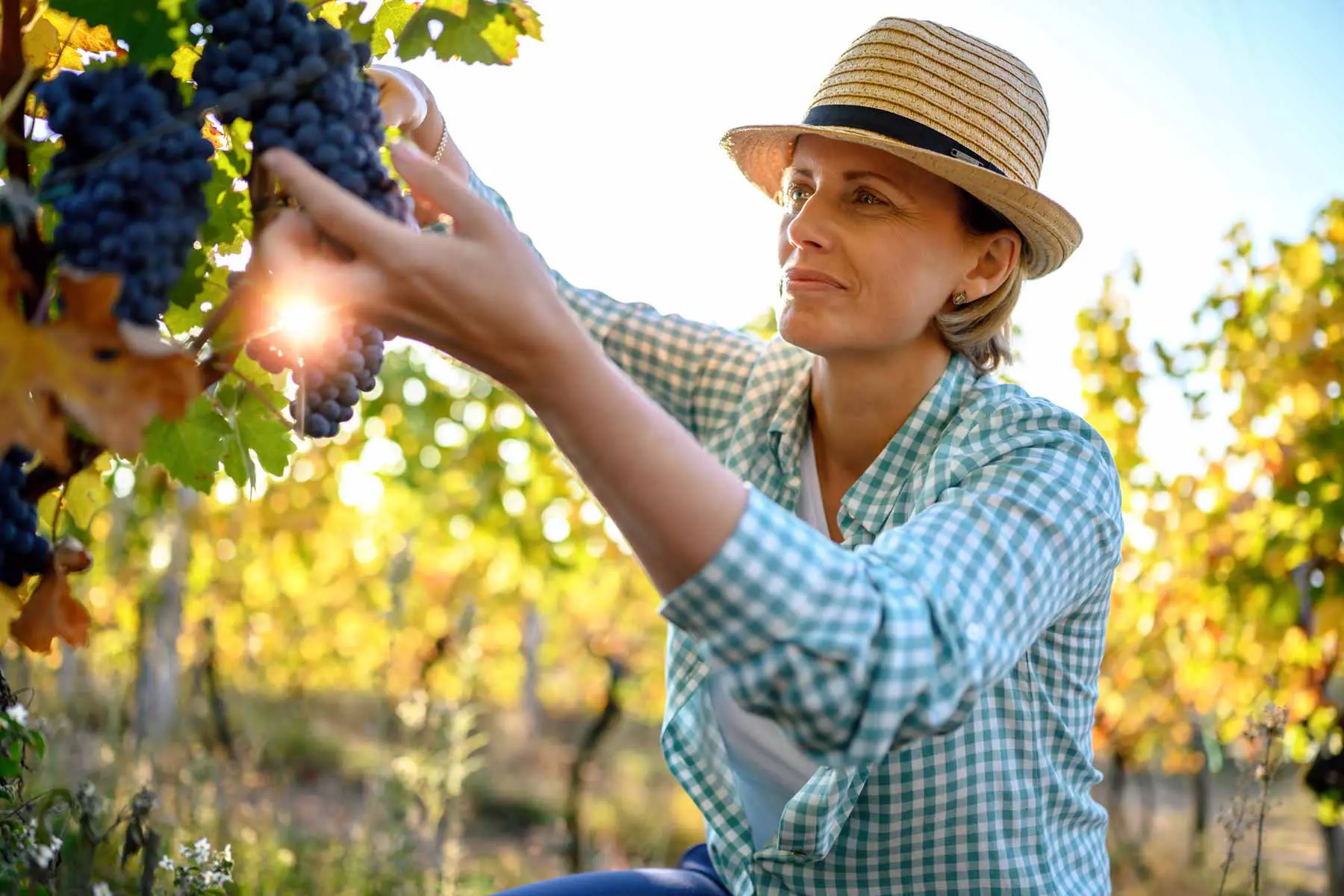
The professional Georgian wine tasting I attended on April 15 was far more than an encounter with what was in the glass. It served as a reminder of how our eastern neighbor, Georgia—drawing strength from thousands of years of history—has managed to overcome the traumatic disruptions of the past century and re-emerge with renewed identity.
Recognized as one of the cradles of wine, Georgia today stands out not only for its past, but for its ability to merge tradition and modernity. From its UNESCO-recognized qvevri method to its distinctive contemporary expressions, it offers a rare synthesis that deserves attention.
The Mesoclimate Miracle of the Caucasus
What fundamentally defines Georgia as a remarkable wine region is the Caucasus Mountains, which act as a vast natural shield.
The Greater Caucasus in the north blocks the freezing air masses descending from Siberia, while the southern ranges protect the region from hot and dry influences. This unique geography creates a highly stable mesoclimate—especially in valleys like Alazani and Imereti—allowing grapes to maintain a precise balance between acidity and sugar.
It would not be an exaggeration to say that Georgia, as a whole, feels as if it were designed to be a country of vineyards.
Qvevri: The Breath of the Earth
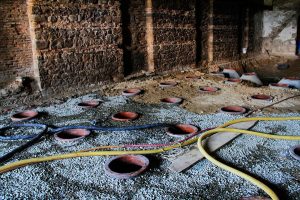
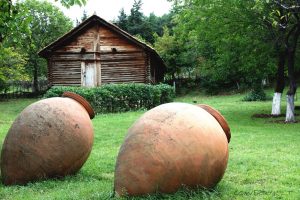
When Georgian winemaking is mentioned, the first image that comes to mind is qvevri—large clay vessels buried underground.
Recognized by UNESCO in 2013, this method is not merely a storage technique, but a living ecosystem where wine breathes through controlled micro-oxygenation.
The now-popular “amber” or “orange” wine style is rooted in this practice, where white grapes ferment and age for months together with their skins and stems inside these vessels.
Under the Shadow of Central Planning: Industrialization and Loss of Identity
Georgia and its neighbor Armenia were stripped of their winemaking identities under the Soviet Union’s model of “socialist division of labor,” and turned into large-scale alcohol production zones.
Decisions made by distant bureaucrats in Moscow led to irreversible damage:
- Georgia’s Test: Uniformity and the Pressure of Quantity
Georgia was designated as the “wine reservoir” of the Union. But this title came at a cost: it marked the decline of more than 500 indigenous grape varieties. Central authorities imposed a handful of high-yield, mechanization-friendly varieties—most notably Saperavi and Rkatsiteli. Other local grapes were uprooted simply because they did not fit production targets. Wine lost its narrative in the glass and became a bulk liquid transported by rail. - Armenia’s Tragedy: From Wine to Brandy Production
Armenia, with its deep-rooted winemaking tradition, was assigned a more specific role: distillation. By central decree, it became “the Union’s brandy factory.” This nearly erased its culture of dry wine production. Vineyards were redirected toward varieties optimized for sugar and alcohol yield, and wine grapes were replaced for industrial alcohol production. - The Outcome of Detached Decisions: “Kitchen Wines”
Perhaps the greatest damage of central planning was the redefinition of “quality.” Wines that were sweet, high in alcohol, and reinforced with additives for durability became the standard.
This system listened not to the voice of terroir, but to factory quotas—severing wine from its soil and the grower from their craft.
Today, what we call the “Modern Renaissance” in both countries is essentially a struggle to reclaim their ancient identities from the ruins of this centralized destruction. Traditions like qvevri in Georgia and karas in Armenia are being rediscovered—almost excavated back into life.
A Treasure Beyond Saperavi and Rkatsiteli
While the body of Saperavi and the structure of Rkatsiteli are widely recognized, Georgia’s ampelographic wealth—home to more than 500 indigenous grape varieties—remains largely unexplored.
Some of the standout expressions from the tasting reveal the depth of this diversity:
- Otskhanuri Sapere
A wild variety from Western Georgia (Imereti), defined by high acidity and forest fruit notes. It requires patience. As it ages in qvevri, its firm tannins soften, evolving into a powerful gastronomic wine. - Kisi and Khikhvi
Highly aromatic varieties that enrich amber wines with layers of apricot, hazelnut, and honey. - Chinuri and Mtsvane
Ancient grapes offering elegance, vibrancy, and mineral precision—bringing a refined perspective to contemporary white wine styles.
Are We Getting Closer to That Idea We Once Imagined?
A few months ago, in one of our WAYANA Newsletter pieces, we shared a thought—perhaps even a quiet ambition.
Wouldn’t it be remarkable to create an “Ancient Wine World Route”, bringing together Turkey and our timeless neighbors in the geography where wine was born—Georgia, Armenia, and Azerbaijan?
And if we allow ourselves to dream a little further…
could this route one day extend to include Iran, Lebanon, Israel, and Palestine?
Would that not evolve into something extraordinary?
Perhaps the most beautiful aspect of wine is the sense of sharing and companionship it creates around a table. Is it truly unrealistic to imagine extending that spirit into an international framework?
We find ourselves asking, almost insistently:
Could we recreate this, even on a micro scale, at WAYANA?
Would such an approach resonate with those who share our curiosity and excitement?
What do you think?
Could the idea of an “Ancient Wine World Route” truly find its place?