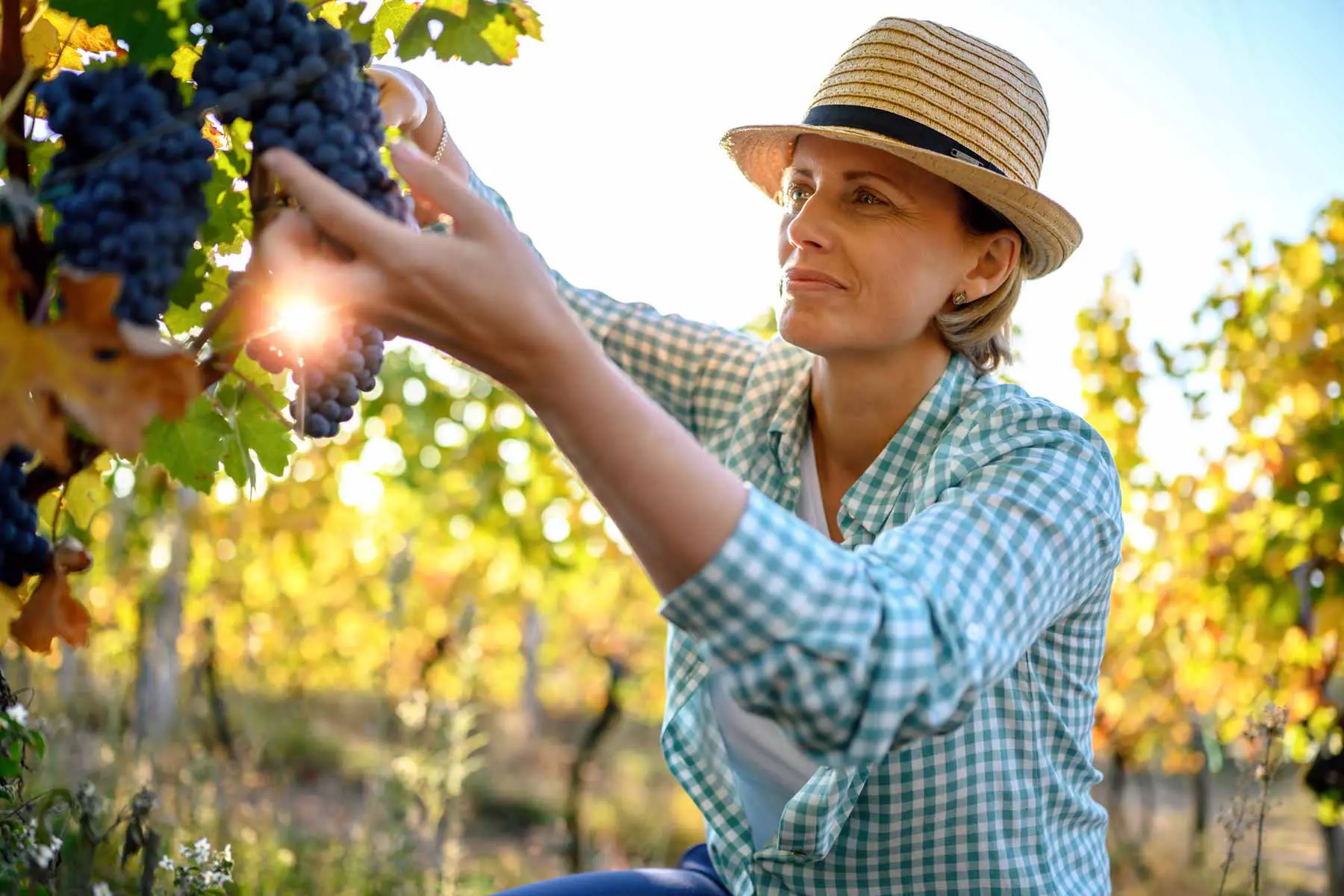
A Reflection on Resilient Viticulture
We all know the economic contrast between northern and southern Italy. You can feel it as you travel down the boot-shaped peninsula — not only in cities and infrastructure, but also in how the land is worked. And few places reflect this better than Taurasi, in southern Italy’s Campania region.
Taurasi is known for its native red grape, Aglianico. But for many locals, the real pride lies in how their vineyards are grown — using ancient farming methods handed down through generations, reaching back as far as the Etruscans. Compared to the yield-focused logic of modern viticulture, the Taurasi way follows a very different philosophy.
The vines here don’t stand in neat rows. They’re scattered among olive trees, wheat fields, wild herbs, and fruit trees. These aren’t monocultures — they’re polycultures, layered and entangled. Of course, part of this approach came from necessity. In economically struggling regions, farmers needed to get as much out of the land as possible. But there’s more to it than survival.
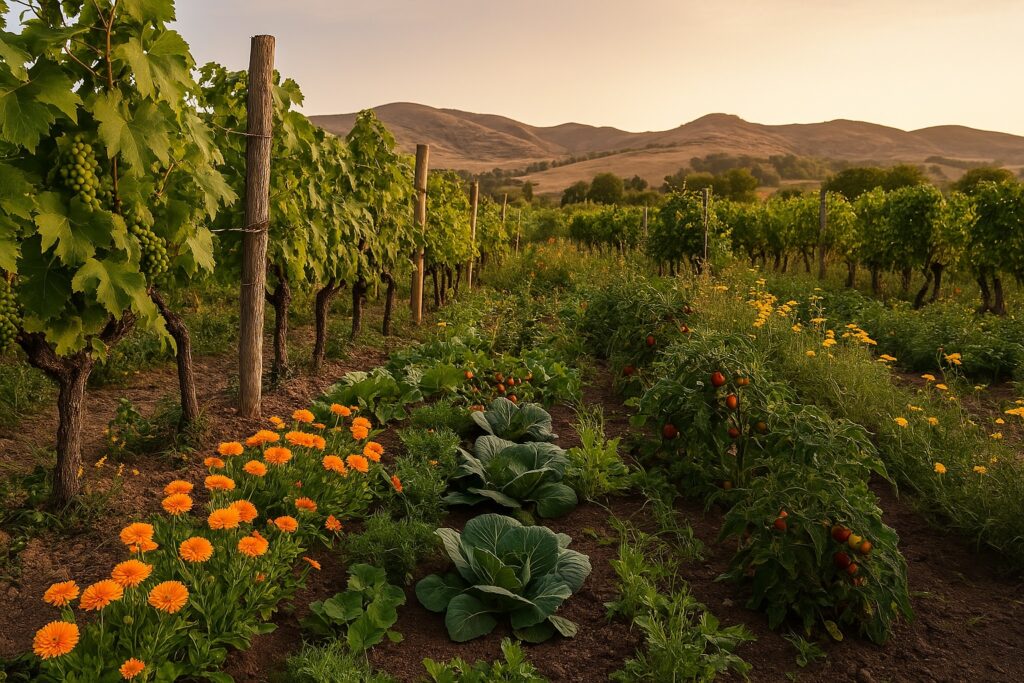
In the face of climate change, the old ways may offer lessons we can no longer ignore.
Back in the 19th century, the phylloxera epidemic devastated European vineyards. It couldn’t be eradicated, so scientists developed a workaround: grafting European vines onto American rootstocks that were resistant to the pest. It worked — and modern European viticulture was reborn. But those vines are not the same as the ones that came before.
Taurasi — like Cappadocia in Turkey — is one of the rare places where phylloxera doesn’t thrive, thanks to unique soil conditions. Here, some vines still grow on their own roots. But even more importantly, they grow alongside other crops in a system that nurtures biodiversity and resilience.
This combination of old vines and multi-species farming creates a special kind of synergy.
Old vines develop deep, complex root systems over time. These roots allow them to survive periods of drought and find nourishment even in harsh seasons. Vines left to grow freely (rather than pruned and wired into uniform rows) often stretch higher, catching more wind, resisting frost, and avoiding the fungal diseases that come with stagnant air.
And biodiversity? It keeps the soil alive.More plant species means a richer microbial web, better nutrient balance, and a natural defense system that doesn’t rely on chemical interventions.
Of course, old vines have their downsides. The biggest is low yield. But in return, they offer something else: exceptional grape quality, with significantly higher concentrations of polyphenols — the kind of compounds that make wine not just flavorful, but also healthful.
In the end, it all comes down to choices.Can this two-thousand-year-old tradition survive in a world that prizes efficiency and speed? Can growers still earn enough by producing less — and producing better?
Some Taurasi producers have turned to modern methods. Their vineyards, shaped by vertical training systems and wire trellising, look like vineyards anywhere else in the industrial wine world. And in a system where labor is undervalued, and income demands more output from less time, this is often the only viable business model.
But profitability isn’t the only measure that matters anymore.
Climate change is forcing us all to reconsider the kind of farming we believe in. And when we look at Taurasi — or at similar experiences in Turkey’s Cappadocia region — we start to see how different worldviews lead to radically different outcomes.
There, in Cappadocia, one grower tried to establish a modern vineyard using trellised systems. But locals, who had watched generations before them bury their vines in winter and uncover them in spring, warned that it might not work. When the temperature dropped to -30°C, the trellised vines died. Eventually, they were torn out and replaced by bush-trained vines, low to the ground and rooted in tradition — literally.
Nature, it turns out, remembers.
And sometimes it knows the way better than we do.
We live in uncertain times — environmentally, economically, and emotionally. And while we all have to make decisions based on new realities, rushing toward quick solutions often brings regret. The wisdom of the past is not something to romanticize blindly. But it’s not something to discard, either.