WAYANA’nın Iter Vitis Avrupa Şarap ve Bağ Rotaları’nın üyesi olmasının son halkası, üyelik belgemizin verilmesiydi. Bu seremoni, Türkiye’nin ev sahipliğini yaptığı “CULTURAL ROUTES OF THE COUNCIL OF EUROPE 14th ANNUAL ADVISORY FORUM” etkinliğinin ikinci akşam yemeğinde yapıldı. Ödül Töreni etkinliğinin düzenlendiği Kapadokya’da olunca, bize de yollara düşmek göründü. Ama bir taşla bir kuş vurmayı kendimize yakıştırmadığımız için bu geziye Vinolus Şarapları ziyareti de ekledik. İyi ki de öyle yapmışız.
2025 yılının Nisan ayındaki Gelveri ziyareti esnasında, uzun bir aradan sonra —yaklaşık yedi yıl olmalı— Vinolus Şarapları’nın kurucusu Oluş Molu’yla karşılaştık. Bizim her zaman menümüzün bir parçası olan Vinolus, kendine özgü zarif şaraplarıyla tanıdığımız ama bir türlü mercek altına alamadığımız bir üreticimiz olmuştu. Sohbet derinleşti, tekrar görüşmek üzere sözleşip ayrıldık. Oluş Molu ve kendisiyle birlikte yoğun mesai harcayan Dr. İnanç Atılgan kısa bir süre sonra WAYANA’yı ziyaret ettiler. Bizim iade-i ziyaretimiz artık şart olmuştu ve Kapadokya gezisi bunun için mükemmel bir fırsat oldu. Bu yazıyı, o gezinin notlarıyla kaleme aldık.
Bazı şarap üreticileri yalnızca şarap üretmez; bulundukları bölgenin geleceğine dair bir vizyon da inşa eder. Vinolus Şarapları ve Oluş Molu’nun hikâyesi bunun en güzel örneklerinden biri.
Turkish Wine — A Heritage Reborn
Vinolus’un WAYANA ziyaretinin akabinde, merkezine Oluş Molu’yu alan bir armağan kitap ulaştı elimize. Ülkemizin şarap yayıncılığı konusunda ne denli çorak olduğunu hatırlayacak olursanız, kitap bizim için bir vaha gibiydi. Hem kitaba hem Vinolus’a farkındalık yaratmak için biz de bir değerlendirme yazısı kaleme alıp hem WAYANA Bülten’de haber olarak hem de bağlantılı bir blog yazısı olarak yayınlamıştık. Yazıyı okumak isteyenler buradan ulaşabilir.
Molu Çiftliği: Bir Şaraphaneden Daha Fazlası
Although our main focus was Vinolus Wines, it’s only fair to start a bit wider — with Molu Farm, the family estate entrusted to Oluş Molu, named after one of Kayseri’s long-established families.
Çiftlik, Kayseri’nin merkezine 10-15 dakikalık araç sürüşü kadar yakın. Arazinin toplam alanı 2.500 dekar yani 2.500.000 metrekare. Çiftliği gezerken araç kullanmazsanız, yorucu bir gün geçireceğiniz kesin. Bizim rehberimiz Oluş Molu’nun kendisiydi. Babasının kaybından sonra elbette kardeşler arasında bir bölüşüm yaşanmış ama çiftliğin bütünlüğünü —bazı bölümlerin oluşturulması hariç— korumayı başarmışlar ve çiftlik faaliyetleri Oluş Hanım’ın ellerine emanet edilmiş.
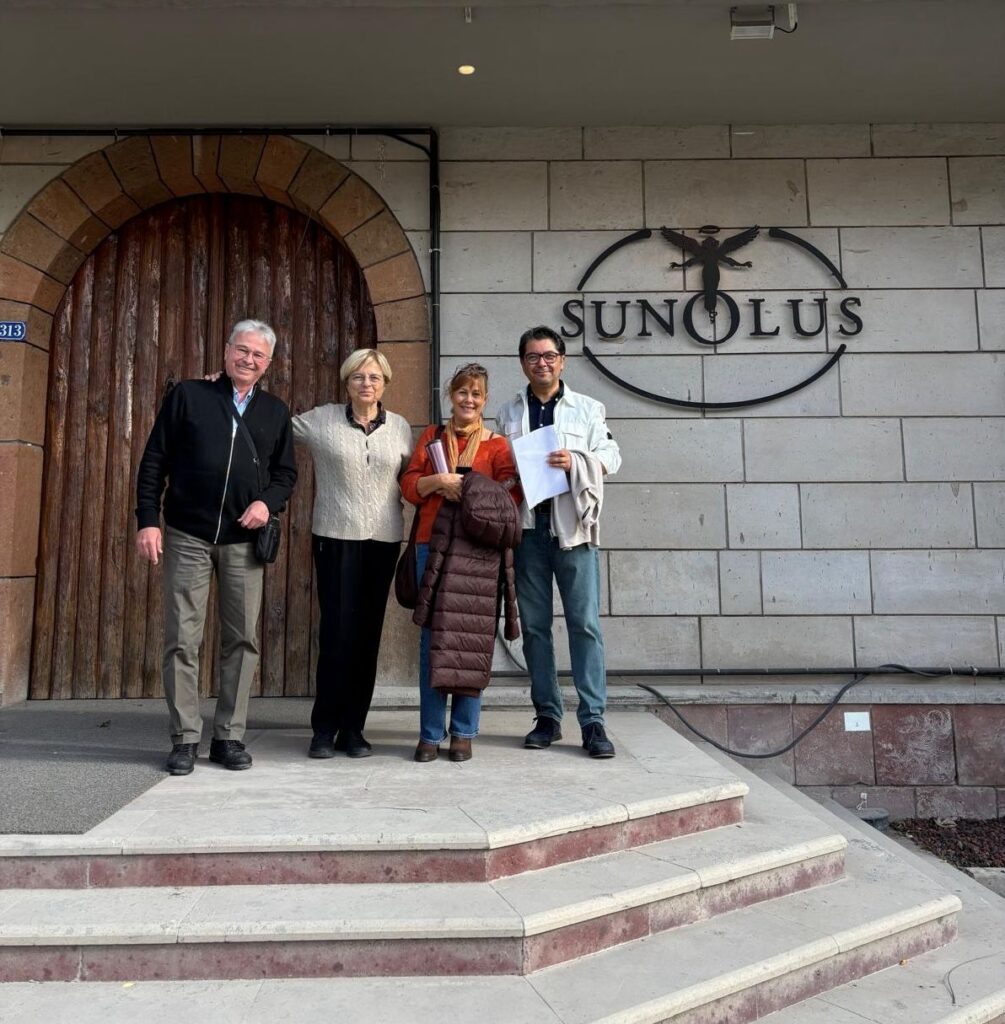
Molu Çiftliği’nde halen tahıl ve taze sebze üretimi yapılıyor. Bağlara biraz sonra geleceğiz. Küçük bir kanatlı bölümü var. Oluş Hanım’ın annesi zamanında yarış atları yetiştirilmiş, ama o faaliyet artık sürmüyor. Ayrıca bizim misafir olduğumuz SUNOLUS Butik Oteli ve Molu Kültür Merkezi de bu çiftliğin sıra dışı bir karakter kazanmasını sağlayan etkileyici yapılar.
Oluş Molu
When you meet Oluş Molu, there’s an undeniable grace in her presence — a quiet, refined energy that you also find reflected in her wines. But once you look closer, beneath that delicacy lies a true Amazon: resilient, perfectionist, and fiercely devoted to her work and culture.
Babasının yaşı ilerleyince büyüdüğü kente geri gelen Oluş Molu, kendi imzasını taşıyacak çiftlik ürünü olarak şarap imalatını seçer. Biyolog olması aslında kendisini üretim sürecine yakın gibi gösterse de, tümüyle yabancısı olduğu bu konunun zorlu başlangıç yıllarının içinde bulur kendisini. Mücadeleci yanına rağmen zaman zaman pes etme noktasına yaklaştığını itiraf etse de, pes etmez ve bizlerin kendi adını taşıyan şaraplarıyla buluşmamız bu sayede mümkün olur.
Vinolus Wines
Vünolus Molu Çiftliği bünyesindeki bağlarında yetiştirdiği üzümleri işliyor. Kendisinden beklendiği gibi bağlar organik tarımla yetiştiriliyor. Hem beyaz şaraplık hem kırmızı şaraplık üzümleri var. Ayrıca “Méthode traditionnelle” olarak adlandırılan ve ikinci fermantasyonun şişe içinde yapılmasıyla üretilen bir doğal köpüklü şarabıyla bir de Pet-Nat şarabı var.
Vinolus’un wine-makerlığını José Hernandes-Fulya Akıncı ikilisi yapıyor ve Oluş Molu’nun bu ikiliyle kurduğu güvene dayanan harika bir ilişkisi var. Hem Oluş Molu’yu hem Fulya-José ikilisini tanıyanlar olarak, bu profesyonel ilişkinin bu denli sağlıklı yürümesini, aralarında oluşturmayı başardıkları gizli dille yarattıklarını görebiliyoruz.
Vinolus, yılda 35 bin şişelik bir üretim yapıyor. Dışarıdan aldıkları üzümler de var. Ama İspanyol esintili Tempranillo ve Kapadokya’nın marka üzümü Emir onların göz bebekleri. Uzun yıllardır Vinolus’un kendi imza şarabı gibi gördüğümüz Emir-Rousanne kupajı da her şarapseverin tanıması gereken, titizlikle üretilen bir beyaz örneği.
Potansiyeli Olan Bir Agroturizm Projesi
Molu Farm shines as one of Kayseri’s most inspiring enterprises. With its eight-room boutique hotel, a refined kitchen that gives a modern yet faithful interpretation of local cuisine, and the warmth of evenings by the fireplace accompanied by their own wines, Sunolus offers a serene alternative to Cappadocia’s tourist bustle.
A potential cultural transformation is also on the horizon. The Molu Cultural Center, a foundation project initiated by Oluş Molu’s late uncle Metin Molu and designed with the team behind Istanbul’s ARTER project, could play a pivotal role in the farm’s evolution.
As a member of Iter Vitis, the upcoming Cappadocia Wine Route will include the Vinolus–Molu Complex — one of Kayseri’s brightest faces, and possibly its rising star.
Wine Bridge
One of the persistent weaknesses of many industries in Türkiye is the lack of collective collaboration — and the wine sector is no exception. Yet Vinolus has taken a refreshing step in that direction. Together with two like-minded producers, Kastro Tireli and Heraki, Oluş Molu launched a project called Wine Bridge — aiming to present Turkish wines to international markets without the burden of ego or branding vanity. We sincerely hope this young initiative flourishes.
In Essence
Through this journey, we rediscovered Vinolus — a producer we had admired from afar. In Oluş Molu, we saw what a determined Anatolian woman can achieve with vision and courage. You can be sure that WAYANA will stand by her, offering every bit of support we can.
May her path stay bright.
Türkiye’de yapılması zor işlerden birini yürüten şarap üreticileri hakkında daha geniş bilgi almak isterseniz, Türkiye’de Şarap Üreticileri: Antik Mirastan Modern Dönüşüme yazımızı inceleyebilirsiniz.
İlginizi çekebilir:
- Türk şarap sektörü için önemli bir açılım sağlayabilecek şarap turizmi konusuyla ilgili olarak Türkiye Şarap Turizmi ve Dünyada Türk Şaraplarının Algısının Değişmesinde Turizmin Rolü yazımızı öneririz.
- Farklı yörelerdeki bağlarda yetişen üzümlerin nasıl farklılaştığını ve bölgelerin özelliklerini Anadolu’nun Teruar Haritası yazımızda inceleyebilirsiniz.
- Şarap yapımcısı (Winemaker) iki kadın profesyonelin deneyimlerini duymak için Türk Şarap Sektörünün İki Aydınlık Yüzü yazımız size umut ve enerji verebilir.