The Origin of the Franc de Pied Movement: PHYLLOXERA
The 1860s marked a period of steadily growing maritime trade between the two sides of the Atlantic. Foods such as potatoes, tomatoes, and corn, which today feel inseparable from European cuisine, had already crossed over from the New World long before and spread rapidly across the Old World.
Among all these newcomers, one thing was absent: the vine and its fruit. The grapevines native to the Americas were fundamentally different from their European relatives. Old World vines, cultivated for thousands of years both as table grapes and for fermentation, formed a strong and prestigious species that dominated global markets.
Maritime trade required wooden packaging, and wooden crates became widely used. When researchers later examined historical records, they found strong indications that the scourge we call phylloxera arrived in Europe either through a small number of imported American vine cuttings or—quite plausibly—hidden in the wooden packing material used for shipments.
The first documented phylloxera sighting was recorded in 1863, in vineyards near the mouth of the Rhône River in southern France. Between 1866 and 1867 it appeared in several more places. In 1869 it showed up on the western coast near Bordeaux, then advanced steadily, reaching the outskirts of Paris by 1885. By then, it had destroyed nearly 40 percent of Europe’s vineyards and dealt a crippling blow to the wine industry.
Science could not eradicate phylloxera then, nor can it today. But a lifesaving workaround was devised. The solution came from America’s native vines. These species were structurally resistant to phylloxera. Their rootstocks began to be used as hosts, and Europe’s ancient vinifera varieties were grafted onto them. Because phylloxera could not harm American roots, European viticulture was rescued.
Avrupa bağcılığı varlığını sürdürme şansına sahip olmuştu ama artık asmaların kök ve gövdeleri kendi özgün, doğal kök ve gövdeleri değildi. Peki bunun bir önemi var mıydı?
‘Evet, var‘ diye düşünenler olayın üzerinden uzun bir zaman geçtikten sonra bir araya geldiler. İşte Franc de Pied böyle ortaya çıktı.
Kendi Köklerine Dönme Arzusu Nasıl Başladı?
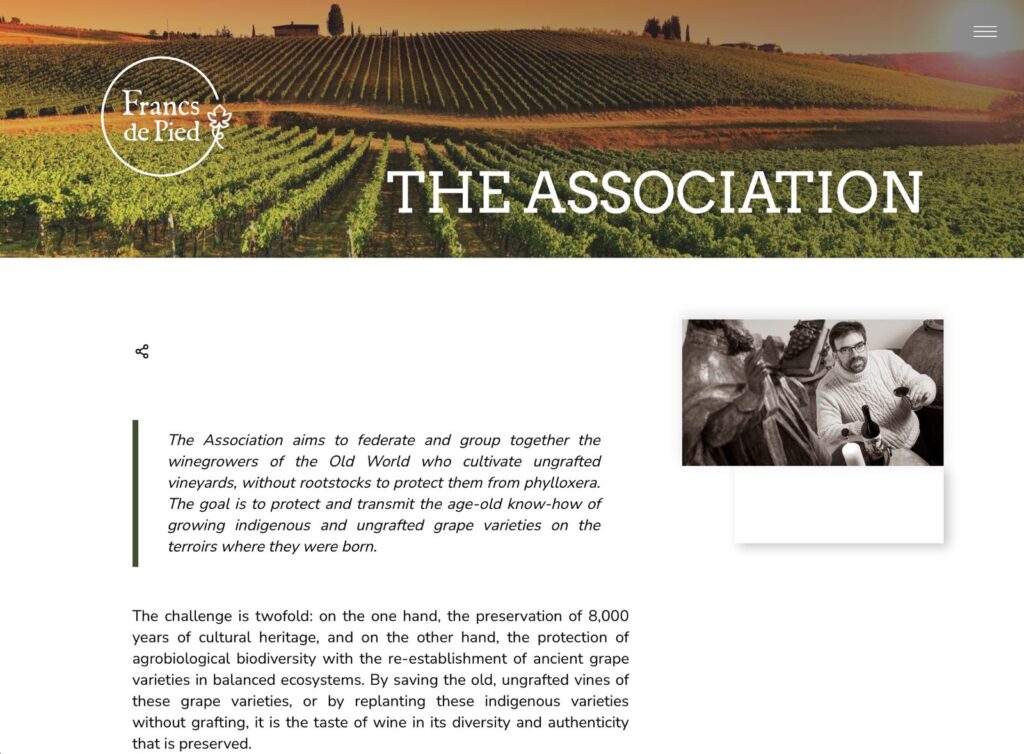
Franc de Pied did not emerge as an institution or a formal organization. It grew out of a shared curiosity among researchers, viticulturists, and small-scale winegrowers:
“Could certain soils allow vines to grow again on their own original roots?”
Starting in the early 2000s, small experimental vineyards were established across Europe. Conditions known to be hostile to phylloxera were revisited: sandy terroirs, volcanic slopes, granitic subsoils, and areas with high limestone content.
Slowly, small pockets of vitis vinifera vines growing ungrafted began to appear. Sometimes it was a single parcel; sometimes only a few rows.
Yet all shared the same purpose: giving the vine a chance to live again on its own roots.
Franc de Pied Bilgi Kutusu:
- Amerikan anacına aşılanmamış asmadır.
- Kendi kök sistemi üzerinde büyür.
- Filoksera nedeniyle son derece nadirdir.
- Kumlu topraklar ve izole bölgelerde daha uzun süre yaşayabilir.
- Kültürel miras ve bilimsel araştırmalar açısından önem taşır.
What Is the Aim of This Approach?
The ideas behind Franc de Pied can be grouped into several key themes:
Asmanın “kök fiziğini” anlamak
Amerikan anaçlara Avrupa üzüm cinslerinin aşılanmasının sebebi Amerikan asmaların köklerinden yararlanmak ve filokseradan korumaktır. Bu durumda toprağa tutunma, besin alma biçimi, su yönetimi gibi hayati fonksiyonların hepsini Amerikan asma belirler. Avrupa asmasının orijinal halindeki kök yapısı, toprağa tutunma biçimi, besin alımı ve su yönetimi tamamen farklıdır. Elbette bu fark meyveye ve, onun işlenmiş hâli olan şaraba da yansır.
Aşılı ve aşısız bağların aromatik farklarını görmek
Bu konudaki değerlendirmeler elbette sübjektif. Somut ölçümlere dayalı değil, duyulara dayalı değerlendirmeler yapılıyor. Ama kendi kökleri üzerinde yetişen asmalardan gelen ürünler daha canlı bir asidite, daha çarpıcı aromalar ve yer yer daha belirgin bir mineralite sunabiliyor.
Filokseraya dayanıklı alanlar tespit etmek
Filokseradan asmayı koruyan bazı bölgeler var, ama her yer uygun değil. Ama bulunan uygun yerlerde küçük ve sürdürülebilir “franc de pied” bağları oluşturmak mümkün.
Geleceğe dair stratejik bilgi toplamak
Bağcılığın tek sorunu elbette filoksera değil. Dünyanın içine girdiği iklim değişimi ve çok uzun yıllardır kullanılan toprakların yorgunluğu gibi başka büyük sorunlar da var. Asmanın kendi kök ve gövdesini daha iyi tanımak, bu değişimlerle ilgili doğru kararlar verilmesi açısından büyük önem taşıyor.
Elbette aşılama yöntemi bir yandan devam edecek. Ama acaba azınlığa düşen özgün kök ve gövdeye sahip Avrupa asmalarının (bilimsel adıyla Vitis vinifera) bize sağlayacağı ne var? Cevap aranan soru bu.
What Has Been Achieved?
Today, Franc de Pied is no longer a romantic fantasy. It is a small but concrete field of research and experimentation. Over the years, several accomplishments have emerged:
Uygun bölgeler haritalandı.
From France to Greece and from Italy to Turkey, sandy, volcanic, and granitic terrains have been confirmed to repel phylloxera.
Tadım verileri birikti.
Hundreds of notes describe aromatic differences. Opinions vary, but a strong trend is clear: Ungrafted vines can produce fruit with a “purer, brighter” profile.
Bilimsel yayınlar arttı.
Dozens of papers have been published. Academic interest has helped frame the subject within a scientific context.
Ticarî üretimler oluştu.
The phrase “franc de pied” now appears on labels and is attracting international curiosity.
What Has Not Been Achieved?
The challenges are equally important:
Complete resistance is impossible
A vineyard planted in unsuitable soil will be lost quickly.
The model cannot be scaled
Most of the world cannot grow vines without American rootstocks.
Economic risk remains high
Ungrafted vines may have shorter lifespans, require more demanding care, and face higher loss rates.
No universal method exists
A successful site in one region may fail entirely in another.
Franc de Pied Şarapları Gerçekten Farklı mı?
Franc de Pied şaraplarının farklı karakter taşıdığı yönünde birçok üretici ve tadım uzmanının gözlemleri bulunuyor. Ancak bu farkın yalnızca aşısız köklerden kaynaklandığını kesin olarak ortaya koyan bilimsel bir uzlaşı henüz yok. Toprak, bağ yaşı, yetiştirme koşulları ve üretim teknikleri de sonucu etkileyen önemli değişkenlerdir. Şarap değerlendirmeleri duyusal analizlere dayalı öznel değerlendirmeler. Dolayısıyla sonuçlar sübjektif ve tartışmasız sonuç veren değerlere henüz sahip değiliz.
Günümüzde Franc de Pied Asmalarının Bulunduğu Bazı Bölgeler
- Kapadokya
- Santorini (Yunanistan)
- Kıbrıs
- Kanarya Adaları
- Şili’nin bazı bağları
- Güney Avustralya’nın filokseradan arınmış bölgeleri
- Fransa’da belirli kumlu parseller ve tarihî bağlar
Final Word:
Franc de Pied is, in a sense, a long-delayed defiance against phylloxera. But success depends on finding those rare corners of nature that inherently protect the vine.
150 yıl önce Avrupa bağlarını yok eden filoksera, gücünden hiçbir şey kaybetmiş değil; fırsat bulduğunda en iyi yaptığı şeyi gözünü kırpmadan yapıp asma köklerini yok ediyor ve bitkiyi ölüme mahkûm ediyor. Bunu yapamadığı toprakların hangi özellikleri taşıdığını artık çok iyi biliyoruz. Bu, en azından güvenli alanlarda orijinal köklere sahip asmaları yetiştirmenin mümkün olduğunu hatırlatıyor.
We must protect such lands and use phylloxera-resistant areas wisely. For the continuity of the vines we have cultivated for thousands of years, this responsibility is unavoidable.
Franc de Pied asmaları yalnızca filokseradan kurtulmuş birkaç eski bağın hikâyesini anlatmaz. Aynı zamanda bağcılık tarihinin en büyük krizlerinden birine verilen yaratıcı cevabı ve doğayla kurulan ilişkinin nasıl değiştiğini de hatırlatır. Bugün bu asmaların korunması, yalnızca geçmişe duyulan saygının değil, biyolojik çeşitliliğin, bilimsel araştırmaların ve kültürel mirasın geleceğe aktarılmasının da önemli bir parçasıdır.
Bu yazı ilginizi çektiyse, aşağıdaki yazıların da üzerlerine tıklayarak göz atabilirsiniz.