Bir müzeye girmeyi çoğu zaman vitrinin önünde durup bilgi okumak gibi düşünürüz. Doğrusu çoğunlukla da öyledir. Ama Asmadan Bağcılık Tarihi Müzesi’ne adımınızı attığınızda önce bir cümle karşılar sizi: “İnsanlar ne zaman zeytin ve üzüm yetiştirmeyi öğrendiler, barbarlıktan kurtuldular.” Thukydides’in iki bin beş yüz yıl önce kurduğu bu cümle, içeride anlatılacak her şeyin anahtarını verir. Burada mesele yalnızca üzüm ya da bağcılık değildir. Mesele, insanın toprağa tutunarak kendini yeniden kurma hikâyesidir. Asmadan Bağcılık Tarihi Müzesi, bağcılığın doğduğu Anadolu topraklarında asmanın ve üzümün izini sürmemizi sağlar.
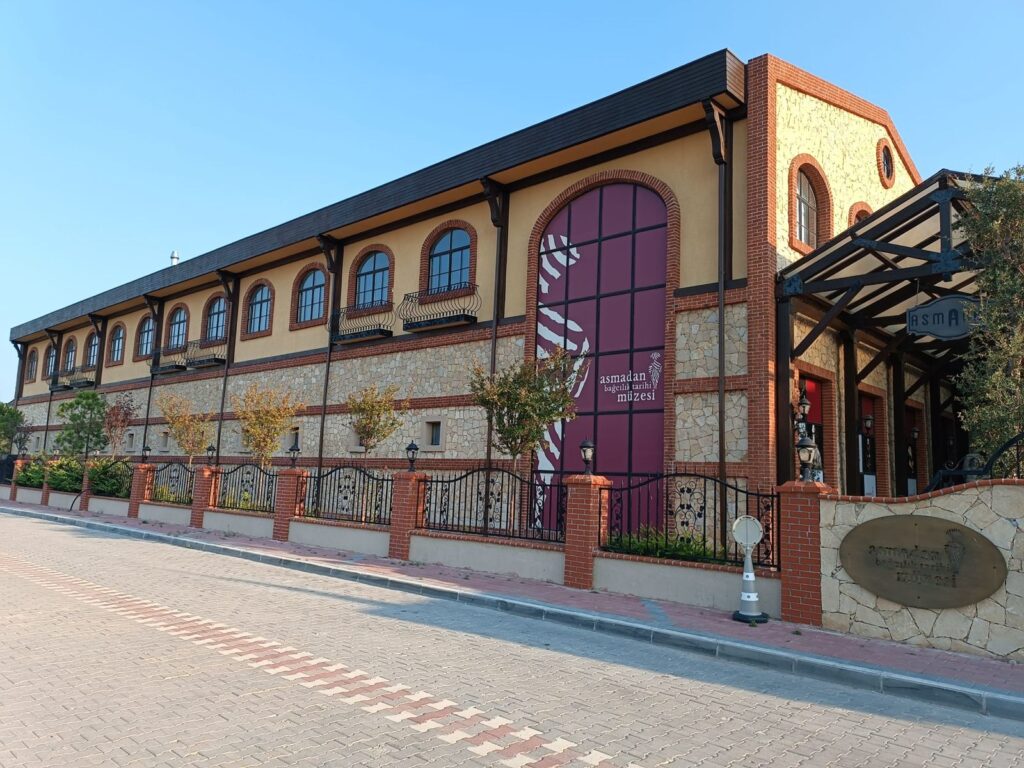
Asmadan Bağcılık Tarihi Müzesi
From the moment you cross the threshold, you begin to trace not an agricultural product, but an idea of civilization. In these lands, the vine and the grape were never just fruit-bearing plants; they became silent witnesses to humanity’s transition to settled life, to the measuring of time, to the act of calling a place “home.” The museum builds its narrative precisely from this point: not mastering nature, but learning to live with it. The vine binds human beings to the soil. Those who cultivate grapes put down roots; a vineyard is not only where a plant takes hold, but where people do as well.
Yabani Asmadan Kültür Asmasına
The story of the Asmadan Museum follows the domestication of the grape across a vast geography stretching from eastern Anatolia to the Caucasus and northern Mesopotamia. A time span of nearly nine thousand years unfolds before you not as a strict chronology, but as a continuous line of narrative. History here is not simply “this happened at that time”; it is the gradual transformation of humanity’s relationship with nature. The passage from wild vines to cultivated ones is not only an agricultural development, but a shift in how humans understand and reshape the world.
Anadolu’da Hayat Bulan Her Uygarlığın Şarapla İlişkisi Vardır
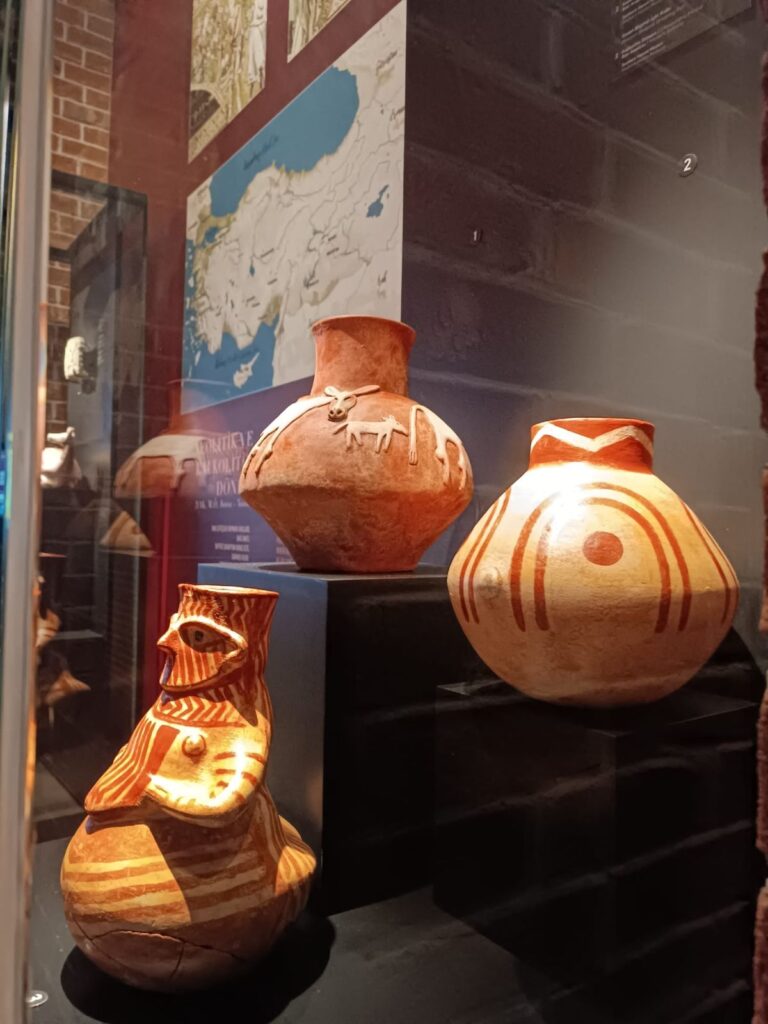
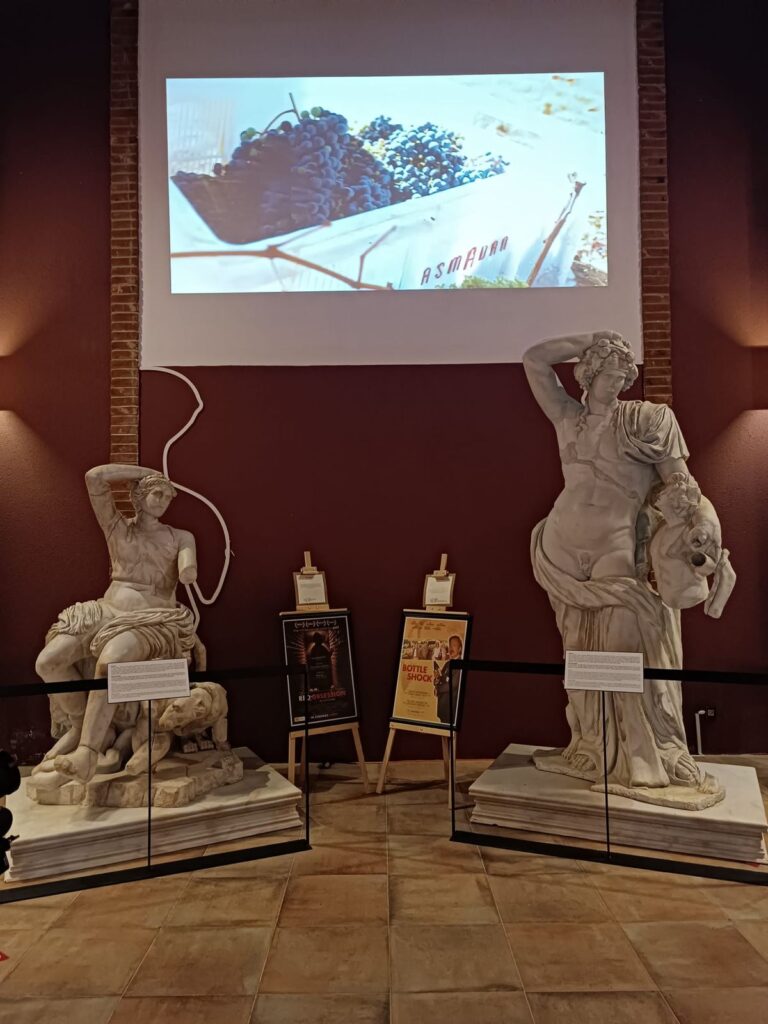
Throughout the exhibition, vessels, ritual objects, and images quietly reveal how grapes and wine have formed a cultural language over thousands of years. Most of these objects are full-scale replicas. Yet this is not a shortcoming, but a deliberate choice. The museum is not a “collection” in pursuit of originals; it seeks to construct a narrative that carries the traces of the past into the present. Through replicas, artifacts from different periods and regions can meet in the same space. The original Hellenistic and Roman pieces placed among them remind us that this story is not a fiction, but rests on a real memory buried in the soil.
Bağcılık Tarihi Aslında İnsanlık Tarihi
As you look at the history of viticulture here, you are in fact looking at the history of humanity. For viticulture is one of the symbols of the transition from nomadic life to settled civilization. Those who cultivate grapes become bound to a land; to establish a vineyard is, in a sense, to establish a civilization. That is why, as you walk along the museum walls, you witness not merely the evolution of a plant, but of an entire way of life. Agriculture, trade, ritual, everyday life, and aesthetics all connect along a long cultural continuum shaped around the vine and the grape.
Geçmişe Gitmek İçin Değil Bugünü Anlamak İçin Kurulan Müze
What sets the Asmadan Museum apart is its ability to construct this narrative without romanticizing it, yet without drowning it in dry facts. Each object on display invites not so much the question “What did people do in the past?” as “What have we forgotten today?” In the modern world, the vineyard is often seen merely as a production site, the grape as raw material. Here, however, we are reminded that the bond between humanity and the vine is not only economic, but deeply cultural and ethical. Civilization was built not by dominating nature, but by learning to live with it, by cultivating respect for it.
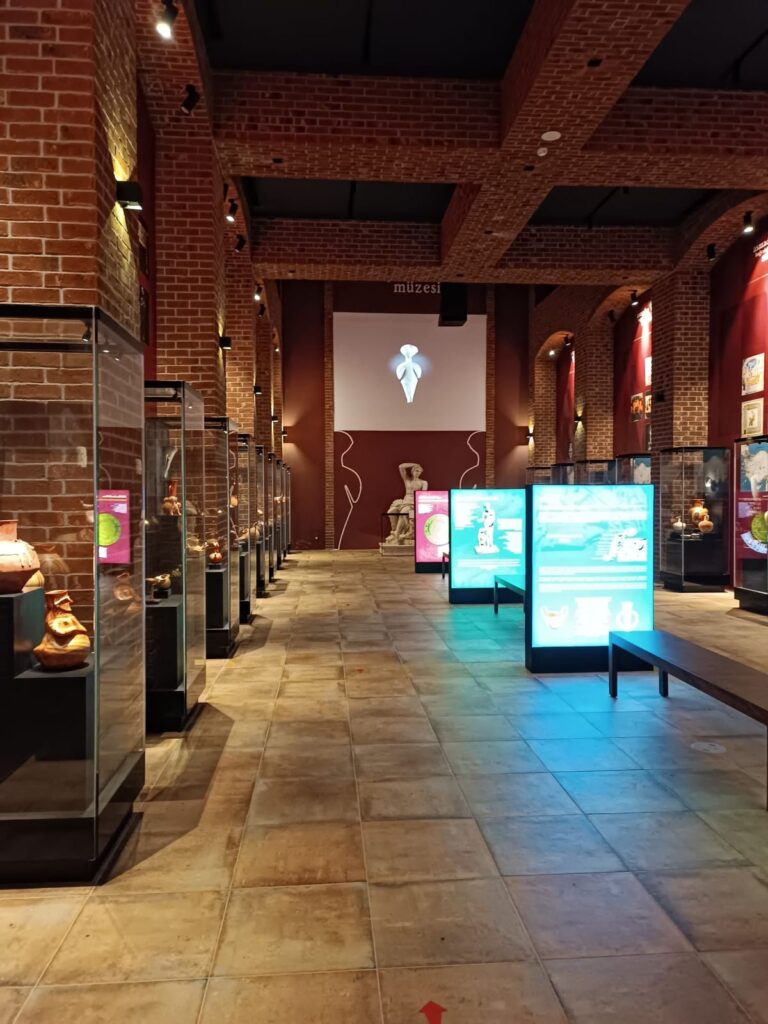
The spatial language of the museum reinforces this idea. As you move between the brick walls, time ceases to be linear and becomes layered. Standing before a display case, you form an invisible connection between a libation vessel from thousands of years ago and today’s wine glass. Technology has changed, forms have evolved, but the meaning remains: human beings do not merely consume what the soil provides; they endow it with meaning, create ritual, tell stories.
For this reason, the Asmadan Museum is more than a “cultural pause.” Everyone who enters is, knowingly or not, drawn into a larger question: How do we relate to the soil today? Do we see the vine, the vineyard, the grape merely as products, or as the continuation of a partnership that spans millennia? Is what we call civilization truly progress, or simply another name for the gradual severing of our bond with nature?
The museum offers no ready-made answers. But it makes one thing unmistakably clear: the history of viticulture is also the history of humanity. And this history is not confined to the past, preserved in museums. It continues to be rewritten in every vineyard, every glass, every table.
Perhaps this is where the true value of the Asmadan Museum of Viticultural History lies. It does not exist to take us back into the past, but to invite us to rethink the present. It asks us to see the grape and the vine once again not merely as agricultural products, but as founding elements of civilization. It challenges our habit of dominating the soil and reminds us that living with it is both possible and necessary.
This is not a call to nostalgia. On the contrary, it is a warning for the future. If we truly accept the history of viticulture as the history of humanity, then we must also redefine how we look at the soil, production, and culture. Civilization does not sustain itself once it is established; it must be reimagined and revalued by every generation.
Behind every museum stand both visible and invisible people. Only those involved can truly grasp how much thought goes into the placement of a map, the wine jug behind glass, the earthen vessel, the amphora leaning against the floor. Projects like the Asmadan Museum of Viticultural History can only come to life through the dedication of those who believe in them. Fortunately, a capable and tireless dreamer like Murat Yankı, together with the Asmadan investors who deemed this project worth realizing, were able to come together. Thanks to them, we now have a museum we can take pride in. We are grateful both to them and to the countless cultural workers whose names we may not know, but whose labor we encounter as we walk through the museum.
Asmadan Bağcılık Tarihi Müzesi’nin bize neler söylediğini doğru anlayalım.
Toprakla bağımızı kaybedersek, yalnızca bir tarım geleneğini değil, insan olmanın temel bir parçasını da yitiririz. Uygarlık, doğaya hükmettiğimiz yerde değil; onunla birlikte yürümeyi öğrendiğimiz yerde başlar.
Ve belki bugün, her zamankinden daha fazla, bu hatırlatmaya ihtiyacımız var.