Bilim, doğanın gizemli işleyişinin sırlarını deşifre etmemizi sağlayan en güçlü araç. Türümüzü, yani insanı, diğer canlılardan ayıran yanı da bilimin açıklığa kavuşturduğu işleyişi, teknoloji sayesinde yaşamımızın içine entegre eden çözümler üretebilmesi. Homo habilis, yani alet kullanan insandan bu yana ve giderek hızlanan bir ivmeyle, yüz binlerce yıldır bunları yaşıyoruz.
Looking back from 2026, it has been barely 150 years since we grasped that the formation of wine is governed by a single-celled microorganism: yeast. Yet in that short span, through painstaking accumulation of knowledge, we have come to exert influence over domains we once believed forever beyond control.
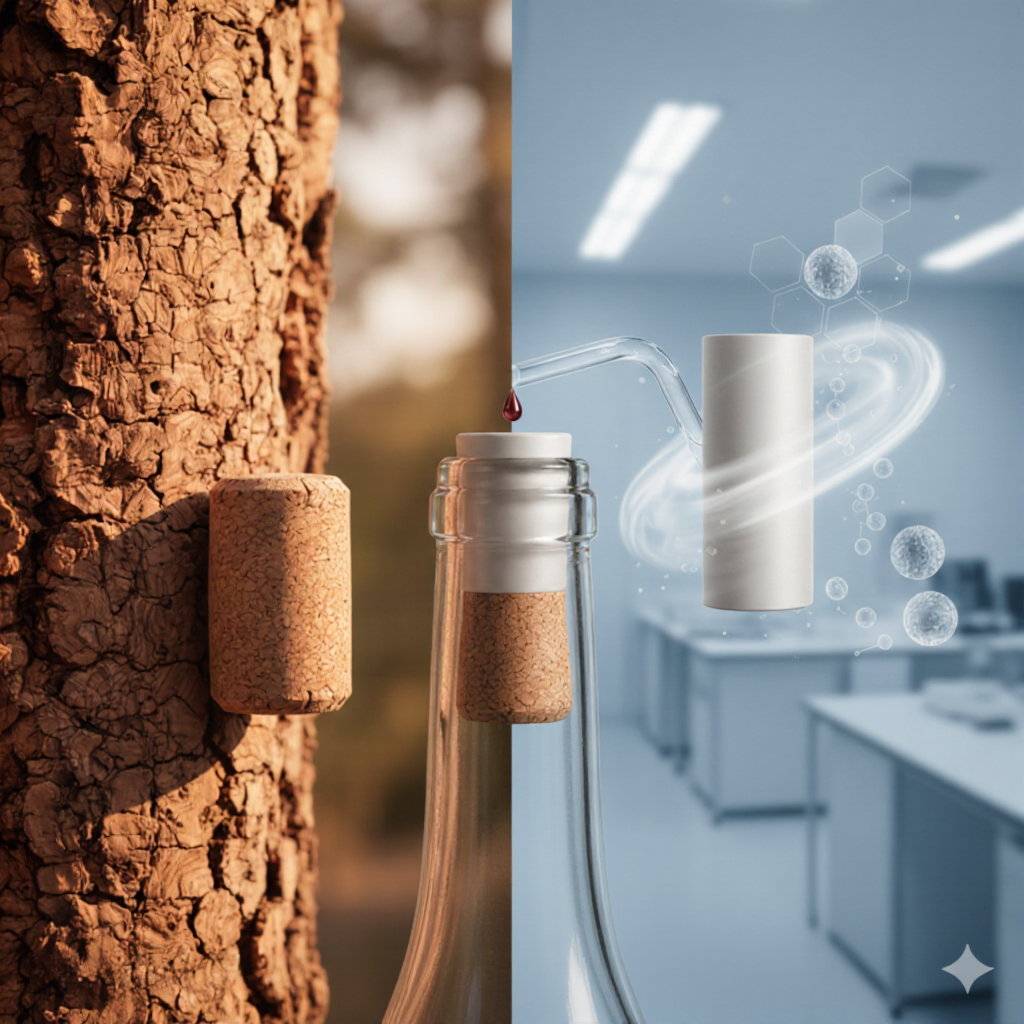
One of those domains—the stopper that safeguards a wine in the bottle—is the subject of this essay. Today, cork falls into two main categories: natural and technological.
Peki bugün şarap üreticileri neden hâlâ doğal mantar kullanıyor? Eğer teknoloji bu kadar ilerlediyse neden tamamen sentetik çözümlere geçilmedi?
The Bottle’s Guardian: Why the Search for Alternatives?
For centuries, natural cork was the wine bottle’s only legitimate companion. Harvested from oak bark, its porous structure allowing wine to breathe, it became the emblem of a ritual. But one defining trait of anything natural is unpredictability. Countless producers have endured—and will continue to endure—the experience of a painstakingly crafted vintage being ruined in seconds by that musty flaw we know as “cork taint” (technically, TCA contamination).
We do not need to go far back in time. As recently as forty years ago, “faulty wine” was an unfortunate accident, something a producer could only accept with resignation. In today’s world, however, this is no longer a tolerable weakness. New, reliable solutions now render such risks unnecessary.
This piece is written to help you assess, with clarity, the closures used on wine bottles.
Technological Corks: Where Engineering Meets Nature
When we speak of “technological cork” today, we are not referring to a simple plastic plug, but to a designed object shaped by advanced physical and chemical processes. One of the most transformative examples in this field is DIAM, whose production process reveals just how sophisticated modern closures have become.
Supercritical CO₂ and Purification:
DIAM teknolojisi, mantarı doğal kusurlarından arındırmak için büyüleyici bir yöntem kullanır. Mantar granülleri “süperkritik” haldeki karbondioksit ile yıkanır. Bu haldeki CO2, hem sıvı gibi nüfuz eder hem de gaz gibi yayılır; mantarın derinliklerine saklanmış TCA moleküllerini ve diğer 150 farklı istenmeyen koku bileşiğini söküp atar. Bu, asmanın köklerinden gelen mineral hafızayı kirletebilecek her türlü dış etkenin laboratuvar hassasiyetiyle ayıklanmasıdır.
Hassas Bir Teruar Tasarımı:
Teknolojik mantarlar, sadece bir kapak değil, bir “yaşlandırma kontrol ünitesidir.” Üretim aşamasında mantarın yoğunluğu ve içindeki mikrokürelerin oranı değiştirilerek, mantarın şaraba ne kadar oksijen sızdıracağı (OTR – Oksijen Geçirgenlik Oranı) milimetrik olarak ayarlanır. Bu durum, üreticiye şu lüksü tanır: “Ben bu şarabın 3 yıl boyunca meyvemsi tazeliğini korumasını istiyorum” diyen üretici DIAM 3’ü; “Bu şarap 10 yıl boyunca yavaşça evrilmeli” diyen ise DIAM 10’u seçer.
Natural and Technological Corks: A Shift in Storage Paradigms
One of the most ingrained habits among wine lovers—“store bottles horizontally”—actually arose from a vulnerability of natural cork. Being a living material, natural cork dries and contracts if it is not kept moist by contact with wine, allowing uncontrolled air ingress and oxidation.
With technological corks, this necessity disappears. Their binders and homogeneous structure provide inherent stability. Because they retain their physical form regardless of humidity, they maintain their seal even when bottles are stored upright. This represents a quiet revolution in retail, cellaring, and restaurant practice. The natural cork’s need to “stay wet” yields to the technological cork’s “structural poise.”
Peki, teknolojik mantarla kapatılan şişelerin yatık saklanmasında sakınca var mı? Yok. Hem alışkanlıklar hem de doğal ve teknolojik mantarlarla kullanılarak kapatılmış şişelerin birlikte saklandıklarını düşünecek olursak, yatay saklamak yine de anlamlı bir seçenek.
The Future in the Glass: Ritual or Reliability?
Bundan 150 yıl önce Stevenson “Eşekle Seyahat” kitabındaki yolculuğunu yaparken Florac’ta içtiği bir kadeh Volnay için, “şarabın kanında bir lüks içinde” aktığını söyler. O gün bu bir lükstü: hem iyi bir rekolteye denk gelmek hem de mantarın azizliğine uğramamak lüksü. Bugün sahip olduğumuz know-how sayesinde iyi bir rekolteye denk gelmek yine bir şans olsa da artık mantarın azizliğine razı olmak gibi bir çaresizliğimiz yok.
Doğal mantar, sunduğu o eşsiz açma ritüeli ve ekolojik mirasıyla her zaman “aristokrat” bir yere sahip olacak. Ancak bugünün üreticileri, ister birkaç bin şişe üretim yapan mikro işletmeler isterse milyon şişe üretim yapan devler olsunlar, teknolojik mantarlar hepsine bir laboratuvar güvenliği sunuyor. Şistli toprakların mineralini, kireçtaşının ferahlığını ve asmanın emeğini şişeye hapsederken, artık doğanın kaprislerine değil, bilimin hassasiyetine güveniyoruz.
Gelecekte doğal mantar ortadan kalkacak mı?
Whether the wine in your glass has been sealed with oak bark or with an engineered product refined through supercritical processes, what truly matters is that it reaches you without any compromise to the values it represents. It must be said: through knowledge shaped by capable technologies, we are granted protection against nature’s unpredictable surprises.
Peki, bu gelişmeler doğal mantarın ortadan kalkması anlamına gelecek mi? Kabuklarından yararlandığımız Quercus suber binlerce yıldır yaşamını sürdüren bir tür. Yaşamını bundan sonra sürdürmesinin önünde de bir engel yok. Bu da demektir ki doğal mantarın varlığını sürdürmesinin önünde de bir engel yok.
Doğal Mantar ve Tekno Mantar
| Doğal mantar | Tekno mantar |
|---|---|
| Her biri benzersizdir. | Standart üretimdir. |
| Çok uzun yıllık geçmişe sahiptir. | Yeni teknolojidir. |
| Düşük de olsa TCA riski vardır. | TCA riski yoktur. |
| Oksijen geçirgenliği değişebilir. | Kontrollü geçirgenlikle donatımıştır. |
| Prestij algısı yüksektir. | Tutarlılık avantajı sağlar. |
Notes for the Curious
*Süperkritik CO2 koşulu nedir?
Karbon dioksit gazı 31,1o C ve 72,8 atmosfer basınçta ve daha yukarı ortamlarda hem gaz gibi yayılabilir hem de sıvı gibi akarak çözücü bir performans gösterir. Doğal mantar parçacıklarının içindeki riskli bileşikleri bu sayede temizlemek mümkün olur.
*Mikroküreler Nedir?
Microscopic filler materials that enhance the sealing capacity and performance of cork granules.
Bu konu ilginizi çektiyse, aşağıdaki yazıların da üzerlerine tıklayarak inceleyebilirsiniz.