A story captured in a glass is never just about grapes and barrels. Soil, light, wind, and water all play their part — but in recent years, one element has claimed the spotlight: altitude. How does a vineyard’s elevation above sea level influence grapes and wine? Why has the industry’s view of altitude changed over time? And how is climate change rewriting this relationship? This piece explores these questions through both Turkish examples and global parallels.
The Biophysics of Elevation: Acidity, Aroma, Phenolics
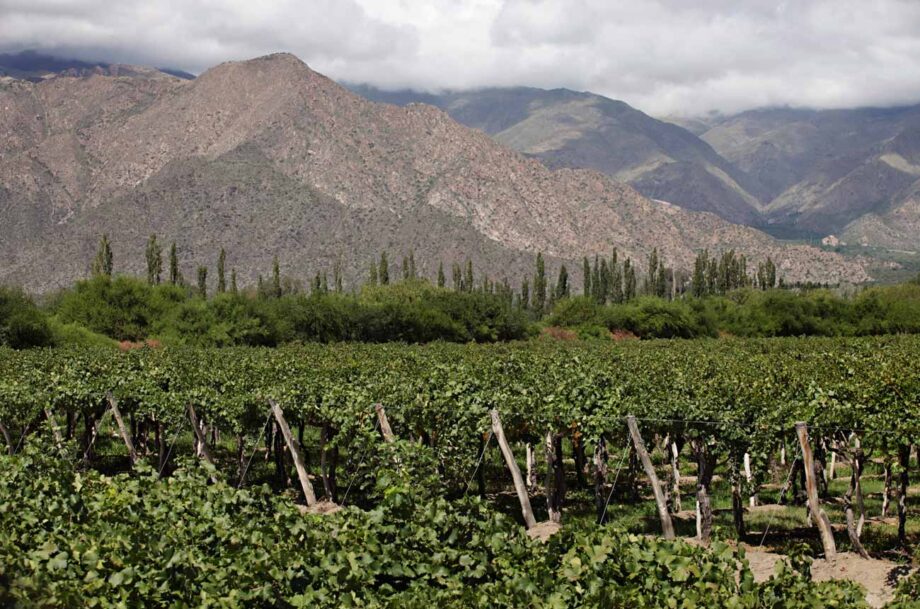
The signature of high-altitude vineyards is their cooler average temperatures and pronounced day-night (diurnal) temperature swings. Sugars accumulate under the daytime sun, while cooler nights preserve acidity — translating into freshness, vibrancy, and aromatic precision in the glass. As the atmosphere thins, increased UV exposure triggers greater phenolic synthesis, contributing to color depth and tannin texture in reds. The ripening window tends to lengthen, reducing the risk of over-ripeness — though hazards like spring frost become more likely. In short, altitude isn’t a magic wand, but combined with the right soil, slope, and vineyard management, it becomes a powerful lever of quality. For those who wish to dive deeper, the research of Dr. Gregory V. Jones offers essential reading on the subject.
A Shift in Perception: From “Cold Risk” to “Cool Refuge”
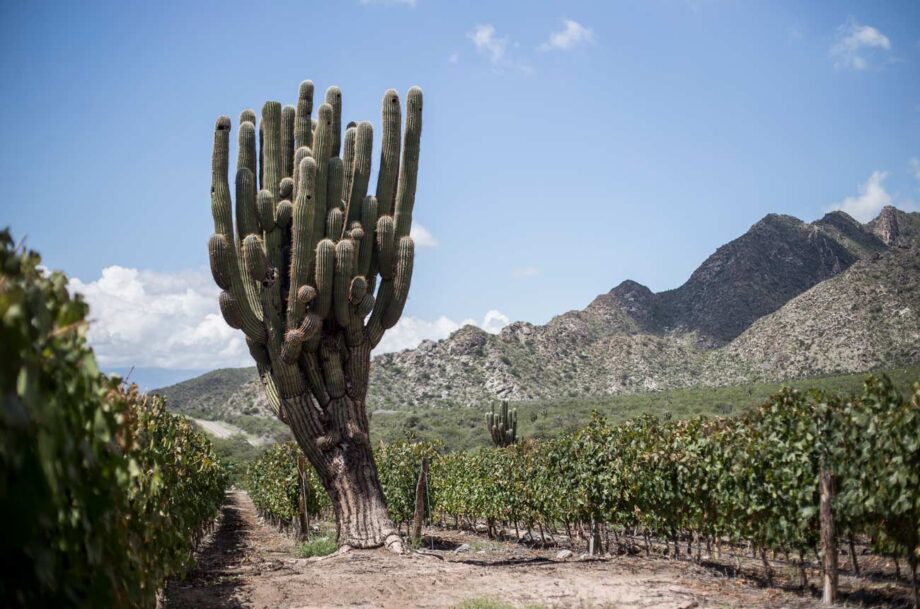
Traditionally, altitude was associated with low yields and frost risk. But over the past two or three decades, as global temperatures have risen, the narrative has reversed. Growers seeking relief from heat stress have turned toward cooler microclimates — and altitude has become desirable. Today, vineyards climb beyond 3,000 meters in the Andes, with parcels in Salta reaching 3,300 m and redefining the upper limits of viticulture. The current Guinness record belongs to Lhasa, Tibet, at 3,563 m — proof of how far wine’s ecological adaptability can stretch.
The same shift has become a deliberate climate-strategy: producers are moving northward or upward. Studies show that many existing vineyard zones will face new suitability challenges by the century’s end, while cooler regions and higher plateaus may open new opportunities.
Three Examples from Turkey: Elmalı, Cappadocia, Elazığ–Diyarbakır
With an average national elevation of 1,141 m, Turkey already lives close to the sky. Roughly 57 % of its land lies above 1,000 m, meaning that when thoughtful vineyard design meets these cooler microclimates, altitude becomes a natural advantage.
Elmalı (Antalya) – Nestled on the foothills of the Taurus Mountains, vineyards sit around 1,100 m. Producers often emphasize the freshness and aromatic clarity born of the region’s strong day-night contrast. The altitude tempers summer heat and allows long, balanced ripening. The area’s sole producer, Likya Wines, reports Boğazkere vines taking up to 210 days to ripen, with harvests extending into November.
Cappadocia (Nevşehir) and the Central Taurus (Mersin) – Volcanic soils and elevated plateaus naturally define this region. Altitudes of 1,000–1,200 m are typical, especially for whites like Emir, which thrive on lively acidity and delicate profiles. In Mersin, producers working with Aküzüm and Patara varieties cultivate vines on plateaus above a thousand meters.
Elazığ–Diyarbakır Corridor – In the ancient viticultural basins of Eastern and Southeastern Anatolia, vineyards typically lie near 900 m. Producers highlight the “high-altitude” effect and wide diurnal ranges that preserve acidity and balance in hot summers. Even higher examples exist: 7Bilgeler Winery sources Öküzgözü grapes for its Vindemia series from two contracted vineyards at 1,450 m and 1,550 m.
Together, these examples reveal a shared “cooling strategy” across Turkey’s diverse climates — elevation as a way to protect the authentic voice of native varieties.
“How High Can You Go?” — Global Comparisons
In the Andes, the vineyards of Salta above 3,000 m are not just record-breaking curiosities but stylistic frontiers: intense UV exposure and wide diurnal ranges yield concentrated yet vibrant wines. The Tibetan example, meanwhile, illustrates the technical and logistical extremes of high-altitude viticulture. Seen in this light, Turkish producers working between 1,000 – 1,200 m operate in a globally significant range — a strategic band where freshness, structure, and identity converge.
Climate Change: Not an Escape to Altitude, But Its Smart Use
Climate models suggest that many coastal and low-lying regions may struggle with economic sustainability, while cooler zones and high plateaus will gain importance. But “just go higher” isn’t a solution. Altitude brings its own hazards: spring frost, wind stress, water scarcity, erosion. True sustainability lies in smart vineyard design — choosing the right slope and aspect, maintaining ground cover, managing windbreaks, and capturing water effectively.
“What About the Numbers?” — The Data Gap
At a global scale, there is no publicly verified dataset showing the proportion of vineyards located between 1,000–2,000 m or above 2,000 m. Academic studies map climatic classifications, but few translate elevation bands into percentages of total vineyard area. This gap itself is telling: the industry would benefit from combining satellite-based elevation layers with official vineyard inventories to produce a transparent “altitude map” of viticulture.
In Turkey, the topography speaks for itself — 57 % of the land lies above 1,000 m. The examples of Elmalı (~1,100 m), Cappadocia (1,000–1,200 m), and Elazığ (~900 m) show how these altitudes help local varieties maintain freshness and stylistic consistency, especially during hot summers.
Conclusion: Altitude as Strategy, Not a Number
Altitude is no longer a “cold risk” — it’s the key to balanced ripening and stylistic clarity. In regions like Elmalı, Cappadocia, and Elazığ–Diyarbakır, elevation helps native grapes express their true character. As global viticulture adapts to a warming planet, altitude, when used intelligently, becomes both a quality tool and a sustainability strategy. Still, it isn’t a cure-all. Soil, slope, aspect, water, and frost management must complete the equation. Altitude, in the right place with the right vine at the right time, is the hidden metronome that keeps a wine’s rhythm in tune.