President Donald Trump has once again stirred concern in the wine industry by threatening to impose a 200% tariff on European wines, particularly those from France. While this is not the first time such a threat has surfaced, the renewed tension has prompted widespread reaction from industry experts, retailers, and wine lovers across the United States.
Let’s see what it really means if the new 200% tariff is applied:
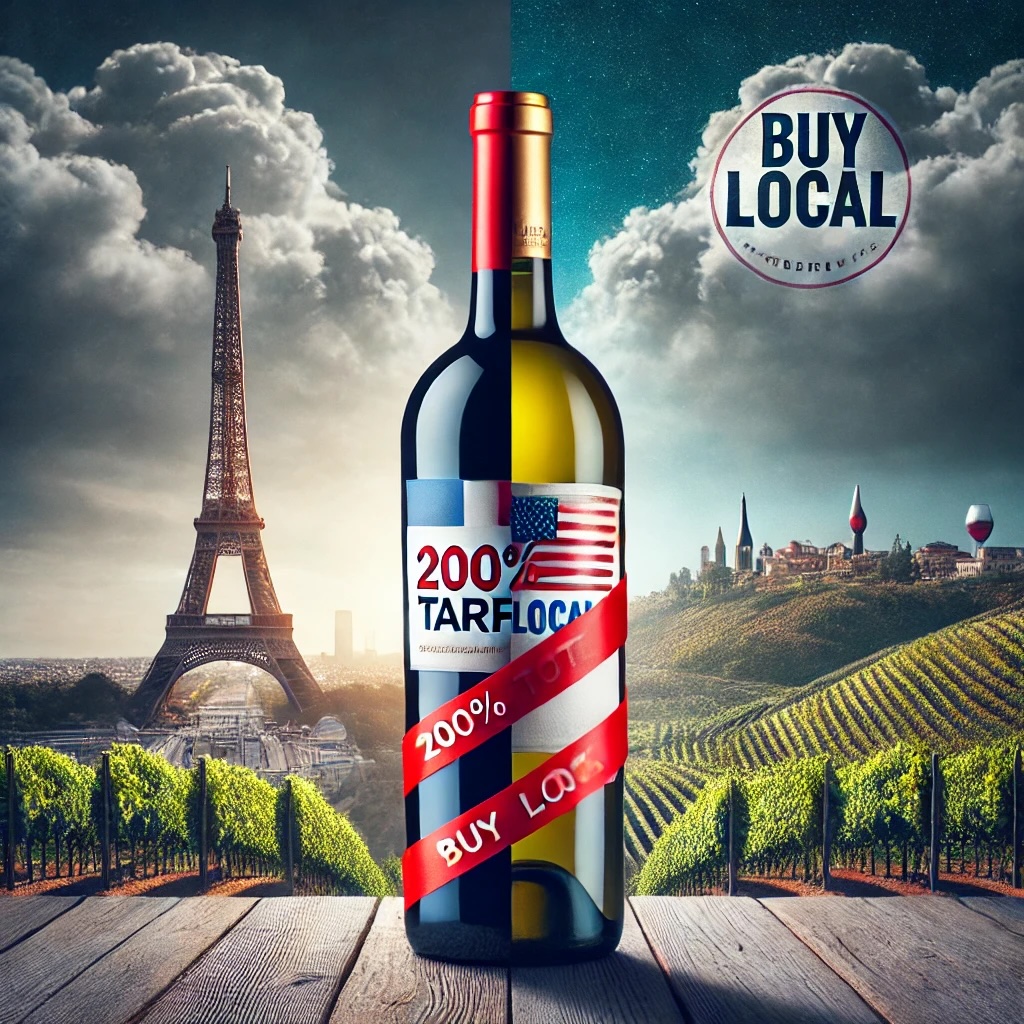
Price Shock for Wine Lovers
If enacted, this tariff would dramatically raise the price of imported European wines. A $25 bottle from France could suddenly cost more than $75. Such a spike would place Old World wines out of reach for many consumers and restaurants, particularly those that specialize in traditional food and wine pairings.
Strain on Importers, Retailers, and Small Businesses
U.S. wine importers, distributors, and boutique retailers—many of whom rely heavily on European wines—would face significant financial challenges. Industry leaders fear some may be forced to close shop, losing decades of investment and connections with small, artisan winemakers overseas.
A Temporary Win for Domestic Wines?
Some U.S. producers might enjoy a short-lived boost in demand as consumers look for more affordable options. However, experts caution that long-term consequences, especially in the form of European retaliatory tariffs, could hurt American wine exports and damage international partnerships.
Beyond Business: Cultural and Educational Consequences
European wines are not just commercial products—they are cultural artifacts and essential to wine education, sommelier training, and hospitality programs. Limiting access to these wines narrows the richness of wine appreciation in the U.S. and threatens the diversity that has fueled the American wine revolution.
What Experts Are Saying
Ben Aneff, president of the U.S. Wine Trade Alliance, called the potential tariff “a political stunt” with the potential to devastate small businesses.
Importer Kermit Lynch warned of the long-term effects on artisan producers and consumer choice.
Wine economist Mike Veseth added that retaliatory measures could hit U.S. producers hard in European markets.
Final Thoughts
While the tariff is still just a threat, its implications are real. From rising prices to disrupted business models and cultural setbacks, the potential 200% tariff could reshape the wine landscape in the U.S. at every level. The industry watches closely—and nervously—as political winds continue to shift.