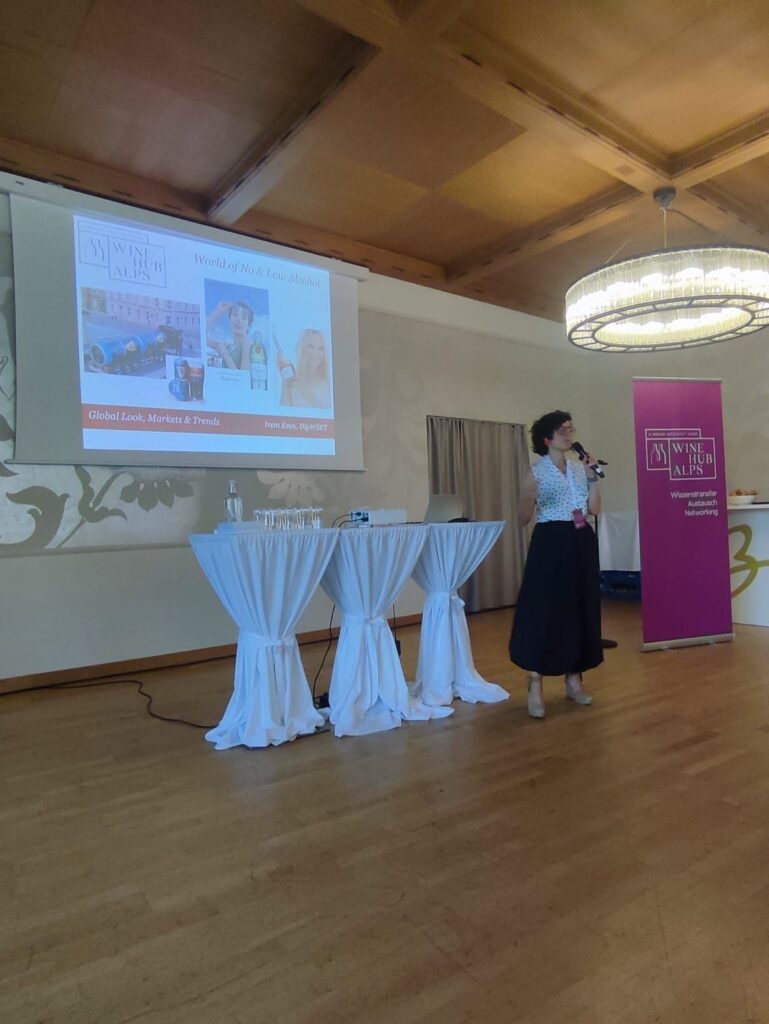
Küresel gastronomi dünyasında yeni nesil tüketici alışkanlıkları hızla değişirken, pazarın en yenilikçi ve dikkat çekici yükselişini hiç kuşkusuz alkolsüz şarap kategorisi gerçekleştiriyor. “Temmuz ayının başında katıldığımız online toplantılardan birinin konuğu İrem Eren’di. Eren halen İspanya’da yaşayan ve dealkolize şarap konusunda alanının en yetkin isimlerinden birisi. Bu toplantı kendisinin de bu alanda ana dilinde yaptığı ilk sunumdu. İrem Eren’in aramızdan biri olarak böyle bir pozisyonda olması hepimiz için bir övünç kaynağı, başarılarının devamını görmek en büyük arzumuz.
Sunumda neler vardı?
Eren sunumu beş başlıkta planlamıştı; bu plana göre ilerledik. Başlıklar şunlardı:
- A Contemporary Overview of the Wine Industry
- Legal Regulations and Definitions
- Markets and Consumer Behaviour
- Production Methods and Technologies
- Opportunities
Şarap sektörüne genel bakış
Eren opened her presentation with a striking slide showing three non-alcoholic products side by side: beer, gin, and wine. This image, in itself, signalled that we’re entering a whole new era in beverage consumption. She highlighted how rising temperatures are leading to increased sugar levels in grapes, which in turn naturally raises the alcohol levels in wine.
While the specifics vary from country to country, she pointed out that taxes imposed based on alcohol content directly influence retail prices. As a result, reducing alcohol levels by even a few degrees has become an increasingly common trend in the industry.
Şarap bölgelerinin yan yana yer aldığı bir grafikte 1990-1999 yıllarında %13 olan ortalama alkol değerinin 2010-2019 aralığında %14,5’e yükselmesi sıcaklığın şeker ve alkol üzerindeki etkisini gösteriyordu.
Bu bölümdeki bir başka başlık tüketici eğilimlerindeki değişimleri gösteren Dry January, Zebra Stripes gibi içkiyi azaltmaya yönelik çağrıların karşılık bulduğu, tüketicilerin çeşitli sebeplerle içki tüketimlerini azaltmayı tercih ettikleri gerçeğiydi. Ayrıca Dünya Sağlık Örgütü (WHO)’nun miktarı ne olursa olsun alkolün sağlığa zararlı olduğunu ve kanser riskini artırdığını resmi dille açıklamasının kaçınılmaz etkileri olacağının altını çizdi.
2008-2023 döneminde dünya genelinde şarap tüketiminin %7 azalmasına karşın düşük alkollü ve alkolsüz (No&Lo) şarabın yükselme eğiliminde olduğunu gösteren değerler geldi karşımıza. 2022 yılında 11 milyar USD büyüklüğündeki alkolsüz pazarının 2032 yılında 23 milyar doları aşmasının beklendiğini ekledi.
Eren’in bu aşamada altını çizdiği önemli bir bilgi var. Tüketicilerin %76’sının halen alkol tükettiğini belirten konuşmacı, No&Lo kategorisinin şarap içenlerden değil, şarap içmeyen ama alkolsüz bira, Coca-Cola, meşrubat içenlerin şarap dünyasına kazanılması için bir fırsat olarak görülmesi gerektiğini belirtti.
Yasal düzenlemeler ve tanımlar
Ülkeler bazında büyük farklılıklar gösteren mevzuatların yarattığı kafa karışıklığının büyük olduğunu, her ülkenin şarabı alkolsüz kabul ettiği oranın farklılık gösterdiğini dile getirdi konuşmacımız. %0,1 alkolü tolerans sınırı olarak kabul eden ülkeler varken, Japonya’nın bunu %1 kabul etmesi ilginç bir detaydı.
Avrupa Birliği’nin 19 Haziran’da sunulan bir teklifle Birlik bünyesinde ortak bir alkolsüz standardına giden sürecin başlatıldığını, önümüzdeki yıl bunun nihai düzenleme olarak uygulamaya geçeceğini tahmin ettiklerini öğrendik. İlginç ayrıntılardan birisi de Avrupa Birliği kanun yapıcılarının şarap tüketiminin düştüğü bu dönemde, alkolsüz ve düşük alkollü ürünlerin sektörün toparlanmasına katkısı olacağını dile getirmeleri. Bu yönleriyle bizim ülkemizden çok farklı bir yerden baktıkları aşikâr.
Daha sonraki konuşmalarda söz alan Lermonos Şarapları kurucusu Hürriyet Hanım, kendisinin TAPDK ile yaptığı görüşmeyi özetledi. TAPDK’nın alkolsüz şarap kategorisi için Şarap Üreticileri Derneği gibi bir meslek örgütü tarafından kendilerinin dikkatine getirilmesini istediklerini öğrendik. Halihazırda bizim gıda kodeksimizin tanımlarında alkolsüz ürünlerin karşılığı olmadığı için üretmek de ithal etmek de sıkıntılı.
OIV (Uluslararası Bağcılık ve Şarap Örgütü) tanımında %8,5 ve üzerinde alkole sahip üzümden fermente edilen içecekler şarap olarak kabul ediliyor. Dealkolize şarapların %0,5 alkol ve daha düşük alkol içermesi şartı var. %0,5 ile %8,5 arasında alkole sahip, yani alkol oranı azaltılmış şarapları da “Partially Dealcoholized-Alkolü Düşürülmüş” olarak adlandırıyor.
Küresel Şarap Pazarında Yeni Nesil Eğilim ve Alkolsüz Seçenekler
No&Lo kategorisinde ilk 10 ülkenin başında açık arayla Almanya geliyor. Almanya’yı İspanya, ABD ve Japonya izliyor. İngiltere ve Fransa birbirine çok yakın miktarlarla beşinci ve altıncı sırada. Sonra da Brezilya, Avustralya, Güney Afrika ve Kanada’yı görüyoruz. Şaraplar arasında alkolsüz köpüklüler öne çıkıyor.
Eren drew special attention to Australia. When China, its biggest export market, halted wine imports, Australia responded by building three major facilities for dealcoholization. This move significantly impacted both production and local consumption dynamics.
Consumers in the No&Lo segment are divided into four distinct groups, recognized globally:
- Abstainer (17%) → Those who never consume alcohol
- Blender (20%) → Those who balance alcoholic and non-alcoholic consumption
- Trailer (21%) → Those open to trying alcohol occasionally
- Substituer (43%) → Those who differentiate between consuming alcohol with meals and abstaining at other times
Beyond alcohol, other concerns are increasingly shaping consumer choices. Issues like sugar content, calories, fats, and additives are coming under growing scrutiny. An interesting aside involved cannabis—once illegal, now legal in some places. Eren noted a rising curiosity among consumers who want alternatives that might “make them feel good” without involving alcohol.
Eren also highlighted how the price range for products in this category has expanded dramatically. Whereas in the past, the market was dominated by low-priced options, now premium products are emerging. Bottles priced as high as $80 signal this transformation.
Bira ve cin üreticisi kurumların markalarında bir değişiklik yapmaya gerek görmeden alkolsüz ürünleri çıkardığını, ama şarapta farklılaştırmış ürünlerin öne çıktığını görüyoruz. Bira ve cinin alkollü ve alkolsüz örneklerindeki tat performansının ayırt edilmeyecek kadar iyi olduğunu belirten konuşmacımız, bunlardan cinde dealkolizasyon yapılmayıp farklı üretim süreciyle gerçekleştirildiğini, biradaysa karbondioksitin varlığının biraya avantaj sağladığını dile getirdi. Cinin burundaki aromada kusursuz bir performansı varken, sek haldeyken tadının birden yavanlaştığını, ama kullanım şeklinin daha çok kokteyller olduğu için sorun yaşanmadığını hatırlattı.
Şarabın dealkolize edilmesindeki önemli sorunlardan birinin hacminden %15 gibi bir kısmının kaybedilmesi olduğunu, bunun da özellikle gövde yapısını olumsuz etkilediğini söyledi.
Üretim yöntemleri ve teknolojiler
Eren described three main dealcoholization techniques, all requiring fully ripened grapes and stable wine as starting points. SCC, used in Australia, and GoLo, originating from South Africa, both operate on vacuum-based distillation and can process between 600 to 2,200 litres per hour. During production, alcohol collects in one tank, the alcohol-free wine in another, and the aroma compounds in a third. The third method is a German technology known as Solos, which differs by using a specialised filtration system to separate aromas from the wine. This technology is relatively new, and Eren mentioned that she expects to learn more about it in the coming months.
Son söz ve fırsatlar
The No&Lo segment is clearly expanding its market share. Yet, it’s equally true that many devoted wine lovers remain sceptical about non-alcoholic wines. As a relatively young category, the No&Lo segment doesn’t yet have decades of accumulated knowledge behind it. However, this will inevitably change in the coming years. For instance, while the current recommendation for non-alcoholic wines is a maximum of five years of bottle aging, this guideline may evolve as understanding grows. Interestingly, natural cork, a crucial element in the aging process of traditional wines, is not recommended for non-alcoholic wines because micro-oxygenation can cause rapid deterioration.
Nonetheless, this is not merely a passing trend. Non-alcoholic wine undoubtedly serves the needs of certain consumers—whether for health reasons, pregnancy, or the necessity of driving. Simultaneously, it offers producers a new avenue to counteract growing anti-alcohol lobbying efforts.
In short, the non-alcoholic wine sector is rapidly expanding, driven both by health considerations and market potential. Technological advancements continue to support this growth, even though consumer perceptions still show some resistance. Despite these challenges, this segment is here to stay and holds significant promise for the future.
Böyle bir alanda bizim topraklarımızdan bir profesyonelin sesini duymak hepimize çok iyi geldi. Teknolojik kısmı ne olursa olsun, İrem Eren’in rehberimiz olmasından hepimiz çok memnun olduk. Alkolsüz şarap konusuna zaman zaman geri döneceğiz. En azından kime soracağımızı da artık iyi biliyoruz.
Küresel ölçekte yükselen bu yeni nesil tüketici eğilimleri, alkolsüz alternatiflerin pazardaki yükselişi ve endüstrinin dönüşüm dinamikleri ilginizi çekiyorsa, blogumuzdaki diğer köklü strateji yazılarımıza da göz atabilirsiniz:
Yeni nesillerin alkol tüketimini azaltma tercihlerinin ve bu küresel pazar daralmasının bağ sökümlerine uzanan derin ekonomik krizlerini rasyonel verilerle incelediğimiz Şarap Tüketimindeki Düşüş ve Yansımaları makalemizi okuyabilirsiniz.
Geleneksel şarap dünyasındaki katı ve kurumsal tescil sınırlarının, bu tarz dinamik ve yenilikçi pazar trendleri karşısında üreticilerin elini kolunu nasıl bağladığını felsefi olarak tartıştığımız Tradition or Constraint? The Appellation System at a Crossroads analizimize göz atabilirsiniz.
Farklı coğrafyaların ve kültürlerin restoranlarında bir kadeh şarabın servis standartlarının, ülkelerin misafirperverlik ve tüketim alışkanlıklarına göre nasıl değiştiğini incelediğimiz Which country's restaurants are kindest to wine lovers? sosyo-kültürel çalışmamızı ziyaret edebilirsiniz.
Türkiye pazarında hem bu küresel eğilimlerin hem de yerel ağır yasal kısıtlamaların yarattığı baskıyı, butik üreticilerin çıkış yollarını ve kolektif direnç modellerini ele aldığımız iki ciltlik dev manifestomuz için Türk Şarapçılığının Geleceği: Ufukta Işık Var mı? – 1 ve Türk Şarapçılığının Geleceği: Yerel Çözümler ve Umut – 2 yazılarımızı inceleyebilirsiniz.