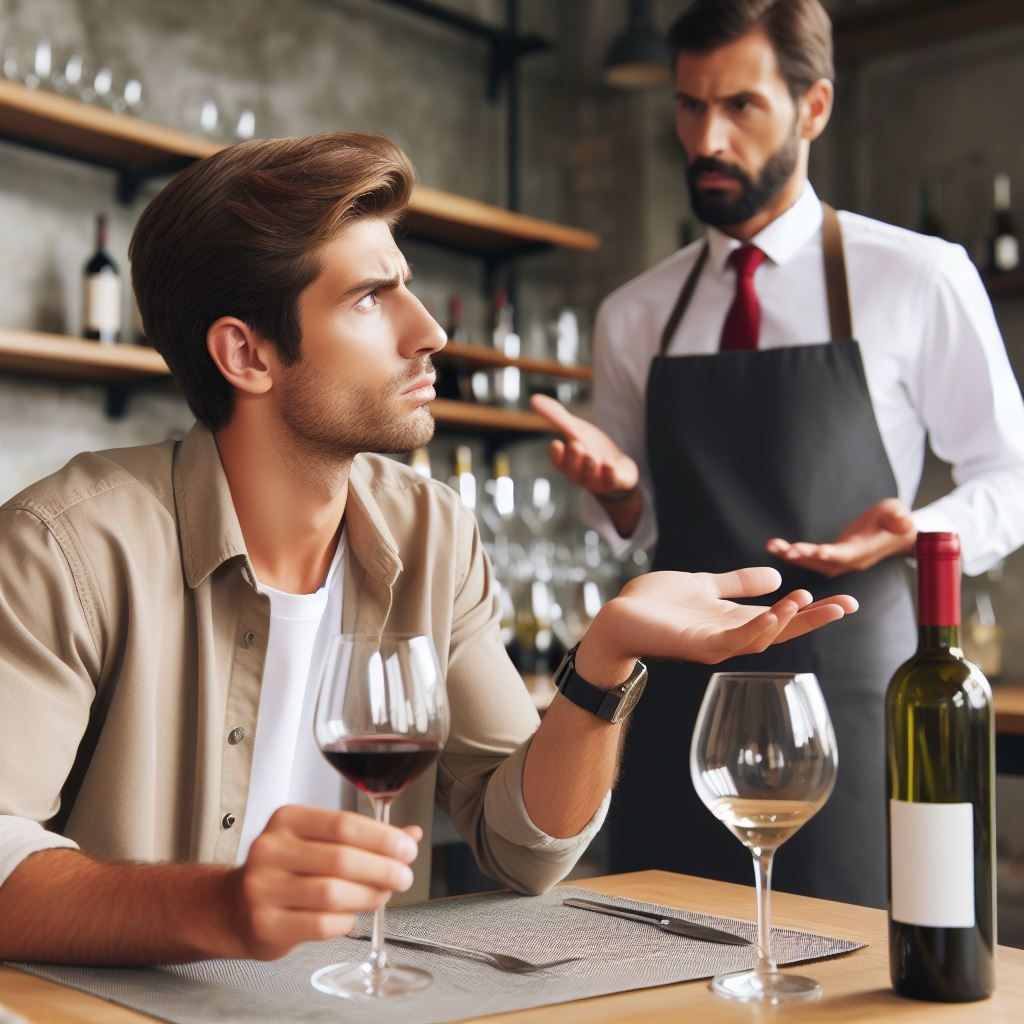
You may come across snobby wine enthusiasts in wine-bars and restaurants that serve wine, including WAYANA. These types immediately catch your eye as they interrupt the sommelier and try to show that he also knows wine. Here are the salient features of the wine snobs who stand out with their behavior.
The first is to aim to make the wine steward sweat with the questions he chooses, moving the conversation from a productive exchange of information to a place dominated by wine jargon. For example, while it makes sense to ask whether the acid value of the red wine being discussed is higher than the average acid value, asking about the effect of malolactic fermentation on flavor can spoil the fun.
Criticizing the manufacturer without taking into account its unique identity while making price evaluations is one of these topics. The price of a wine made from the same grapes by an industrial giant that produces 20 million bottles a year should not be considered the same as the price of a wine produced by a winery that produces 10,000 bottles in total, spending three years of effort before releasing it to the market.
Ordering the most expensive wine while thinking it is the best wine is another example. At WAYANA, we show the wines with the same features but in different price segments and leave the choice to the guest according to the budget allocated to the wine. WAYANA also has an additional advantage: Our guest can taste it before making the final decision.
Especially in restaurants, the headache caused by those who know a lot about food pairings can be great. Trying to show that you know better than sommeliers, whose professional responsibilities are to provide correct guidance based on the experience they have gained over time, is one of the disturbing signs.
We should not forget the wine snobs who intervene and correct the information given about wine. Those who express their opinions, from the regions of the vineyards to the characteristics of the harvest, have the weakness of highlighting their own differences rather than sharing the information they have.
Since serving by the glass is more prominent at WAYANA, we don't often come across ‘wine experts’ who order bottles, smell the corks and comment. But we should not forget that there are real experts in the wine world who make judgments based on corks of the opened bottles.
The wine is solid and reflects the characteristics of the grape, but the person who ordered it sends it back because he does not like the bottle. We do not experience this at WAYANA because our guest tastes the wine before ordering the bottle. However, returning the bottle without justification is a common situation and is not appropriate unless there is a justified reason.
There are also wine snobs who believe that visiting the place where wine is produced provides an overwhelming advantage and highlight this. While it is possible to have a very enjoyable conversation, using this as an advantage is one of the signs of wine arrogance.
Wine is not just an alcoholic beverage, it is a common denominator of a much richer life culture. Moreover, the basis of our excitement for wine is that it surprises us every day. Instead of using wine as a tool to show off its superiority, it would be much smarter to devote it to discovering a new feature of wine every day, wouldn't it?