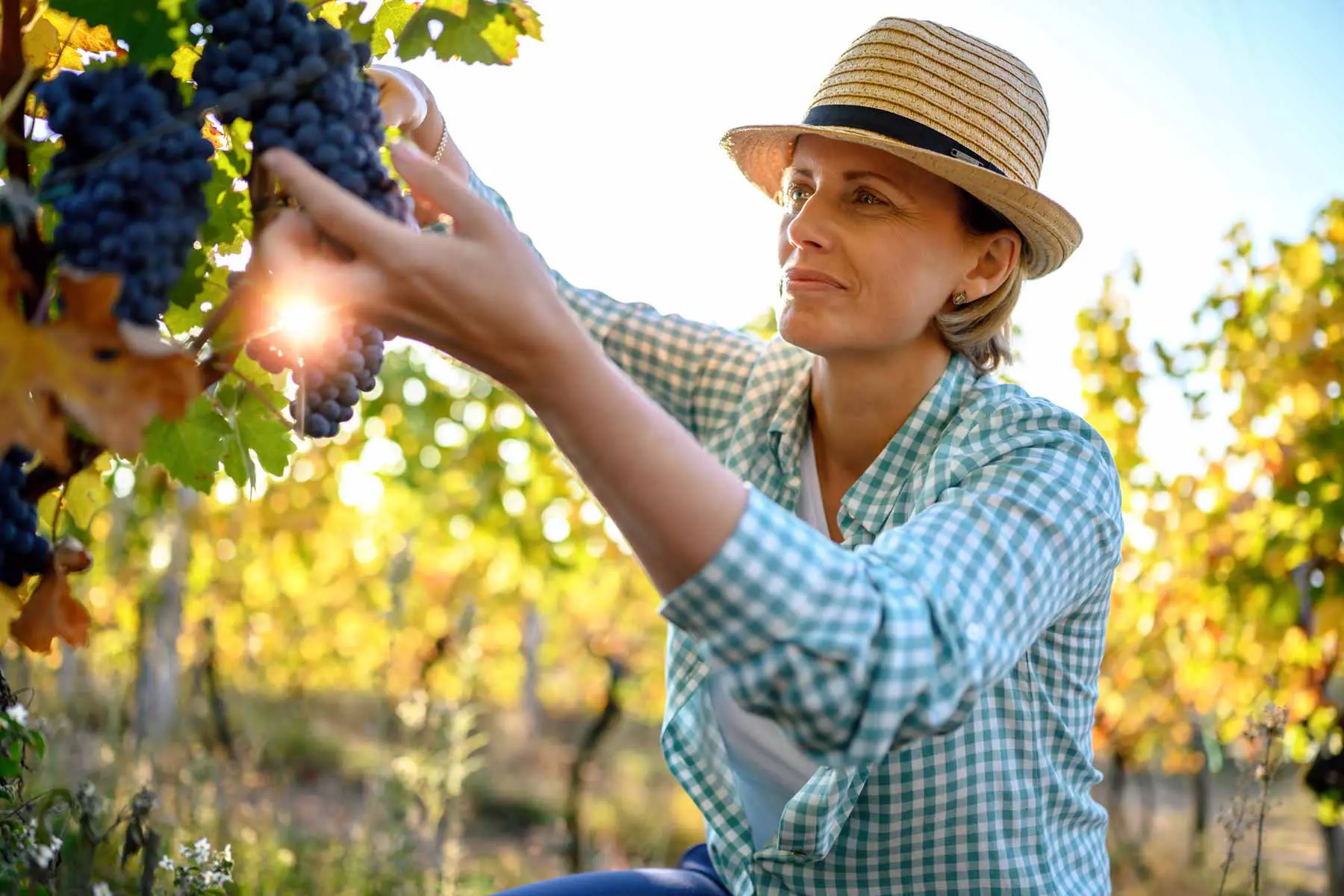
No one in their right mind would deny the contributions of technology to winemaking. Looking back briefly, it's been less than two centuries since we became aware of the scientific truth behind fermentation. During this time, the wine world has witnessed many developments that have increased both efficiency and quality. In fact, the changes in the last two hundred years of the roughly ten-thousand-year history of wine are incomparable to the previous millennia.
In today's winemaking processes, we see a widespread use of both simple and complex tools. What's more, we observe that the previous generation's mechanical solutions are being replaced by optical and electronic equipment, with signs pointing towards the emergence of the next generation of products integrated with artificial intelligence in the coming years. Amidst all this change, let's come to the very simple question in the title: Is there still a place for crushing grapes with feet in today's world?
Nearly all companies involved in winemaking use equipment that combines the tasks of destemming and crushing grapes. However, some producers in the Iberian Peninsula and California prefer and highlight the traditional method of foot crushing over this mechanical solution. Particularly appealing from a cinematic perspective, does this festive method reflect in the quality of the wine?
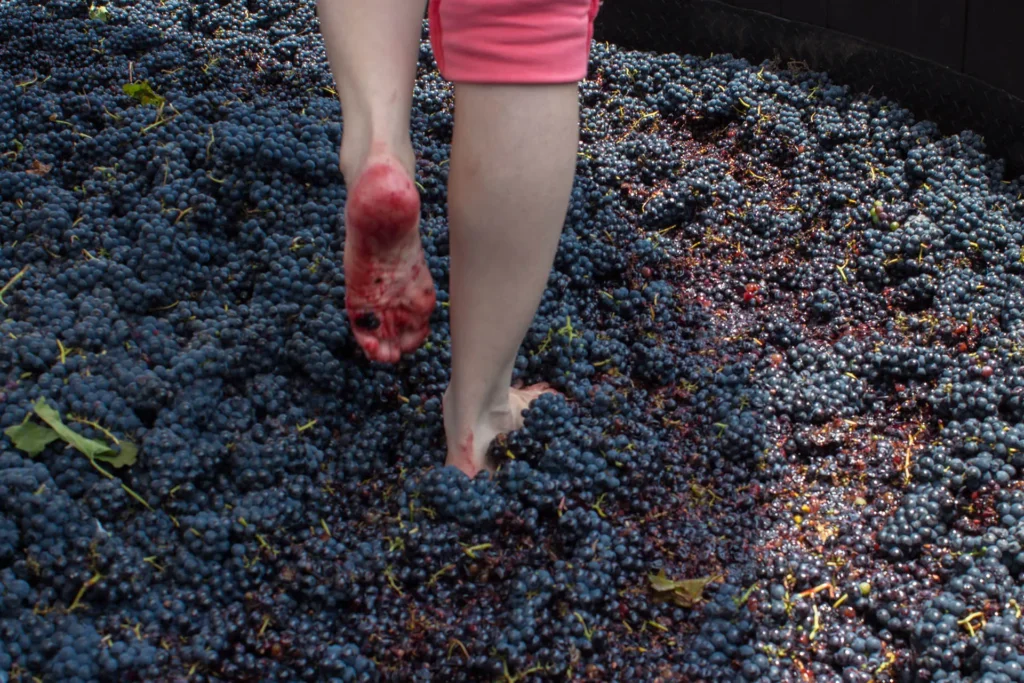
Those who prefer this method say yes. For example, they argue, when you squeeze a grape between your thumb and forefinger, you control the pressure you apply. This level of control isn't possible with a mechanical press, which functions like a vise. Therefore, controlling the tannin effect caused by crushing grape seeds is best managed by leaving this process to human discretion. One proponent of this method says they prefer to crush whole clusters with feet first and then destem.
While discussing the potential negative impact of crushing seeds on tannin levels, another winery debates increasing foot pressure during crushing to enhance tannins in a Cabernet Sauvignon, which they believe will be softer on the palate due to the season's quirks.
Producers who choose foot crushing, which philosophically parallels the increasingly popular biodynamic farming practices worldwide, argue that it offers advantages in skin contact with grape juice. They affirm that the skin contact achieved through foot crushing contributes to the complex identity of the wine.
One can't help but wonder: From a hygiene perspective, isn't it necessary to consider the dirt from people's feet in foot-crushed wines? The answer is ready: Vineyards are already open spaces. Dust carried by the atmosphere and bird droppings are among the many external factors that naturally inhabit the grape skin throughout the growing season, and none of these pose a danger to the final product for human consumption. The reasons include the low oxygen levels reduced by fermentation, alcohol conversion from sugar, and the acid in wine preventing pathogenic growth. Amidst all this, foot dirt doesn't hold much significance.
In summary, there remains a traditionalist group in the wine world that still prefers foot crushing grapes, and their numbers are even growing. It must also be admitted that watching foot crushing can evoke a range of emotions!