In February 2025, wine critic Jamie Goode attended the Pinot Noir 2025 conference held in Christchurch, New Zealand. During the congress, he was deeply impressed by a talk delivered by Nigel Greening, founder of Felton Road Winery, in which Greening shared his thoughts and positioning regarding the future of the wine industry.
In truth, Nigel Greening voiced out loud what many of us have been quietly thinking. With Jamie Goode’s permission, we’re pleased to share Greening’s words with you here.
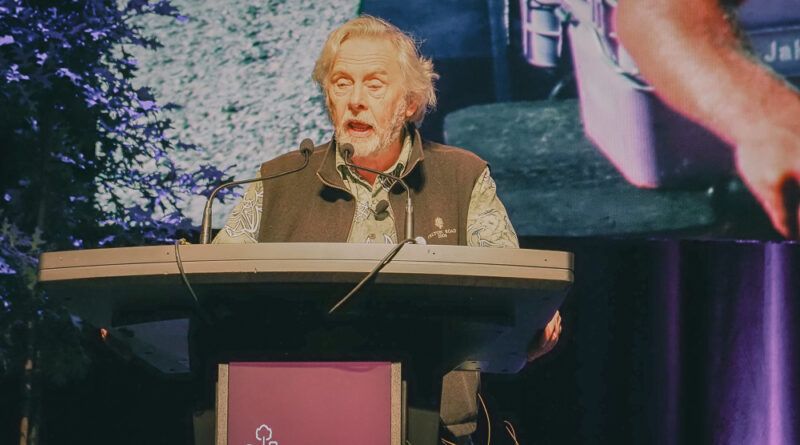
Nigel Greening’s Speech
We’re living in strange times… It’s profoundly unsettling. So much of the world as we know it is shifting, and in moments like these, we’re all tempted to look backward… to better times—or at least, times we remember as being better. And that’s exactly what I want to talk about today: how we navigate these waters we find ourselves adrift in… how we resist the urge to keep glancing over our shoulders, and instead look forward toward a better future.
There’s no doubt the wine world is facing serious challenges. Just recently, I was talking to a leading port producer who was practically in a state of panic—and I can’t really blame him (if I were making port, I’d probably be panicking too!). He’s convinced that the anti-alcohol lobby is about to wipe out his entire business. I suspect it’s easier to cling to that kind of explanation than to admit that perhaps people simply don’t want to drink what he’s making anymore.But one thing is certain: health-conscious movements are indeed impacting wine sales, particularly among young professionals. These younger consumers are either choosing total abstinence or, if they do drink alcohol, they’re gravitating more toward cocktails.
Then there’s the near-collapse of Bordeaux sales. The world’s largest fine wine system has practically vanished from the market for now, and there’s no obvious way back. The big châteaux can no longer sell their wines at the prices they once demanded, and the smaller producers can’t sell theirs at any price at all. Burgundy, too, has had its own rude awakening: the 2023 en primeur campaign brought a massive but inconsistent vintage, exaggerated prices, and a customer base that’s increasingly frustrated. The whole notion of “fine wine” seems to have become outdated and somewhat tainted—bloated prices, an aura of exclusivity, and an image crafted largely by older white men and Asian male collectors. (And yes, I say this as an older white man myself!)
Added to all this, we face the disruptions of climate change, widespread social instability, the looming threats of ongoing conflicts and political anarchy… It’s a daunting picture when you step back and look at it.
We must find the courage to throw out this old, outdated wreckage. And we know that if we want to broaden wine’s appeal, we have to strip it of unnecessary mystery. So how do we do that? Let me give an example:
One of the core pillars of fine-wine snobbery is the belief that great wines shouldn’t be drunk “before they’re ready.” Good wine, it’s said, only “comes into its own” after twenty years in a cellar. But why? Historically, wine needed time to soften and resolve its harsher edges—that’s how this cult of aged wines took root. Of course, there’s absolutely nothing wrong with enjoying mature wines—but it shouldn’t be a requirement. People shouldn’t have to own a cellar just to drink good wine. And producing a wine that tastes fantastic the moment it’s released doesn’t diminish its value—in fact, it enhances it.
So why not talk about deliciousness instead of pontificating endlessly on minerality, texture, or length on the palate? Why not say, “This wine will be fabulous tonight,” instead of “Wait ten years”? We have to let go of clinging to the wreckage of “fine wine” and start speaking in a language our future customers actually relate to. Simplifying the language of wine doesn’t mean dumbing it down—it means letting go of pretentiousness.
And most importantly… I believe we have to stop being exclusionary and start being inclusive. Throughout its history, wine has been about inclusion and friendship. It’s about gathering together, talking, sharing ideas, laughing, confiding in each other—all over a glass of wine and some bread. Wine is a brilliant antidote to the false illusion of connection that social media offers. Are young people really abandoning wine? Or have they simply forgotten how to gather physically and enjoy one another’s company? We’ll never succeed in bringing people together if we keep championing exclusivity!
What creates resilience in this market? I believe it lies in shifting away from outdated snobbery and exclusion and embracing broader social values. Socially conscious, successful, sought-after, environmentally responsible, well-priced, approachable… There’s a long list of values, and carrying more than one of them definitely strengthens resilience. That’s probably why Felton Road has gathered so many certifications: today’s consumers are increasingly skeptical of vague marketing claims, and certifications are a way of saying, “We really mean what we say.”
So where does Felton Road stand in all of this? Frankly, we’re uncomfortable being seen as part of the fine-wine tradition. Because that tradition has become boring, snobbish, and arrogant. It fosters exclusivity, and I’m tired of it. We don’t want to be Burgundy’s stand-in anymore—the crazy prices, the frequent inconsistencies in quality, the clinging to increasingly outdated notions of terroir… Those things don’t represent us.Nor do we fit neatly into the so-called “natural wine” crowd, even though our wines are made as naturally as anyone’s. Are we organic? Biodynamic? IWCA? B Corp? All these labels are less like flags we wave than hats we wear when appropriate. So who do we belong to?
This is where I’m reminded of Pascaline Lepeltier and her wonderful book A Thousand Vines. Lepeltier often uses the phrase “Living Wine.” She doesn’t intend it as a formal category, but she’s referring to honest, characterful, and engaging wines made by artisans. But there’s something even richer in the term itself: wine that is grown and made in a way that cares about life—not just the life of the vine, but the entire living ecosystem around it. In other words: inclusive, not exclusive, farming. Wine made by allowing local microorganisms to steer the process, rather than being forced into submission by the winemaker’s ego, lab-derived products, or excessive technology. And likewise, approaching the winery as its own living biome. It’s understanding that the people who produce the wine should not merely survive but truly live—meaning they should earn a good living, be healthy, and feel supported. Just as the vines and the wines need the same care and support. It calls for winemakers who care as much about ethics as aesthetics. This encompasses social, ethical, climate, environmental, low-impact, and sensitive production practices—producing something that is both admirable and inspiring. Not exclusive wine, but inclusive wine. That’s the essence: leaving exclusion behind and embracing inclusivity.
Most groups define membership with certain entry requirements: certifications, scores, prices, pretentiousness… These are all fences, when what we really need are gates. An inclusive approach. Maybe we do need a shared values manifesto—but not rigid rules. And such a manifesto shouldn’t be fixed and dogmatic but rather flexible and dynamic. There’s tremendous opportunity here for regenerative viticulture. The advantage of regenerative farming is that it focuses on carbon and, thus, climate change—the biggest threat facing both our industry and our customers’ well-being. But unlike organics or biodynamics, it doesn’t follow the “our way or nothing” mentality.
Organic and biodynamic producers rarely talk seriously about climate change—or if they do, it’s not very convincing. Worse still, I’ve heard people say, “We’re biodynamic, so we don’t have to do anything else for climate change.” Organic production, meanwhile, takes a highly prohibitive stance regarding materials and techniques, banning substances not necessarily because of their merits or dangers, but out of dogmatic fear of “chemicals.” While organics sends a strong signal to consumers and the media that the environment and health are respected, it also bans many things that could actually benefit both wine and the environment.
We continue with organic farming—not because we believe all chemicals are evil, but because there’s currently no other way to send a clear message to consumers. Biodynamics is similar, just with a bit more eccentricity layered on top. The upside is its emphasis on living ecosystem dynamics. The downside is that it sometimes veers into pseudoscience and unrelated practices. We stick with biodynamics because much of it clearly works, and the certification system allows us to embrace the aspects we find valuable without adopting practices we disagree with. Moreover, for many people working in the vineyard and winery, these ideas create a powerful sense of community. Calling it a “cult” might be too strong—but it’s certainly a supportive network that keeps many people motivated and connected. So we’ll remain part of both camps, but we won’t use those identities to define who we are.
Organic and biodynamic production are exclusive by nature—they demand adherence to certain rules. By contrast, regenerative viticulture is an inclusive concept that embraces flexibility instead of enforcing restrictive conditions.
So, to sum up: I’m ready to leave exclusionary wines behind. It should be a contradiction to even use the word “exclusive” in the same sentence as “wine.” Wine is about inclusivity. It’s about sharing, friendship, gathering together—not shutting people out. A great wine should be celebrated not solely for its grandeur, rarity, or price tag—but for its unique character and the joy it brings to the conversation. And so my plan for weathering this storm is this: to be socially connective, to strip away the unnecessary mystery surrounding wine, to embrace inclusivity over exclusivity, and to place life itself at the very center of our communication.