A Grandchild Visit, A Wine Tasting, and Notes from Japan
Şarap dünyasının geleneksel sınırlarının dışına çıkıp Uzak Doğu’ya doğru uzandığımızda, Japonya bağcılığının ve teruar çeşitliliğinin ne kadar kendine has bir karakter barındırdığını görürüz. İnsanın torunu olunca, dünyanın öbür tarafına gidip torununu görmek hiç gözünde büyümüyor. Tesadüf bu ya, torunumuzla bu defa buluşma noktamız Japonya oldu. Elbette oraya gittik diye esas işimizi unutmuyoruz. Daha gitmeden bir ön çalışma olarak “Wines of Japan” adlı kitabı okudum ve Japon şarapçılığının genel çerçevesini tanıma fırsatım oldu.
Japonya’da asmanın geçmişi
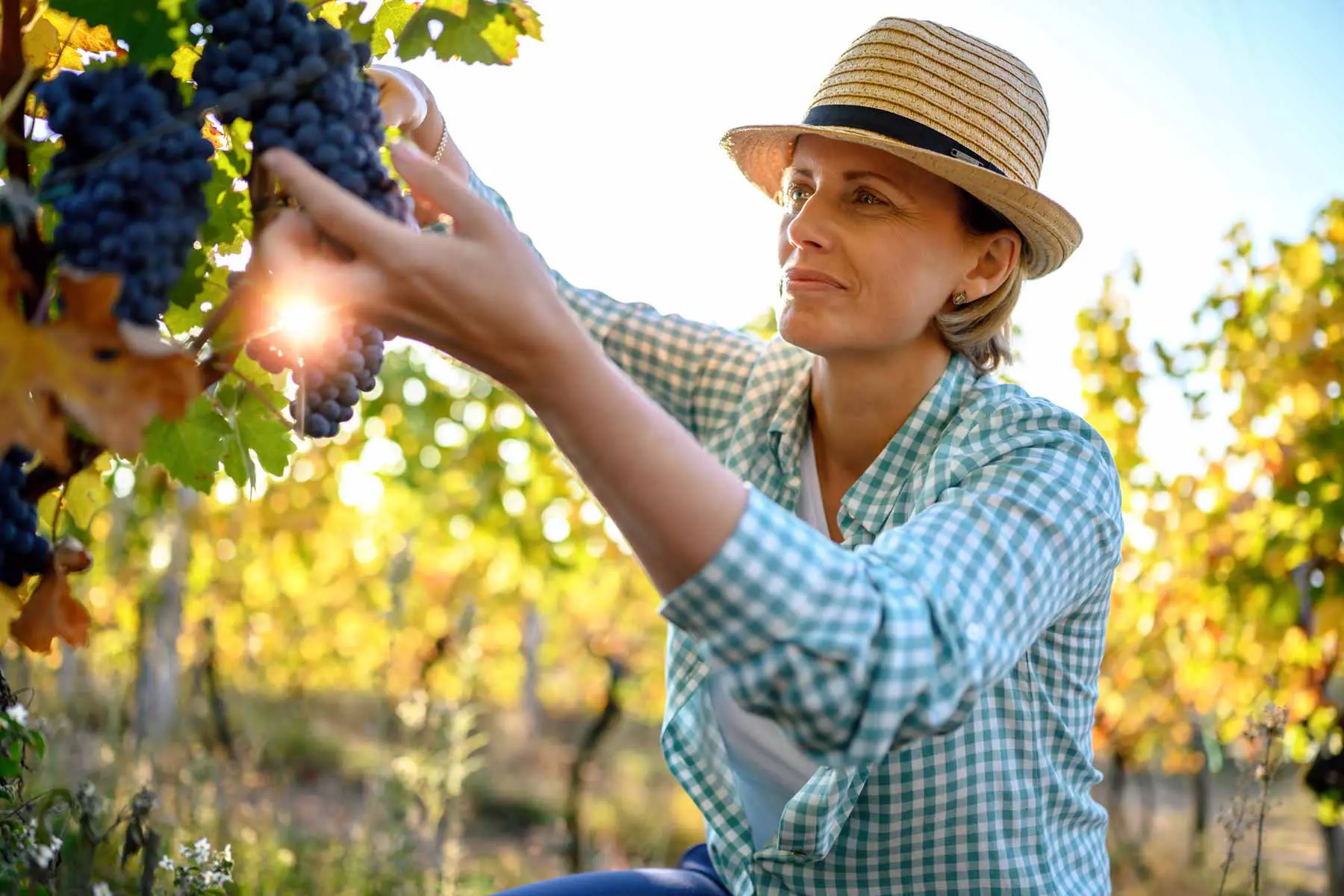
Dünyamızın hem kuzey hem de güney yarı küresindeki 30°–50° paralellerin arasına Şarap Kuşağı deriz. Japonya’nın da büyük bir bölümü gezegenimizin, sıcaklık derecesi olarak bakıldığında, üzüm yetiştirmeye elverişli olan bu kuşağında yer alır. Ancak bölgede hâkim olan muson iklimi, Şarap Kuşağında olmasının sağladığı bu avantajı, olumsuz yönden etkiler. Nemin çok yoğun hissedildiği Japonya’da asmanın yaşamasını sağlamak için bağcıların üzerine daha fazla yük biner.
Japanese records indicate that the country first encountered the grapevine roughly a thousand years ago. But it’s important to note that there are two different legends about how the grape arrived in Japan.
Bunlardan birisinde Katsunuma bölgesinde yaşayan yerli halktan birisinin karşısına çıkan vahşi asmadan koparıp bahçesine diktiği, aradan bir süre geçip meyve verince yediği üzümü yiyip bayıldığı ve üzümün bundan sonra yayıldığını anlatılır. Diğer hikâyede İpek Yolu üzerinden Çin’e ulaşan şaraplık üzüm türü Vitis vinifera’nın bir çeşidinin buradan Japonya’ya geçerek kök saldığı rivayet edilir.
Uzak Doğu Teruarında Japonya ve Endemik Varyeteler
Japan essentially has only three wine grape varieties of its own. One of them is the Koshu grape — the very grape featured in the stories mentioned above. With its beautiful pink-hued berries, Koshu is visually captivating. Scientific studies indicate that Koshu belongs to the family of wine grapes, Vitis Vinifera, though debates about its exact lineage continue.
The other two varieties besides Koshu are Muscat Bailey A (a hybrid grape widely used in aromatic rosé and red wines) and Delaware (an American-origin variety known for producing light, aromatic white wines). Both of these grapes are hybrids of Vitis Vinifera and Vitis Labrusca.
Comparing Japan’s grape portfolio to that of Turkey would hardly be fair. In Turkey, we have 1,459 officially registered grape varieties — although we’re still determining how many are suitable for winemaking. But that’s a topic we’ll revisit a bit later.
Japonya’da şarap üretiminin geçmişi
Japan is, first and foremost, a land of rice. It possesses exactly the kind of climate conditions rice needs. Rice’s dominance is evident not only in food but also in alcoholic beverages. The country’s national drink, sake, is essentially rice transformed into alcohol.
The history of wine production in Japan is directly linked to the country’s opening up to the outside world after centuries of isolation. While grapes have a long history in Japan, wine production itself spans only about 150 years. And it’s more accurate to consider the era of quality wine production as confined to just the past 40 years.
At this point, it’s also helpful to recall the historical roots of Japanese cuisine. Traditional Japanese cuisine did not include meat. As Japan opened up to the world, eating habits began changing in parallel. This shift began with the overthrow of military rule and the establishment of imperial governance in 1868 — a period known as the Meiji Era, which signifies “enlightenment.”
During the Meiji Era, previously forbidden meats like pork and beef were legalized. Around the same time, efforts were made to encourage wine production. However, it took a long time for society to fully embrace these changes. Legally, wine production was possible, but it took much longer for wine consumption to truly grow.
In Japan’s first hundred years of winemaking, it’s evident from historical sources that consumers preferred sweet, fortified wines resembling port. Starting in the 1960s, Japan underwent another significant transformation. The Tokyo Olympics in 1964 and the Osaka World Expo in 1970 played pivotal roles in embedding Western culinary habits into the culture. Alongside changing food habits, Japanese perceptions of wine began evolving. It’s worth noting that similar transformations occurred in Japanese whisky. Although Japanese whisky has about a century of history, its rise to international acclaim has also happened primarily over the past 40 years.
Japon şarapçılığının bugünü
According to official records, there are more than 200 wine producers in Japan. Given that Japan has only three endemic wine grape varieties and a total winemaking history of 150 years, this is quite a surprising figure.
Let’s try to summarize the state of Japanese wine without drowning in numbers:
- In 2023, Japan’s total wine production reached 80 million liters.
- Approximately 20% of this production was made from Japanese endemic grape varieties.
- Records from the Japan Wineries Association list around 200 wine producers, although unofficial sources (like Jancis Robinson) suggest the number may be closer to 500.
- Japan’s four major wine regions are:
- Yamanashi
- Nagano
- Hokkaido
- Yamagata
Japon endemik şarap üzümleri tadımı
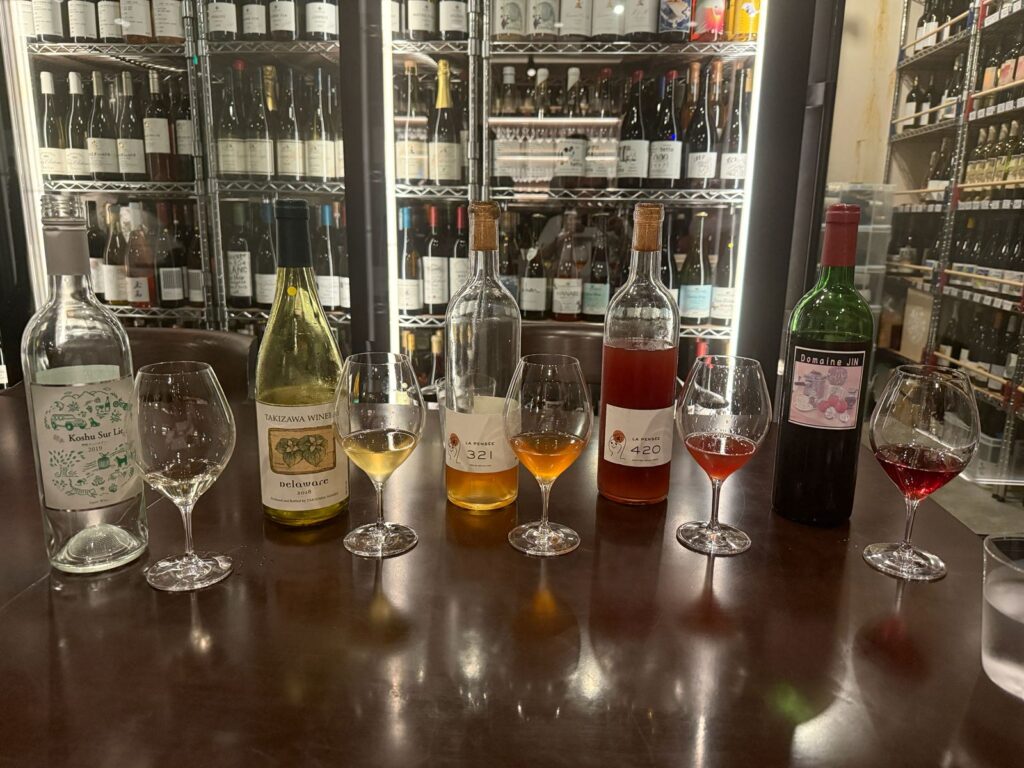
Naturally, visiting Japan without tasting wines made from its endemic grape varieties would have been unthinkable for us. So, we set out to try our luck — and succeeded. We were able to taste a set of five wines at a wine bar called Wine Soirée: Koshu and Delaware whites, Koshu natural wine, Muscat Bailey A rosé, and Muscat Bailey A red.
Koshu beyazı, hafif narenciye notaları ve canlı asiditesiyle ferahlatıcıydı. Koshu natürel şarap, biraz daha derin ve mineral tonlar taşıyordu. Muscat Bailey A rosé ise burunda çilek, damakta yumuşak ve meyvemsi bir bitiş sundu. Delaware, aromatikliğini hissettiren, hafif, kolay içimli yanıyla güzel bir yaz serinleticisiydi.
Wine Soirée features a list of 150 different wines — exclusively Japanese wines, as we discovered. Although none of the staff spoke English, we managed limited communication with the help of ChatGPT. Learning that they serve their wines by the glass was an especially pleasant surprise.
A FINAL WORD
Bir yanda daha henüz tümünün şaraba uygunluğunu açıklığa kavuşturamayan ülkemiz Türkiye var. Tekirdağ Bağcılık Enstitüsü’nde 1.459 kayıtlı üzüm cinsimiz var. Bunların benzeri olanları düştükten sonra geriye 850 civarında üzüm kaldığı tahmin ediliyor. Şimdilik bunların 79 tanesinden şarap yapılmış. (WAYANA’da 72 tanesinin şarabını servis ediyoruz.) Sayının artacağına kesin gözüyle bakıyoruz. Öte yandan, ikisi melez toplam üç endemik üzümü olan Japonya var.
Turkey has around 200 wine producers, a number quite similar to Japan’s official count.
Yet Anatolia has sustained winemaking for at least 5,000 uninterrupted years, whereas Japan’s history in wine stretches back only about 150 years.
In both countries, the last 40 years have witnessed significant strides in the world of wine. We all know how successful the Japanese can be when it comes to production. Despite having a very limited selection of grape varieties, they work tirelessly and with great dedication. And we also know just how hard our Turkish winemakers work.
Japonya’da bağcılığı ve şarapçılığı destekleyen politikalar uygulanıyor. Türkiye’nin bu sektöre bakışının böyle olmadığını biliyoruz. Dileriz ki biz de sektörün desteklendiği yeni bir döneme kavuşuruz.
If your travels ever take you to Japan, don’t just explore the sights worth seeing — make sure to discover the wines of its land as well. A glass of Japanese wine is one of the most delicious bridges you can build to a distant culture.
Uzak Doğu’nun bu saklı teruar mirası, endemik üzüm çeşitlerinin korunması ve asmanın farklı coğrafyalardaki adaptasyon yeteneği ilginizi çekiyorsa, blogumuzdaki diğer nitelikli araştırmalarımıza da göz atabilirsiniz:
Japonya’nın volkanik topraklarının asma üzerindeki mineral etkisinden yola çıkarak, Anadolu topraklarında Kapadokya’dan Manisa’ya uzanan o sarsıcı volkanik teruar öykülerini okumak için Volcanic Origin derin saha analizlerimizi inceleyebilirsiniz.
Tıpkı Koshu gibi, dünyanın bir ucunda sarsıcı bir ampelografik inatla ve tutkuyla canlandırılan, yok olmanın eşiğinden dönen kendi asil yerel kırmızı gen miraslarımızın hikâyesi için Likya Şaraplarının Türk Üzüm Dünyasına Kattıkları ve Vinkara Kalecik Karasının İzinde üretici portrelerimize göz atabilirsiniz.
Asmanın monokültür yalnızlığına hapsedilmeyerek, doğadaki diğer ağaçlarla ve bitki örtüsüyle kurduğu o kadim biyolojik ekosistem dengesini keşfetmek için Married Vines: Asmanın Doğayla Akılcı İzdivacı ekoloji yazımıza bakabilirsiniz.
Kadehteki sıvının renginin, berraklığının ve görsel kimliğinin antik çağlardan modern laboratuvar spektroskopisine kadar uzanan o büyük tarihsel dönüşüm öyküsünü okumak için Şarapta Renk Kavramının Tarihsel Seyri çalışmamızı ziyaret edebilirsiniz.