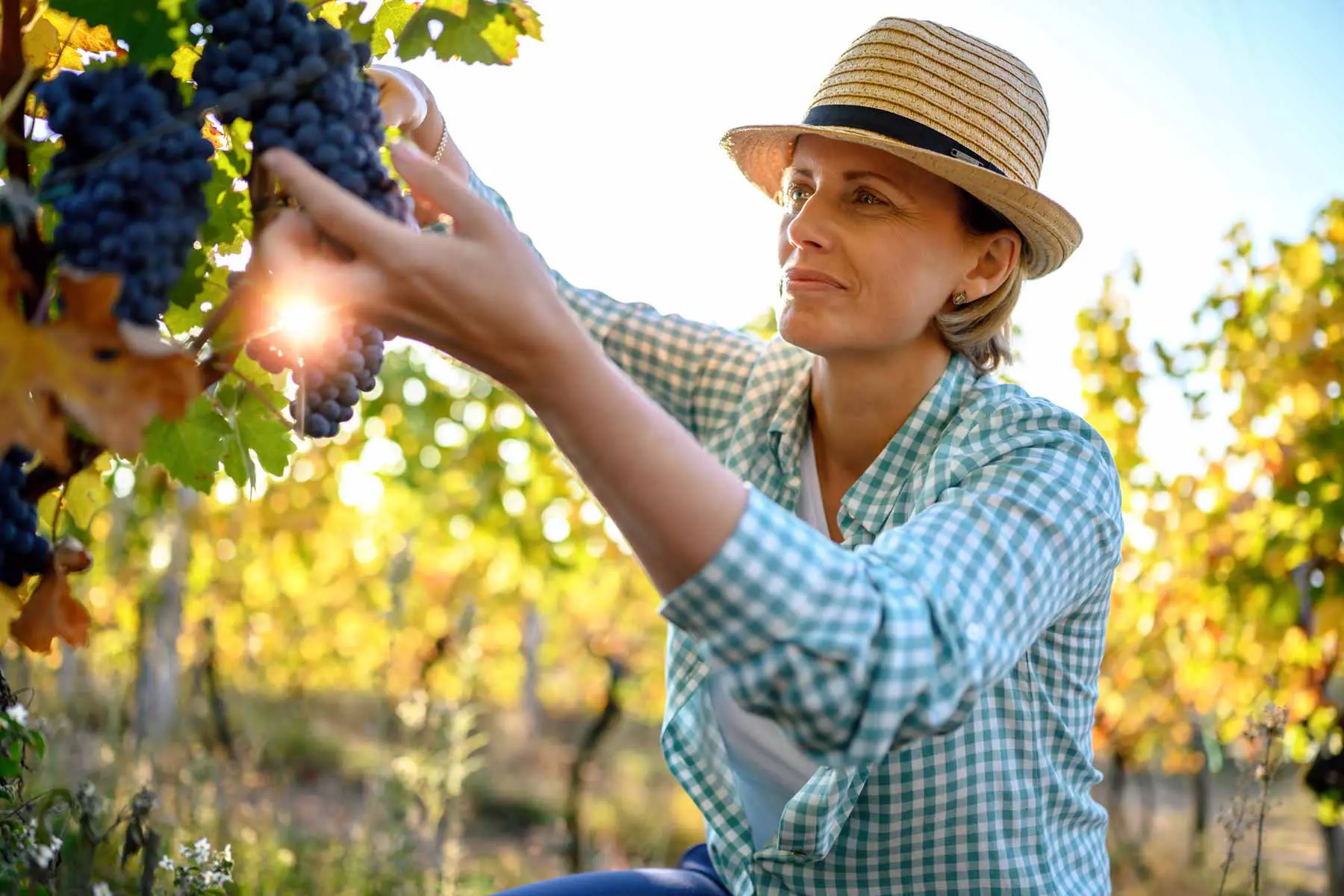
Rome still stands — not only in its stones, but now once again in its vineyards. Across Lazio, the revival of local varieties such as Bellone, Nero Buono, and Cesanese has become a story where nostalgia meets science. This movement, often framed under the romantic glow of headlines like “the rebirth of ancient Roman wines,” also invites serious academic scrutiny.
Wine has been woven into daily life for so long that we sometimes prefer the charm of legend to the discipline of proof. The poetic allure of continuity is seductive — but without balance, it can easily drift away from fact.
One of the scholars cited here, Dr. Emlyn Dodd, is also among the researchers contributing to the archaeology of wine in Turkey. Though Italy and Turkey differ in production scale and grape diversity, they share a deeply entangled heritage. After all, following the division of the Empire, the Byzantine East — including much of modern Turkey — carried Rome’s viticultural traditions for centuries. In that sense, Italy’s current revival of ancient grapes can serve as a model for us as well.
1. Rome’s Wine Geography: Between Myth and Reality
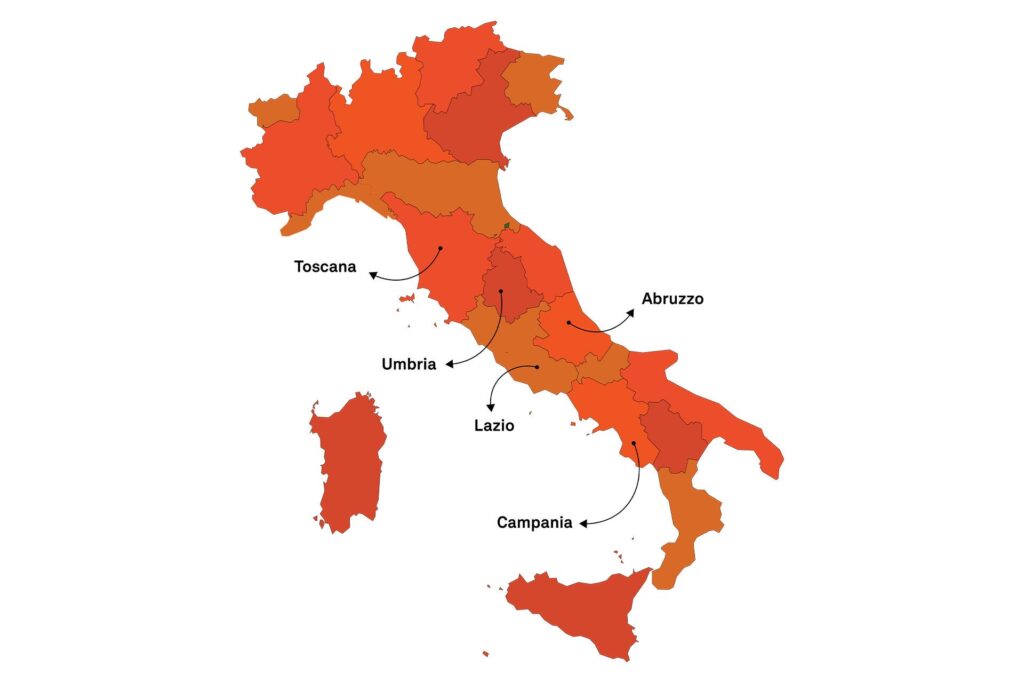
The Wine Enthusiast feature “In the Shadow of Rome: Three Ancient Grape Varieties Stage a Comeback” paints Lazio as the heartland of Roman viticulture. Yet archaeologist Emlyn Dodd disagrees: “Lazio was not the winemaking core of the Roman Empire. Campania, Hispania, Gallia, and the Eastern Mediterranean were far stronger contenders.”
Classical sources support this view. Pliny the Elder praised the Falernian hills; Columella pointed to Campania and Etruria as the pinnacles of viticulture. Rome’s surroundings were active but never the empire’s central vineyard. Today’s Lazio projects, while beautifully symbolic, might be echoing not Rome’s vineyards per se, but those that once looked toward Rome.
2. Bellone, Nero Buono, Cesanese — Ancient Claims and Modern Limits
Each of Lazio’s revived grapes carries a dual identity: historical and symbolic.
Bellone is often equated with Pliny’s uva pantastica, “the bread of the vine.” Yet scholars like Dodd and Dimitri Van Limbergen caution that such claims are romantic, not scientific. The gap between ancient names and modern DNA remains unbridgeable — for now.
Some sources note that Bellone still grows ungrafted in sandy volcanic soils, its roots untouched by phylloxera. This may give the illusion of continuity, but ungrafted does not mean ancient; it merely means that American rootstocks were never used.
Nero Buono, dark and spicy, thrives on the cool slopes of Cori and Lepini, yet no direct evidence links it to Roman times. Cesanese, today Lazio’s signature red and its only DOCG, is sometimes labeled “Rome’s ancient red,” though no ancient record confirms it. As Dodd warns,
“The word ‘ancient’ should be used carefully — and often skeptically.”
3. Roman Wine: Vinegar or Vision?
Popular articles often describe Roman wine as “vinegar mixed with honey and spices.” Dodd calls this a misconception: “Roman wine existed in a wide spectrum of quality — from rustic to refined.”
Indeed, both Pliny and Columella detailed sophisticated techniques — selective pressing, aromatic additives, aging in amphorae — producing wines comparable in spirit to modern late-harvest or aromatic whites.
Dodd also challenges the notion that “Roman wine was superior to all others.” Ancient sources praise wines from Anatolia, the Aegean, and Egypt just as highly. Many of the amphorae found in elite Roman villas came from Ephesus, Laodicea, and Lycia — clear evidence of eastern imports.
Experimental archaeology in recent years has even shown that some reconstructed Roman recipes yield wines pleasantly drinkable by modern standards. The world of Roman wine was far richer — and far more nuanced — than the vinegar myth suggests.
4. Revival or Rebranding?
Modern Lazio is both a laboratory and a stage for Rome’s longing to reconnect with its past. Producers such as Casale del Giglio, Cincinnato, and Marco Carpineto are reinterpreting native grapes through modern techniques on volcanic slopes. Micro-vineyards near the Palatine Hill and Colosseum turn Rome’s viticultural history into a living — and touristic — narrative.
These projects certainly enrich the region’s image, yet, as Dodd notes, “Popular storytelling risks replacing scholarly research.”
- Archaeological data:the location of presses, soil profiles, and vine remains.
- Genetic analysis:comparison of ancient grape DNA with modern varieties.
- Ampelographic study:aligning Pliny’s and Columella’s descriptions with today’s grapes.
- Transparent communication:framing findings in the language of research, not marketing.
Only then can the idea of “ancient Roman wine” evolve from romantic narrative into a historically grounded project.
5. Reflections from Anatolia: Our Own Ancient Grapes
Rome’s revival story resonates in Anatolia — once one of the Empire’s great wine suppliers. Today, native varieties like Hasandede, Horozkarası, Karalahna, Kalecikkarası, Narince, Sultaniye, and Erciş Karası are being rediscovered as living heirs to that layered past.
Yet we must avoid the same trap: saying “this grape has been here for thousands of years” is poetic, not proven. Real continuity emerges only when archaeology, genetics, and documented traditions align. It is beautiful to imagine Erciş Karası flowing from Urartian amphorae — but until verified, that remains legend, not lineage.
Institutions like the Tekirdağ Viticulture Institute, which has catalogued over 850 local wine grape varieties, show how heritage revival can rest on scientific foundations. Lazio’s example reminds us: connecting with the past is inspiring, but building identity requires data, not desire.
6. Conclusion: The Light of Story, the Shadow of Science
As Bellone, Nero Buono, and Cesanese return to life, Rome reclaims not only its grapes but its narrative. Yet the same charm that revives history can also distort it. Dodd’s reminder should guide us all: “Popular narratives flatten history; good research reveals its layers.”
The rebirth of Roman wine should be measured not only by its romance, but by its respect for evidence.
There is nothing wrong with loving the story — as long as we also love the proof behind it.
References:
Wine Enthusiast, In the Shadow of Rome (2024);
Emlyn Dodd, Advancement and Innovation in Ancient Wine Research (2025);
Dimitri Van Limbergen & Emlyn Dodd, Archaeology of Roman Wine Production;
Plinius, Naturalis Historia; Columella, De Re Rustica;
Tekirdağ Bağcılık Enstitüsü verileri (2023).