One of the words we casually lean on most during vineyard visits or wine conversations is microclimate. We invoke it almost instinctively when trying to explain the character of a region, a vineyard, or even what ends up in the glass.
Yet more often than not, what we call “micro” refers to something quite different in scale than what we actually mean. This piece is dedicated to clarifying that small, almost innocent misunderstanding most of us make without even noticing.
Once we place these terms in their proper context, evaluating what we taste in the glass becomes far more precise. So let’s begin.
Two Siblings and a Neighboring Concept: Mesoclimate and Microclimate
While micro has comfortably settled into our everyday vocabulary, meso never quite made that leap.
“Micro” is now so familiar that it has even been reduced to shorthand for the microwave sitting in our kitchens.
“Meso,” on the other hand, remains confined to the language of science. We rarely use it in daily conversation. Perhaps because of this distance, in the world of wine it has quietly handed over its descriptive role to microclimate.
Mesoclimate: The Vineyard’s Address and Its Fate
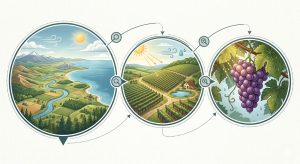
Mesoclimate refers to the middle scale of climate. The depth of a valley, the vineyard’s distance from the sea, or the orientation of a slope—whether it faces north or south—are all elements that define it.
If a producer says, “Our vineyards sit at the valley floor, so we’re exposed to frost risk, but we benefit from strong day-night temperature variation,” what they are really describing is their mesoclimate.
Mesoclimate is the given condition nature assigns to a vineyard. It is, in a way, its destiny. You cannot easily change it. You can only learn to live with it.
Microclimate: The Vine’s Own World
This is where confusion peaks.
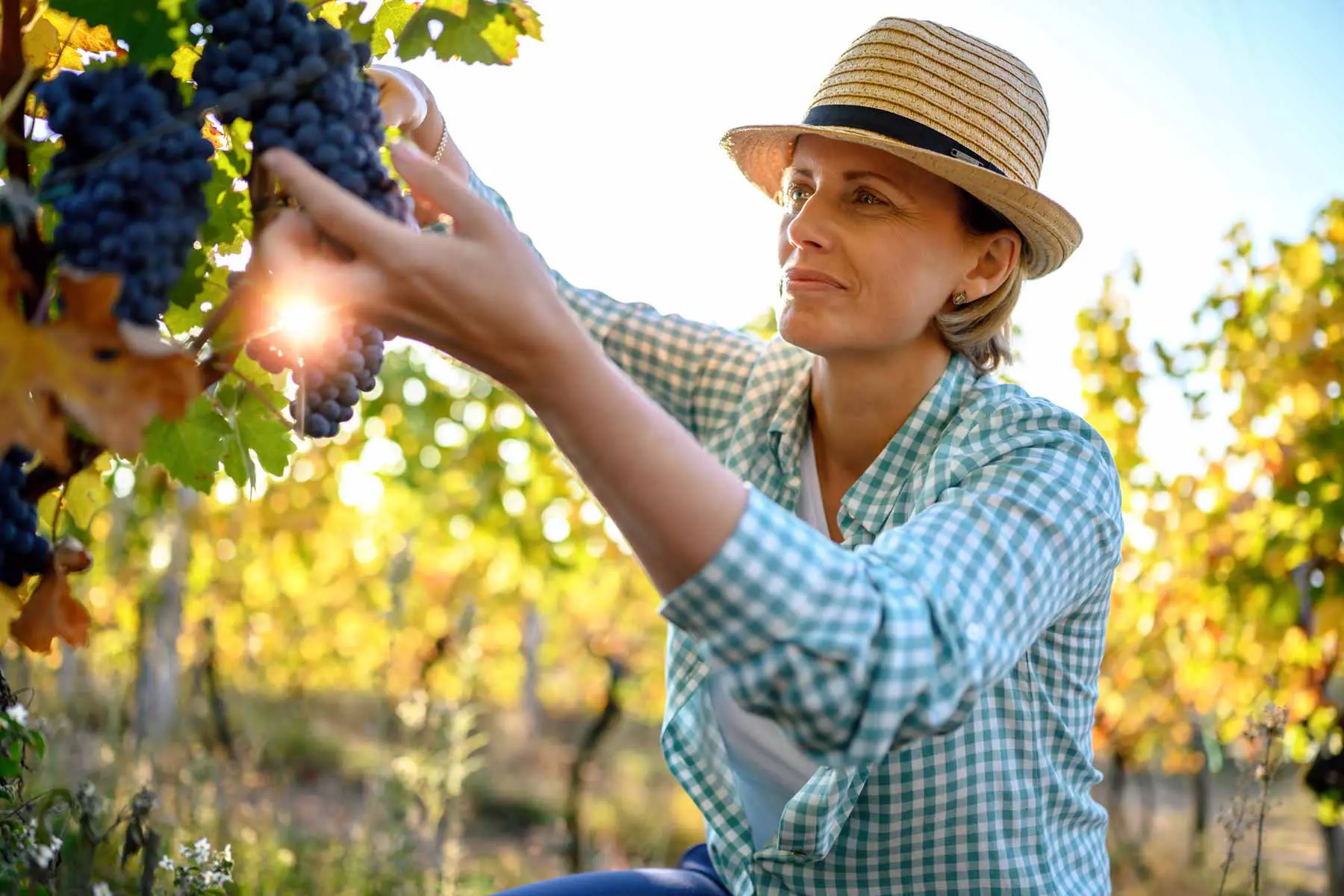
A true microclimate does not cover hectares. It is not even about an entire vineyard block. It can be as small as a single row of vines—or even the few centimeters surrounding a single grape cluster.
The amount of shade provided by the leaves, how the soil reflects heat, or how air circulates between clusters all shape that cluster’s microclimate.
And here comes the exciting part: while mesoclimate is beyond our control, microclimate is not.
Through pruning, leaf thinning, canopy management—what we call the vine’s “umbrella” regulating the relationship between sun and fruit—and cluster management, we actively shape temperature and humidity in that tiny world.
Where Does Terroir Fit Into All This?
At this point, the most mysterious word in the wine world steps onto the stage: terroir.
Often confused with mesoclimate, terroir is actually the entire story.
If we think of mesoclimate as the vineyard’s address, and microclimate as the living space inside the house, then terroir is the spirit that brings them together—along with the soil they stand on and the human hand that maintains that house.
- Mesoclimate and microclimate represent the climatic dimension.
- Terroir is the interaction of these climatic elements with soil (geology) and human experience.
In other words, terroir is the complete answer to the question:
“Why does this grape perform best here?”
Mesoclimate whispers the grape’s character.
Microclimate refines it.
Soil gives it a voice.
When we look at local varieties such as Papaskarası or Kolorko, we are not simply looking at plants. What we see is the result of centuries of adaptation to a valley’s mesoclimate, shaped further by the grower’s precise interventions at the micro level, ultimately becoming part of a living terroir.
To understand terroir is to understand this extraordinary dance between scales.
The Three Components of Wine: Grape – Terroir – Human
When we speak of wine, we often refer to three fundamental components. Each plays a distinct role in shaping the final character.
The grape forms the foundation with its intrinsic nature. The genetic code embedded in the vine is one of the most decisive factors. It is what makes Boğazkere tannic or Emir high in acidity.
But for these traits to fully express themselves, another component must intervene.
That component is terroir.
Terroir is the architect that shapes the grape’s identity by integrating mesoclimatic and microclimatic influences with the environment in which the vine exists.
The journey toward quality fruit begins in the vineyard—and this is precisely where human involvement starts.
The path to great wine is a long and delicate one: growing the grape in harmony with its terroir, harvesting it at the right moment, and processing it in capable hands.
Why Does It Matter?
If we zoom in on terroir as one of the three core components of wine, we can frame the relationship between mesoclimate, microclimate, and terroir like this:
- Mesoclimate builds the structure of the wine:
The vineyard’s location defines acidity and overall body. This is the raw material given by nature. - Microclimate shapes the details:
The grower’s touch around the cluster determines aromatic complexity and tannin texture. This is the direct dialogue between human and nature. - Terroir is the decision-making system where everything converges:
Rather than a static concept of soil, terroir should be understood as a dynamic ecosystem. It is completed through human intervention, native yeasts in the cellar, and the accumulated memory of the vine over centuries.
In short, explaining terroir solely through soil is like explaining a symphony by the paper the notes are written on.
The paper (soil) is essential.
Mesoclimate determines the tone.
Microclimate interprets that tone.
When grape, terroir, and human come together, the symphony emerges.
But what truly gives that symphony life is the unique interaction that brings together the culture of a place, human effort, and the rhythm of nature—within a single glass.