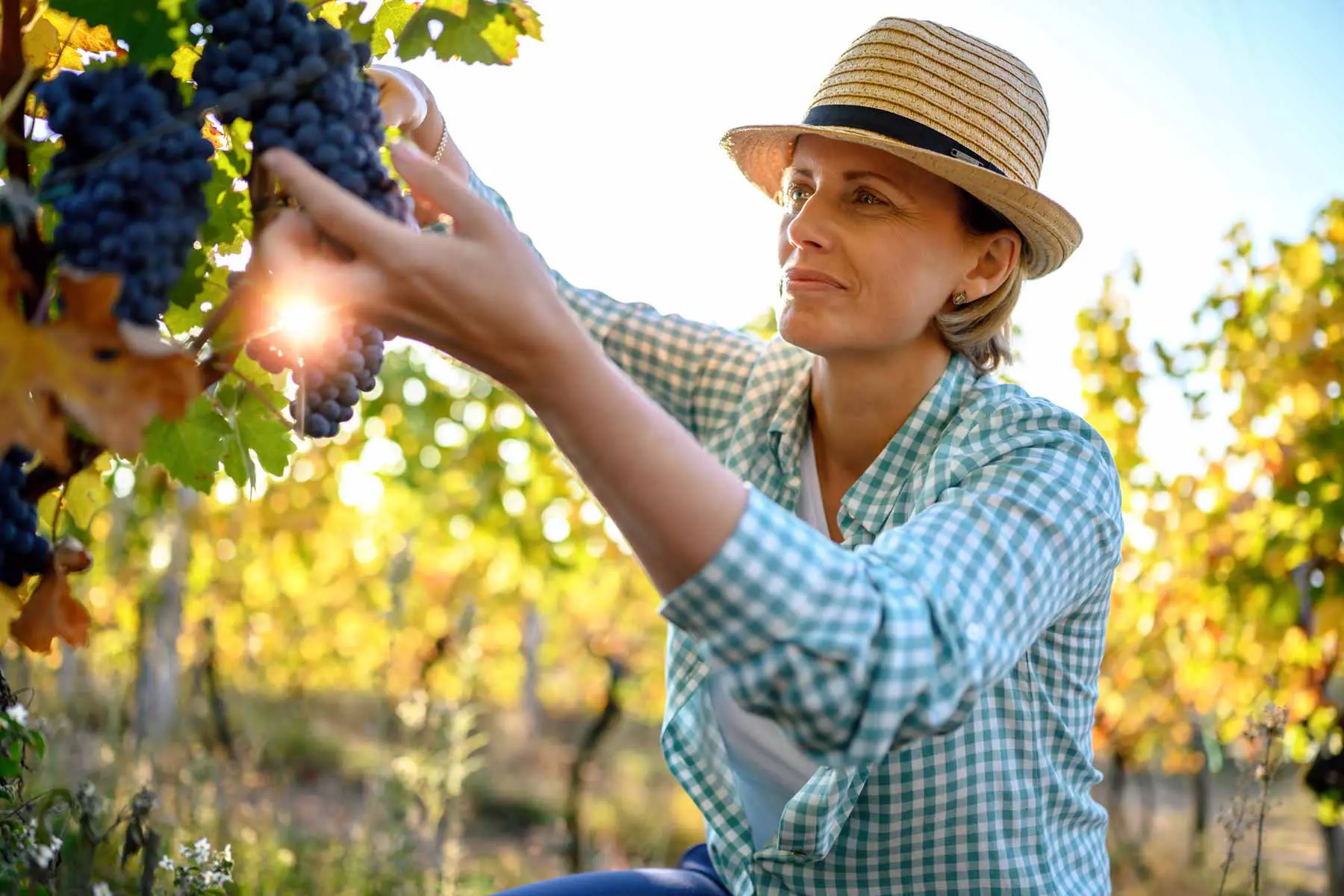
Entering a wine route is not merely about moving from one point to another, following signs, and knocking on a few doors. A true vineyard route experience means becoming a guest of a land that carries thousands of years of memory, listening to the whisper of the wind through the vines, and witnessing one of humanity’s oldest friendships with nature.
The world’s most prestigious wine routes—Tuscany, Bordeaux, Rioja—offer more than wine; they present a philosophy of life. Today, the Çal Wine Route, emerging in the heart of Anatolia, blends this philosophy with the ancient wisdom of these lands, already promising its visitors far more than what a single glass can hold.
Why Walking a Wine Route Feels Different
In the modern world, our relationship with wine is often confined to a supermarket shelf or a restaurant menu. Yet wine is a living organism long before it enters the bottle. To become physically part of a wine route is to transform wine from a commercial product into an experience.
The perspective that reduces tasting to a glass and a sip gives way, on a wine route, to a sensory wholeness. Drinking wine in the vineyard where it was born, among the vines, from the hands of a producer whose eyes light up as they speak of that year’s sun and rain, adds a soul to what you taste.
Feeling the dryness of the soil beneath your feet, understanding how the cool of the evening preserves the grape’s acidity by sensing that very chill on your skin—this is not technical analysis, but an emotional connection. A wine route elevates the visitor into a witness. The bond formed here does not linger only on the palate, but leaves a lasting imprint on the mind and the heart.
Heirs of Antiquity: A Bridge from Laodikeia to Apollo
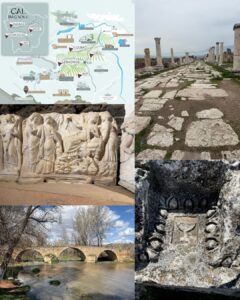
What sets the Çal Wine Route apart is that our steps align almost perfectly with footprints from thousands of years ago. This is not simply a road connecting modern wineries; it is a time tunnel that revives the wine trade networks of the ancient world.
One of the first stops, Laodikeia, is far more than a site of marble columns. It was, in its time, a major commercial hub—almost a “wine exchange” of the ancient world. The massive pithoi uncovered in excavations, along with depictions related to wine, whisper that wine here was not merely a beverage, but a marker of prosperity and a carrier of culture.
Nearby Hierapolis, beyond being a center of healing with its thermal waters, hosted some of the most magnificent rituals of viticulture.
And Pamukkale? Those dazzling white travertines are not only a visual spectacle. This calcareous structure is a defining element of the region’s terroir. The minerality embedded in the soil gives the wines in your glass their distinctive vibrancy and structure.
As you walk carefully among the scattered stones of the now-ruined Temple of Apollo, it becomes impossible not to reflect on those ancient times when humans sanctified nature and the vine. Along this route, we gaze at the same sky and breathe the same wind as those who once celebrated harvest festivals here. The past ceases to be a frozen museum artifact and becomes the living genetic code of the wine flowing into your glass.
Four Visionaries, One Shared Destiny: The Identity of Çal
The four producers who initiated the Çal Wine Route have, in essence, awakened a sleeping giant. The Denizli/Çal region, with its high altitude, unique microclimate, and significant diurnal temperature variation, is an ecosystem seemingly designed for viticulture. Yet what makes this route truly special is not only the climate, but the rediscovery of indigenous gems such as Çalkarası.
The coming together of these four producers symbolizes a shift from individual success stories to a collective regional identity. The project’s potential for growth is directly tied to the region’s deeply rooted production instincts, shaped over millennia.
Çal is not merely a place where grapes are grown; it is a geography where wine is lived as a culture, where traces of viticulture exist in almost every household. This collective spirit will, in time, draw in other boutique producers, strengthen the place of local grape varieties in global literature, and transform this Anatolian highland into an international point of attraction. This evolution represents not just industrial growth, but a form of cultural restoration.
Gastronomy: From Soil to Table
A wine route remains incomplete without gastronomy. Wine tells its full story only alongside its closest companion: food. The culinary initiatives of the Çal Wine Route members are grounded in presenting the purest and most refined expression of the local.
What awaits visitors is not merely elegant restaurants, but a true terroir-driven cuisine that brings the richness of the land to the table. Aromatic herbs grown at high altitudes, cheeses sourced from local producers, extra virgin olive oils pressed from centuries-old trees, and traditional recipes cooked in these lands for generations—alongside regional specialties such as Çal’s renowned okra—come together with wine to create a symphony of flavors.
The tasting kitchens established by these producers offer a tangible expression of the “from soil to plate” philosophy. With every sip and every pairing, the visitor absorbs not only flavors, but also the hospitality, history, and labor of the region.
Conclusion: A Journey of Cultural Heritage
Ultimately, a journey along the Çal Wine Route is not an ordinary item to add to your itinerary. It is an exploration where archaeology, history, nature, and gastronomy meet in remarkable balance. Walking among the columns of Laodikeia and ending the day in a producer’s cellar with a local glass in hand offers a sense of ancient tranquility that modern life rarely provides.
Those who walk this route return to the city carrying more than a few bottles; they carry the feeling of having become part of a story whose roots run deep and whose branches extend into the future. The Çal Wine Route adds a new chapter to Anatolia’s viticultural memory—and invites you to become part of it. Because here, every glass raised is, in truth, a greeting sent across thousands of years.
We hope that the accommodation facilities currently lacking in the region will soon be established. With the addition of these and other complementary social spaces, the Çal Wine Route has the potential to evolve into a thriving ecosystem, rich in both culture and experience.