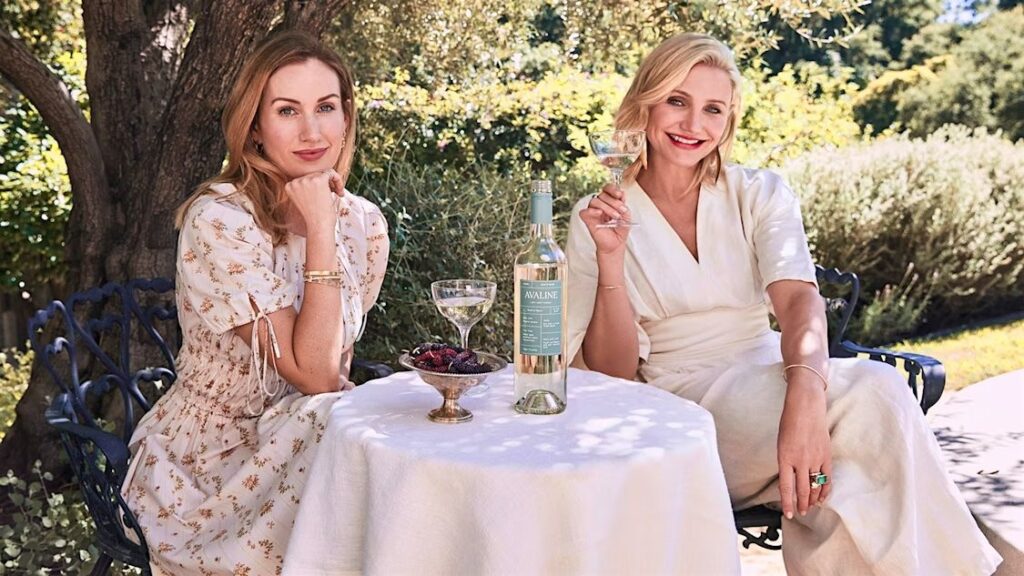
Cameron Diaz and Avaline
Stories that move from Hollywood’s glittering stages to the quiet, patience-driven discipline of the vineyards are often perceived as either a “retirement project” or a “marketing investment.” Yet Cameron Diaz’s decision to step away from film sets in 2014 at the height of her career, and then launch Avaline in 2020 with her partner Katherine Power, was far more than a typical “celebrity wine” venture. With Avaline, Diaz introduced not just a beverage into our glasses, but a kind of wellness manifesto and a transparency debate that the wine world has often been reluctant to address.
“What’s Inside?” — A Story of Awakening
It all began when two close friends started questioning the products they saw on supermarket shelves one afternoon. In an era when modern consumers chase “clean ingredients” in everything from food to cosmetics, Diaz and Power found themselves stuck on a simple question: if detailed ingredient lists appear on everything we eat and use, from packaged foods to creams and soaps, why is there virtually no disclosure on wine labels?
This question confronted them with one of the wine world’s biggest paradoxes. Wine has been accepted for thousands of years as one of nature’s purest gifts, and rightly so. Yet it is also true that industrial production methods, the pursuit of standardization, and shelf-life concerns have long led producers to put more than just grapes into the bottle.
By turning a spotlight on these often overlooked additives, Diaz and her team built the Avaline brand around the concept of “clean wine.”
What Kind of Structure Was Built for Avaline?
To understand Avaline properly, we need to look beyond the moment of “awakening” and examine how that insight turned into a business model. Today, Avaline offers a moderately broad portfolio. What began with just one white and one rosé has expanded into a ten-item range. The core lineup of white, rosé, and red wines continues, now complemented by four single-varietal wines and two sparkling wines. The tenth product is not a new varietal but a packaging format: canned wine.
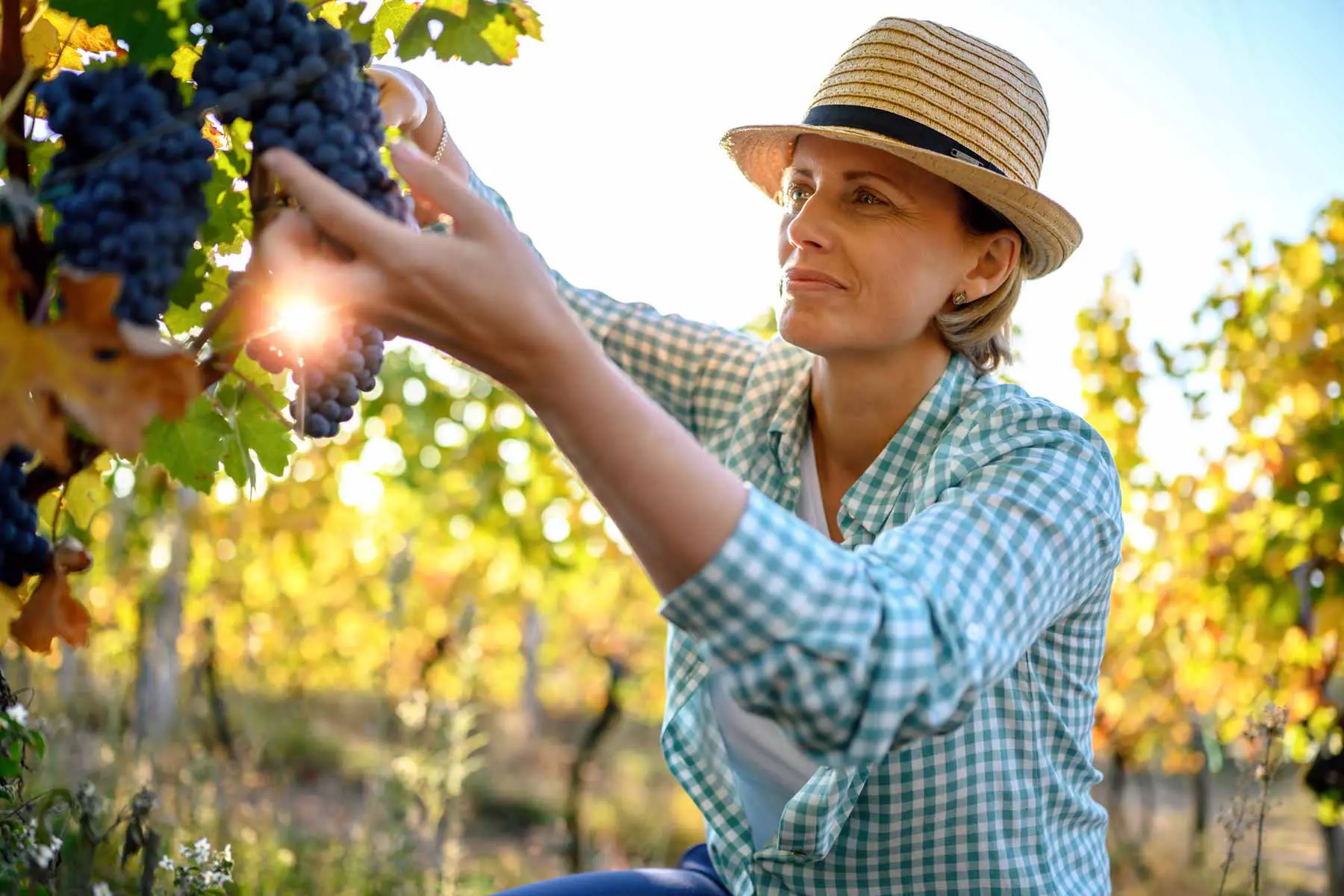
Avaline does not own vineyards. Instead, it sources grapes through partnerships with organic growers in different countries. It also does not operate its own wineries. Production takes place in facilities where Avaline defines and supervises the technical standards. The legally permitted additives listed below are not used at any stage of Avaline’s production.
70 Substances Not Listed on the Label — Choosing Silence
Many wine lovers assume that what they pour into their glass is simply fermented grape juice. In reality, modern winemaking legally allows dozens of intervention tools that do not have to be declared on the label. Cameron Diaz placed this very issue — undisclosed additives — at the center of Avaline’s positioning strategy.
More than 70 additives are legally permitted in winemaking and can be used to manipulate a wine’s color, taste, and structure. Some examples include:
- Mega Purple: A concentrated grape extract used to make color deeper and more visually appealing. It can also alter sweetness balance.
- Fining Agents: Substances such as gelatin, egg whites, or fish bladder (isinglass) used to clarify wine. These agents typically separate from the wine during processing and are not present in the final product, but their use raises concerns for vegan consumers.
- Acid and Sugar Adjusters: Tartaric acid or sugar may be added during production to compensate for deficiencies in the harvested grapes.
- Preservatives: Sulfur dioxide, which also occurs naturally during fermentation, is widely used to prevent spoilage. Other short-lived preservatives such as Velcorin are also used by some producers; they break down after addition, but still remain part of the production process for a period of time.
Avaline rejects this toolbox and instead adopts organic grapes, a vegan production process, and a zero-additive or minimal-intervention philosophy. Diaz’s transparency strategy resonated strongly with a new generation of consumers who view wine as part of a broader wellness lifestyle.
How Did the Wine Industry Respond?
The term “clean wine” created tension within the wine world. Critics argued that the phrase has no scientific definition and functions as an aggressive marketing label that implicitly brands all other wines as “unclean.” Avaline’s founders, however, maintained their position that the consumer’s right to know outweighs these objections. Today, Avaline is no longer just a celebrity project powered by Diaz’s name; as of 2024, it has become the second best-selling organic wine brand in the United States.
What Do the Numbers Show?
Financially, the venture performs strongly. Sales exceeded 2.5 million bottles in 2024. With portfolio expansion and a major distribution partnership with Southern Glazer’s formed that same year, the brand gained significant momentum in the market. Although final figures are not yet confirmed, 2025 sales are projected to surpass 3.5 million bottles. These numbers suggest that Avaline’s transparency-driven approach has moved beyond niche luxury perception and into the mainstream.
Can Avaline Be Compared with Producers in Turkey?
There is currently no direct equivalent in the Turkish market to the specific transparency-focused strategy launched by Cameron Diaz in the United States. Turkey has many certified organic growers, as well as others who state they follow organic principles without formal certification. Disclosure regarding additives remains largely declaration-based. Winery inspections in Turkey are strict, though often shaped by broader regulatory and political frameworks. Producers also face tight constraints on label content and sometimes experience delays in label approvals that complicate distribution.
Across Anatolia’s ancient lands, even without large marketing budgets, there are still quiet heroes who produce with respect for nature and minimal intervention. Our role is to bring examples of these producers to your glass.
Final Word
Cameron Diaz’s departure from Hollywood toward the vineyards may reflect a modern desire to return to essentials. Transparency in wine is not only a health preference but also a symbol of being a trusted producer.
As Diaz puts it: “Knowing what’s in your wine doesn’t diminish the experience — it deepens respect for the work behind the glass.” When you raise your glass this week, consider the nature behind the color and what the label does not say. The real taste may be hidden in that transparency.