Take a calm moment to review the chain of thoughts triggered in your mind by past experiences and by the anticipation of a new gathering you are planning. In all those moments, past and future alike, wine holds a place. Even if you begin the meeting with the rising star of recent years, a cocktail, wine eventually finds its way into the later scenes with its softening, calming presence. Wine balances the fast entry provided by the trendy favorites of the modern world, and it owes this power to the strong position it has earned within human life over thousands of years. Its value comes from being an inseparable part of celebrations, rituals, and togetherness throughout history.
Today, we will look at the chemistry behind this power of wine. We will explore what is set in motion inside our bodies when we take a sip. In fact, it may surprise you to realize that these changes begin even before the first sip.
Dopamine: The Pleasure of Anticipation and Discovery
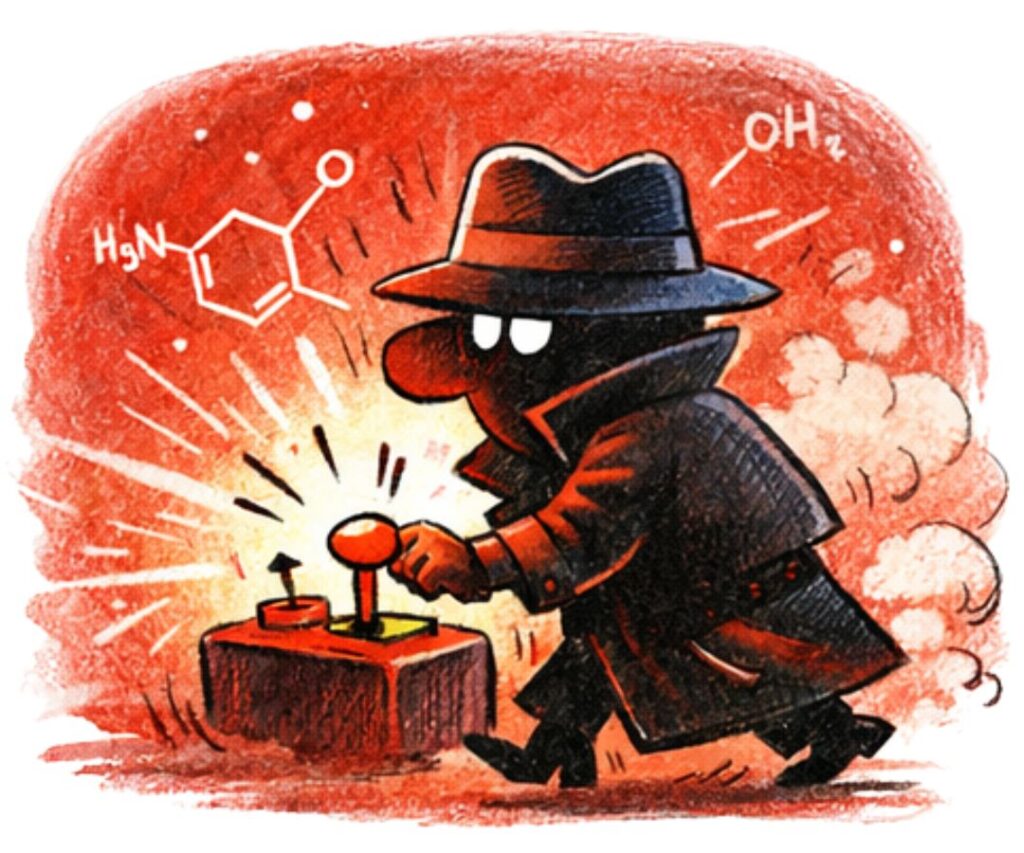
When happiness is mentioned, dopamine is often the first stop. Contrary to common belief, however, dopamine is released not only “when we feel pleasure,” but also “when we realize that pleasure is coming.” The wine tasting process is a powerful dopamine trigger in this sense. It starts the moment we see the bottle, accelerates with the sound of the cork leaving the neck, and continues as we observe the color in the glass, gently swirl to awaken the aromas, and draw in that first scent.
As the brain works to analyze complex aromatic data such as cherry, leather, tobacco, or wet earth, it spends significant energy and rewards us with dopamine. Because drinking wine is not merely an “act” but a “discovery,” it keeps the brain’s reward system continuously engaged. The difference between quickly consuming an industrial beverage and slowly sipping a characterful wine can be measured by how brightly these neural lights are switched on.
Does dopamine produce observable physical effects in the body? Absolutely. The most noticeable is an increase in energy. Restlessness, a light thrill, rubbing one’s hands together, a slight rise in heart rate, sharper focus on the target, and quicker breathing are all part of dopamine’s influence. The pathway dopamine follows to activate these responses is known as the mesolimbic pathway. With that noted, let us move to the next stop.
Resveratrol and Serotonin: Mental Calmness
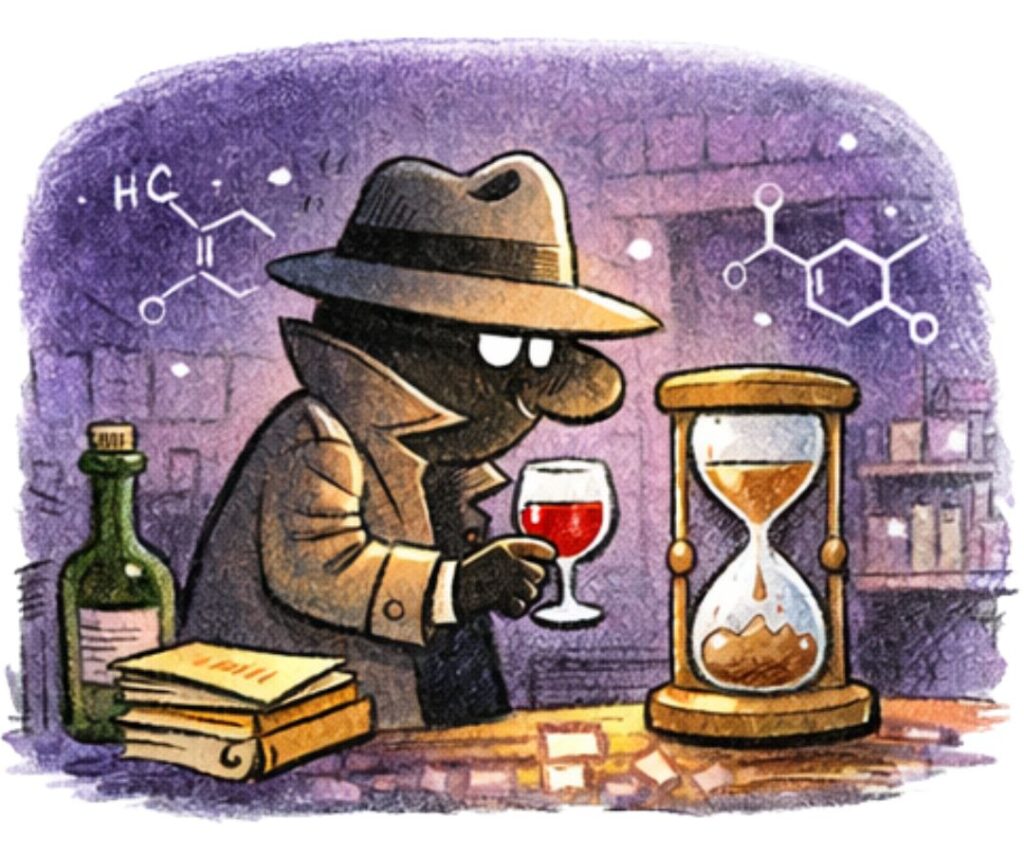
Resveratrol, the celebrated compound found in red wine, is usually recognized as a hero of cardiovascular health. Over the past decade, neuroscientific research has also shown that resveratrol can cross the blood–brain barrier and produce positive effects on the central nervous system. It acts like an adaptor that helps regulate levels of serotonin, often called the happiness hormone, as well as endorphins in the brain.
In today’s high-stress modern world, the sense of lightness provided by a glass of red wine is not only due to alcohol’s relaxing effect, but also to resveratrol’s balancing influence on neurotransmitters. By optimizing blood flow and supporting mental clarity, wine becomes a form of “intelligent pleasure” that distinguishes itself from other beverages. As always, the key word is moderation.
Oxytocin: The Chemical Seal of Sharing
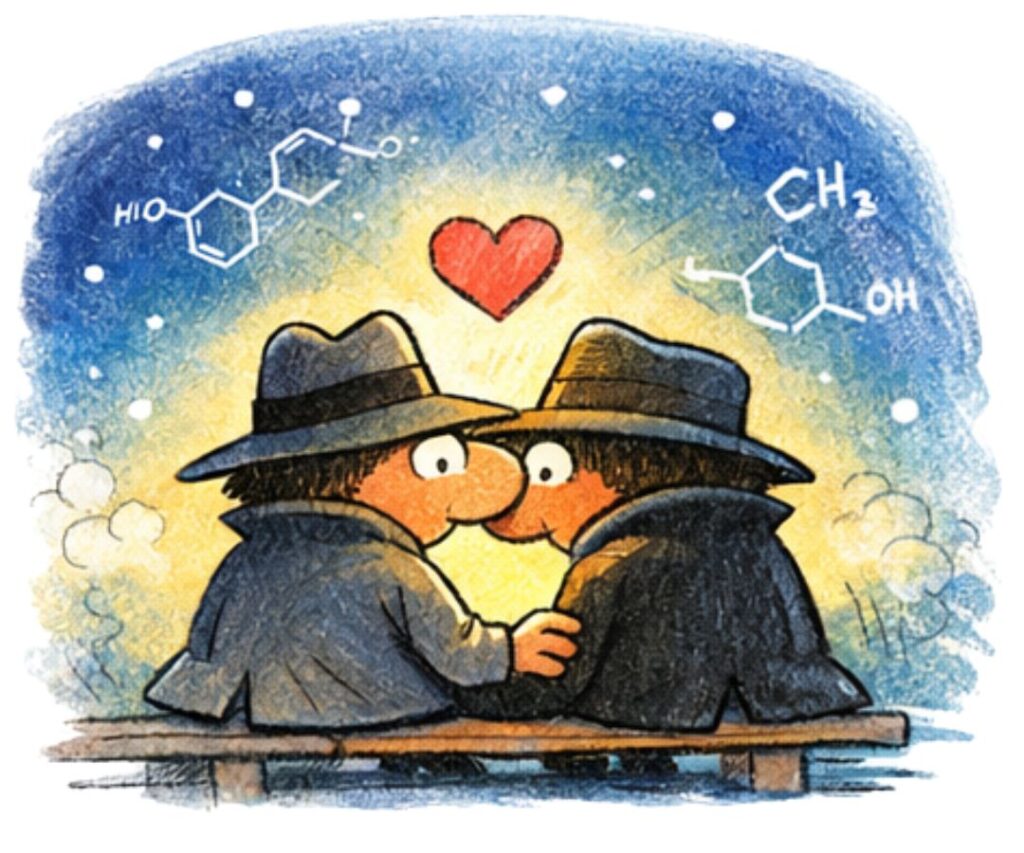
Human beings are social creatures, and much of our happiness depends on the quality of the bonds we form with others. Here, wine helps activate oxytocin. Known as the “trust hormone” or “bonding hormone,” oxytocin peaks when you share a bottle with someone, clink glasses, and make eye contact.
Wine, by its nature, is a shared drink. Finishing a bottle together means becoming partners in the same story. This is the real reason wine so often takes center stage on Valentine’s Day or special anniversaries. Wine does not only relax us physically; it strengthens the bridges of empathy between people, lowers defensive barriers, and opens the door to sincere communication.
Social Togetherness and Happiness: The Right Pairing
Happiness is not a product consumed alone; it is a matter of composition. Just as tannin, acidity, and alcohol must be in balance within a wine, moments of pleasure in life also depend on balance. In gastronomy, the pairing of the right wine with the right food is essential. In the same way, pairing the right wine with the right moment and the right person is equally critical for the chemistry of happiness.
Conclusion: A Glass of Celebration at WAYANA
At WAYANA, we are aware of the scientific and emotional depth behind every glass we serve. In each glass you raise at WAYANA, you encounter not only a flavor shaped by geography, ampelography, and the shared labor of vineyard and winery, but a holistic experience that includes the excitement of dopamine, the calm of resveratrol, and the warmth of oxytocin.
Remember: the best wine is not only the one that is technically flawless, but the one that makes you feel your best. You are invited to a chemical celebration of the invisible bond formed with the person beside you. When the taste in your glass aligns with the happiness in your heart, the world opens wide before you.