Sometimes the story of a grape variety is written not only in the vineyard, but also in archives, laboratories, and email inboxes. The story of Kolorko unfolded in exactly this way. Known as a nearly forgotten local variety in Southern Thrace, Kolorko now stands before us not merely as a regional grape name, but as a living example directly connected to international viticultural literature.
The turning point in this story came through DNA analysis and the scientific correspondence that followed.
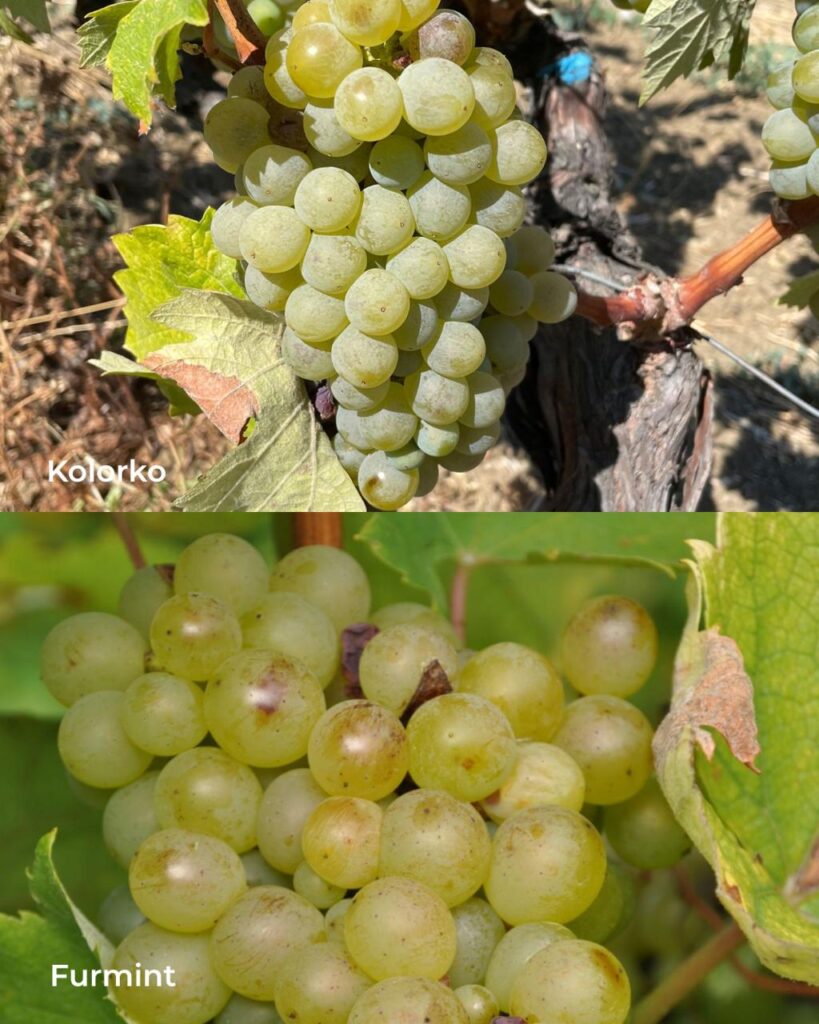
Our First Encounters with Kolorko and Furmint
In our early years of wine service, one of the wines we sourced from Melen Wines was made from Kolorko. At the time, they told us they were concerned about continuity, since securing enough grapes was difficult. In the following years, we could not find another example until Paşaeli released its Kolorko bottling.
Listening to Seyit Karagözoğlu, who devoted himself to bringing the grape back to life, helped us understand the scale of effort and sacrifice involved. Meanwhile, at Paşaeli’s most recent trade tasting, the Hungarian Furmint wines we tasted became our clear favorites among the whites. Learning only later that Furmint and Kolorko might be related came as a real surprise.
Let us briefly revisit the Kolorko–Furmint connection as it was publicly announced on February 9, 2026.
A Grape on the Edge of Disappearance
For many years, Kolorko survived in small plots in villages south of Tekirdağ, mostly through old vines. After the 1960s, its presence steadily declined and it came close to extinction. Its absence from official grape registries left its origin and identity uncertain. Was it a unique variety, or simply a local name for another grape? No one could say for sure.
A decisive step came in 2005, when Paşaeli founder Seyit Karagözoğlu launched a rescue project. Old living vines were identified in villages between Uçmakdere and Şarköy, cuttings were collected, and a new vineyard was established in Hoşköy. Kolorko took root again in lime-rich, nutrient-poor soils exposed to Marmara Sea winds.
In 2009, the first single-varietal production yielded only 276 bottles. It was small in volume, but large in meaning.
First Tastings and Early Signals
Early Kolorko examples drew the attention of international tasters. Herbal and citrus-driven aromatics, a marked mineral structure, full texture, and long finish stood out. It became clear that this was not merely a “local curiosity,” but a grape with real character and serious white wine potential.
Yet the core question remained: who was Kolorko, really?
The only reliable path to an answer was DNA profiling.
DNA Testing and a Striking Result
DNA analyses conducted on Kolorko leaf samples produced an unexpected result. The genetic profile matched exactly with Furmint, the famous grape of Hungary’s Tokaj region. The analysis was repeated with different samples, and the result did not change.
Scientifically speaking, the picture was clear: Kolorko and Furmint were the same variety.
This finding raised a new question. How had Furmint, known as the emblematic grape of Tokaj, come to exist in Thrace under the name Kolorko?
A Possible Historical Link
History enters the scene here. In the early 18th century, Hungarian independence leader Ferenc II Rákóczi took refuge in Ottoman lands after defeat and lived in exile in Tekirdağ for many years. He was accompanied by a sizeable Hungarian community of nobles and followers. The region hosted a notable Hungarian settlement during that period.
There is no direct document proving that vine cuttings were transported from Tokaj to Thrace. However, such transfers are common throughout viticultural history. Migrating communities are known to carry agricultural plant material with them. For this reason, the arrival of Furmint in Thrace during this period is considered a strong historical possibility.
Correspondence with Vouillamoz: Science Applies the Brakes
The Kolorko–Furmint match was identified by José Vouillamoz, one of the most respected figures in grape genetics. The findings were apparently considered significant enough that the researchers waited for the right moment to announce them. The report was presented at a session held on the opening day of the 2026 Paris Wine Show, where Turkey participated with twelve producers, and was made publicly accessible the same day via JancisRobinson.com.
When we heard the news, our excitement was immediate and intense. Once the first wave of adrenaline passed, a question emerged:
Could Kolorko be an ancestor of Furmint?
Historical research generally shows that vine diffusion moved from east to west. Even if the two grapes appear genetically identical, could the deeper origin lie in Thrace? We sent our questions to José Vouillamoz.
His reply was a model of scientific rigor. He did not entirely rule out the possibility, but stated that the most rational interpretation of current evidence pointed in the opposite direction.
His reasoning was clear:
Furmint shows high biological diversity in the Tokaj region, with many clones and variants identified. This is typically considered a sign of a grape’s center of origin. No comparable diversity has been observed on the Kolorko side.
Scientific literature links Furmint’s parentage and genetic relatives to Hungary and neighboring regions. These related varieties have no historical record in Thrace.
The earliest written records of Furmint date back to the 17th century, whereas the name Kolorko appears only in much later documents.
Within this framework, Vouillamoz concluded that the stronger interpretation of current evidence supports a Tokaj origin for Furmint, with Kolorko being the local Thracian name.
The language of science is firm here: possibilities can be discussed, but conclusions must be ranked by the weight of evidence.
Same Grape, Different Wines
Despite the genetic match, wines made from Kolorko and Tokaj Furmint do not show identical character. There are two main reasons.
First, terroir differences. The Şarköy–Tekirdağ corridor lies along the Marmara coast, with a milder climate and strong maritime influence. Soils are largely calcareous. Tokaj, by contrast, has a continental climate and is known for its volcanic soils. Climate and soil directly affect the grape’s chemical composition and aromatic profile.
Second, intra-vineyard mutations resulting from long geographic separation. The same grape grown in different regions over centuries can develop small genetic variations. These may influence berry structure, yield behavior, and aroma compounds. For this reason, the possibility of “same variety, different biotypes” remains scientifically plausible for Kolorko and Furmint.
Today and Beyond
Today, two Turkish producers bottle wine under the Kolorko name: Paşaeli and Melen. The wines are generally produced in a dry white style, fermented in stainless steel, with short lees contact. Pale gold color, mineral and spice associations, beeswax and citrus peel notes, lively acidity, and full body are common traits.
Clarifying Kolorko’s identity did not make it ordinary. On the contrary, it placed the grape within a broader historical narrative. A connection spanning more than three centuries between Tokaj and Thrace can now stand side by side in our glasses under different names and expressions.
Perhaps most importantly, more than a thousand locally recorded grape varieties still exist in these lands. Each may hold a similar story. Some are waiting for a laboratory result, some for a devoted grower, and some simply for the right question.