For centuries, the world of wine has relied on the tradition of sensory evaluation. Now, alongside that tradition, an unshakable mathematical reality is taking its place. The H-TFF (Hydrolysable Tannin Fragmentation Fingerprinting) method developed at Penn State University, which identifies the origin of tannins in wine, together with breakthroughs in acid profiling technologies, is transforming wine from something “interpreted” into something increasingly “data-driven.”
- The Fingerprint of Tannins: Barrel or Grape?
Until now, tannins—the compounds that define a wine’s texture—were measured as a total value. The newly developed H-TFF method, however, separates tannins with surgical precision using artificial intelligence and mass spectrometry.
- Hydrolysable Tannins (Oak Influence): These compounds, derived from barrel aging and responsible for the famous “velvety” texture of wine, can now be identified within six minutes using a fingerprinting method. They are known as ellagitannins.
- Condensed Tannins (Grape Character): These tannins, originating from grape skins, can now be quantitatively compared with oak-derived tannins, scientifically revealing whether a wine is dominated by barrel influence.
So how does this process actually work?
Instead of drowning in laboratory jargon, imagine it as a kind of “molecular sieve.” Scientists separate tannins in three steps:
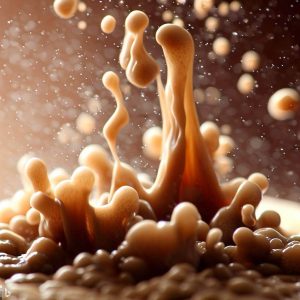
- Fragmentation (Atomic Breakdown): When the wine sample enters the mass spectrometer, tannin molecules are broken apart in a controlled way—like a glass vase shattering on the floor. This technique (in-source fragmentation) breaks only the measured molecules into smaller fragments, leaving the overall sample intact while creating identifiable “fingerprints.”
- Tracking Weight and Signature: Each tannin type leaves behind fragments with distinct masses and structures. For instance, ellagitannins from oak leave a signature (m/z 301) that is chemically different from grape-derived tannins.
- AI Diagnosis: No human can sort through billions of fragments. This is where artificial intelligence steps in. It scans the massive dataset within seconds and maps the tannin profile of the wine, distinguishing what comes from oak and what comes from grape skin.
The study yields additional insights.
Barrels made from oak sourced in three different countries—French, Hungarian, and American—were compared. Laboratory results showed that ellagitannins associated with “silky, velvety, smooth” textures were most prominent in French oak barrels.
Another key finding relates to the effects of barrel toasting. The analyses reveal how raw tannins in oak transform under heat, allowing us to quantify how different toasting levels influence both the wood and, ultimately, the wine.
- The Identity Card of Acids: Tracing Microbial History
Acidity is as critical as tannin in defining a wine’s freshness and balance. Just like tannin analysis, next-generation UPLC-MS/MS chromatography has transformed acid analysis from a destructive process into a descriptive one.
- Natural vs. Intervention: Beyond tartaric and malic acids, the delicate balance of lactic and succinic acids formed during fermentation provides a digital record of the wine’s journey from vineyard to glass.
- Diagnosis in 3 Minutes: The quality of malolactic fermentation or external acid adjustments can now be detected within minutes—without altering the molecular structure of the wine.
How are the “digital traces” of acids followed?
Think of the system as a barcode scanner:
- Accelerated Race (Chromatography): The wine sample is pushed through a fine column under high pressure. Each acid (tartaric, malic, lactic, etc.) moves at a different speed, effectively separating from the others.
- Mass Measurement and Identification: Each molecule entering the mass spectrometer is weighed. For example, tartaric acid, the primary grape acid, has a different molecular weight than lactic acid formed during fermentation.
- Library Matching: The system compares these measurements against a vast digital library of “ideal acid barcodes.” If an unexpected compound or synthetic intervention is present, the system flags it instantly.
- Are the Conditions for Objective Evaluation Finally in Place?
When these two technological advances converge, they ignite one of wine’s longest-running debates: Is fully objective classification possible?
Until now, “quality” has largely depended on subjective expert scores or regional prestige. But the ability to fingerprint tannins and acids at the molecular level is fundamentally challenging that system:
- Mathematical Balance: The abstract notion of “balance” can now be translated into a measurable “Balance Score” based on the ratios of acids, alcohol, and tannin types.
- Transparency and Clean Production: Industrial additives and synthetic interventions can no longer hide from these fingerprinting technologies, clearly distinguishing terroir-driven wines from laboratory-designed ones.
- Standardization: Two laboratories on opposite sides of the world can assign the same objective data to the same wine, eliminating cultural or personal bias.
Conclusion: What Does All This Mean?
The prerequisite for evaluating wine development in a meaningful way is the ability to measure it. Winemakers already measure continuously, from vineyard to bottling. Some rely on precision instruments; others rely on their palate—often as effective, sometimes even more so.
What changes now is the emergence of entirely new measurement tools. These tools will provide access to levels of data that producers could not have imagined before, enabling more controlled and refined winemaking processes.
For wine lovers, these developments promise more objective ways of evaluation than ever before. Whether this will make choices easier—or just give us more reasons to overthink them—is something the coming years will reveal.
The summary is simple: we are closer than ever to making choices based on objective criteria.
Which sounds comforting, until you remember that human beings rarely make rational decisions anyway. So no, these devices probably won’t make life any easier.