As we announced in the WAYANA Bulletin published on March 30, 2026, we are opening a new chapter at WAYANA, with a new source of excitement: “VINEYARD ROUTES at WAYANA.”
The “PRODUCERS at WAYANA” series, which we launched at the beginning of 2025, revealed something truly valuable: wine lovers are not only in search of a good glass, but also of the people and the stories behind it. Now, we are taking that story one step further, carrying it to the very lands where wine is born, to those dusty yet ancient paths.
So why a “Vineyard Route”? Why does following these “wine routes” become not just a tasting activity, but an intellectual and emotional journey of discovery?

Feeling the Geography: The Embodiment of Terroir
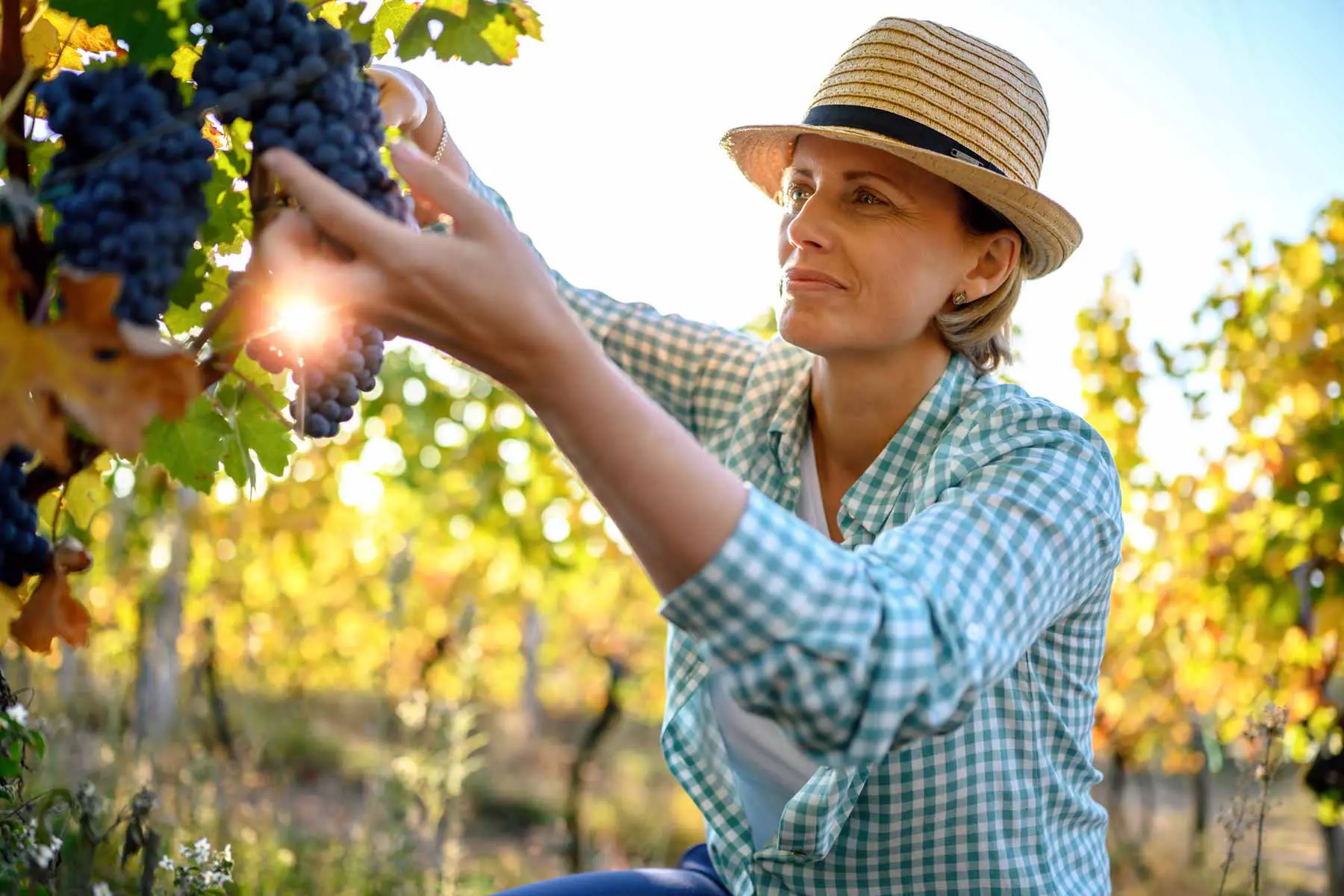
Wine, by its very nature, does not begin in the winery, but in the vineyard. For many wine lovers, the concept of terroir often remains a technical term. But once you step onto a vineyard route, that abstraction takes on flesh and form.
When you feel the hardness of the limestone beneath your feet, when a sharp northern wind brushes your face, or when you witness the sun playing across the grape clusters above, you begin to understand: the vibrant acidity or the fruit-driven character in your glass is no coincidence.
Vineyard routes transform wine from a product on a shelf into a living part of its ecosystem. As you walk these paths, you observe firsthand why a producer chose a specific parcel, why the vines face a certain direction, and what nature whispered to the grower that year.
What you build with your glass is no longer a mechanical tasting exercise, but a living dialogue.
The Memory of the Land: A Two-Layered Heritage
To see vineyard routes merely as travel itineraries is to settle for the visible tip of the iceberg. At WAYANA, we approach these routes through two deeper layers:
Layer 1: Traces of Regional Culture and Civilizations
Vineyards have never existed in isolation from history or society. A vineyard route does not only lead you to a cellar; it also brings you to the gates of ancient cities that shaped the region’s destiny, to the silence of centuries-old monasteries, or to vernacular architecture passed down through generations.
The broader archaeological richness of a region helps us understand the “social status” and historical weight of wine within that geography. Grapes grown in the shadow of a Phrygian rock tomb or beside a Seljuk bridge carry within them the full memory of those lands.
Layer 2: Wine Archaeology – The Tangible Evidence of Memory
This is where the heart of a true wine enthusiast begins to beat faster, and where WAYANA places particular emphasis.
Wine archaeology provides the registered title deed of these lands as a “wine geography.” As you walk among the vineyards, you encounter ancient rock-carved pressing facilities, massive press stones that have stood still for thousands of years, and the remnants of amphorae that once carried wine across the Mediterranean.
To feel that the wine you are sipping today shares a lineage with wines produced at the very same spot 2,000 or 3,000 years ago, under the same winds and perhaps with similar methods, is a unique experience.
Wine archaeology whispers a quiet truth: we are not discovering something new. We are simply the latest representatives of a continuous tradition that has struggled to survive across millennia.

Our First Stop and Model: The Çal Vineyard Route
The Çal Vineyard Route, the first guest of our new series, is a remarkable example where all these elements come together almost like a “case study.”
Looking at this unique region of Denizli, it becomes clear why it is our first stop.
The Power of Nature and Terroir
Situated at an altitude of 800–900 meters, this high plateau of Denizli gives the grape remarkable resilience and character with its limestone and gravelly soils. The sharp temperature differences between day and night help the grape retain its aromatic intensity. The region’s local hero, Çalkarası, stands as a vivid example of how elegance can emerge from such demanding conditions.
Archaeological and Historical Depth
Çal is not just about vineyards. The nearby Temple of Apollo Lairbenos Temple reminds us of the region’s spiritual significance in the ancient world.
From the perspective of wine archaeology, however, Çal is an open-air museum. Ancient grape-crushing basins, unmoved for thousands of years, stand as the clearest evidence that this region has been a continuous center of production since antiquity.
This is a geography that proclaims, through every stone, that it is one of the homelands of grape and wine.
Living Labor and the Future
Today, the producers who form the Çal Vineyard Route are not merely engaged in commercial activity. They are guardians of a vast cultural heritage.
In an era where communication is constrained and naming itself is shaped by “sensitive conditions,” their determination to protect their vineyards is admirable. At WAYANA, we see it as our responsibility to give voice to this persistence and dedication.
A Closer Look at the Apollo Lairbenos Temple
As you climb Asartepe along the Çal Vineyard Route, the Temple of Apollo Lairbenos appears before you.
This is not just a stone structure; it is one of Anatolia’s earliest confession and atonement centers. On this hill, once climbed by people seeking purification thousands of years ago, you can still see kantharos reliefs that foreshadow the ancestors of the wine in your glass today.
From this vantage point overlooking the Menderes Valley, you begin to understand why vineyards have flourished for millennia under the shadow of this sanctuary.
Let’s Meet at WAYANA
Setting out on the road and walking these routes step by step is not always possible. But bringing that journey to you, and recreating its full depth in the heart of Kadıköy, is our greatest motivation.
At the first event of our “VINEYARD ROUTES at WAYANA” series, we will meet with the producers of the Çal Vineyard Route. We will raise our glasses not merely for the taste of a drink, but for the memory of the land, the sanctity of labor, and the continuity of a heritage spanning thousands of years.
We invite all our friends who are curious not only about the taste, but also about the roots and stories, to join us at the first stop of this new journey.
Because a vineyard route is not meant to take you somewhere.
It is meant to help you understand something.