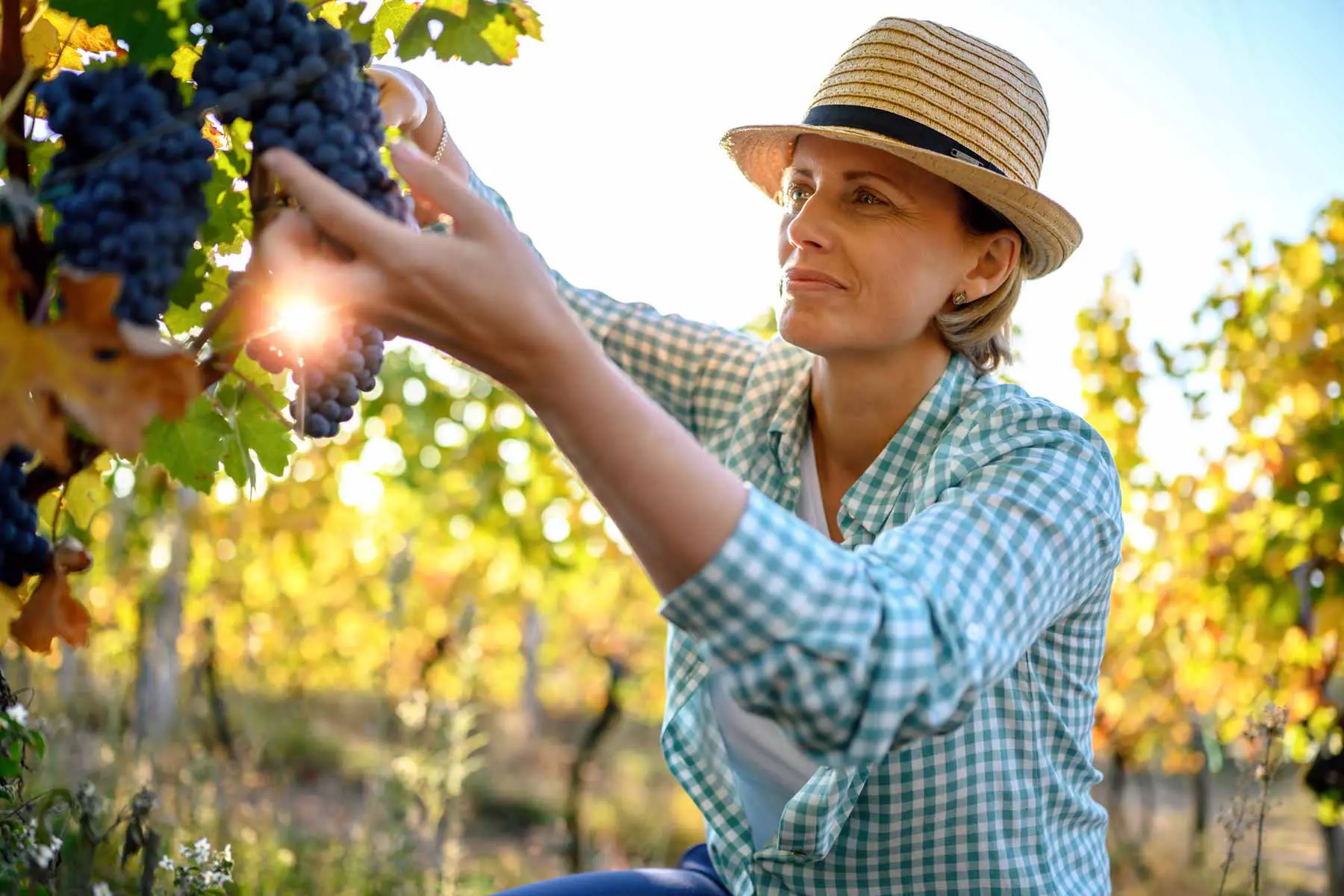
When we saw recent reports showing that up to a quarter of wine producers’ income now comes from wine tourism, we thought it was a good moment to revisit this topic and take a fresh look at where we stand in our own geography.
Our country is still not listed among the world’s main wine tourism destinations. Our most successful example so far is the Urla Wine Route. The older Thrace Wine Route, on the other hand, has already turned into a kind of abandoned “ancient route,” mostly due to neglect. Are we hopeless? Not at all. Especially in the last two years, there has been serious effort to create new routes. But before we come back to our own backyard, let’s start from the beginning and look at wine tourism and its global picture.
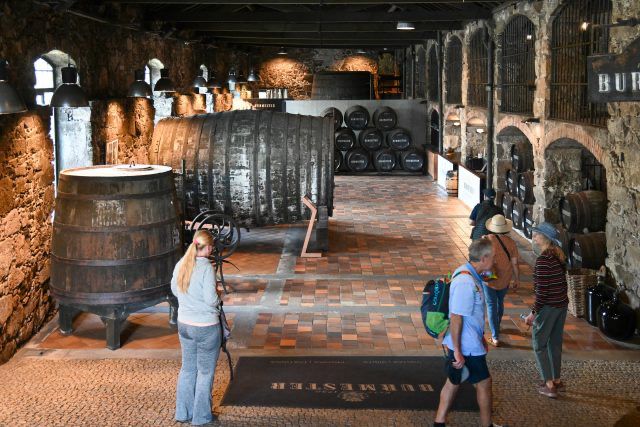
What Is Wine Tourism?
Wine tourism has become a favorite of gastronomy and culture enthusiasts in recent years. People no longer want to simply see a place; they want to experience its smell, texture, history, and production culture. Going to the vineyards, talking to producers, listening to the story of grapes as they anchor themselves into the soil, and comparing glasses made in different styles are all part of this curiosity. By 2025, wine tourism worldwide is not only diversifying, it is also undergoing a serious transformation in terms of accessibility.
The Global Wine Tourism Map in 2025
Titan Travel’s recent 2024–2025 study shows that wine tourism is becoming increasingly affordable. The research examines several indicators such as overall costs, tasting fees, bottle prices, and online search volumes for different regions, and ranks the most attractive destinations in terms of value for money.
South Africa tops the list with a score of 8.38 out of 10. An average bottle price of just £3.42 and tasting fees around £11.73 make it a very attractive destination. Chenin Blanc harvests in February and March and tastings with mountain views have now become a global phenomenon.
In second place is Portugal, which stands out with the highest tour density: 6.1 wine tours per 1,000 km². The traditional foot-crushing of Touriga Nacional grapes during the September harvest has turned into an unforgettable ritual for visitors.
Third place belongs to Italy. With Prosecco at its peak in September, cheese and charcuterie pairings, and 827 recorded wine tours, Italy’s position is, unsurprisingly, as strong as ever.
The study also shows that France, with over 46,000 searches in a year, remains the most searched wine tourism destination in the world.
Taken together, these figures prove that in 2025 wine tourism is no longer a niche interest. It has become one of the main motivations behind travel planning.
Why Wine Tourism?
One of the main forces driving wine tourism is people’s desire to come into direct contact with a region’s culture. That contact isn’t limited to the tasting counter; it also forms in the soil of the vineyard, in the shade of old stone houses, and in the small stories producers accumulate over the years.
Wine tourism also acts as a lifeline for rural economies. Small towns far from major cities gain new lines of business thanks to a steady flow of visitors throughout the year. Another important aspect of the experience is the increased awareness around biodiversity, local production, and agricultural heritage. Even an hour spent in a vineyard can be a powerful
Who Are Wine Tourists? Five Profiles
One of the most comprehensive studies in this field, conducted in Barossa Valley in 2018, divides wine tourists into five main groups. These profiles are still very relevant today and offer valuable guidance for producers designing their visitor experience.
1. The Wine Buyer
Almost half of all visitors fall into this group. Their main motivation is to taste and buy wine. History, technical details, or the background of the vineyard are secondary. They are the ideal audience for short, clear, focused tastings.
2. The Dining Enthusiast
Roughly one in five visitors belongs here. For them, flavor, atmosphere, and the food-and-wine pairing experience are key. The vineyard’s ambience, presentation, and gastronomic details are extremely important.
3. The Wine Connoisseur
This is the curious group that enjoys details and loves comparing different styles from different vineyards. They want to experience the tasting in depth and discover distinctive wines.
4. The Wine Learner
A small but impactful segment. They are open to learning and want to develop their tasting practice. They don’t want to drown in technical jargon, but they do appreciate clear and accessible explanations.
5. The Wine Enthusiast
The smallest group, but often the most open to rich experiences. Buying wine right after the tasting is not a must for them; however, if guided well, they can become some of the most loyal followers of a producer or a brand.
These five profiles show that wine tourism is far more than a simple “tasting experience.” It is an expanding universe shaped by very different expectations.
Wine Tourism Experiences: Beyond the Glass
Reducing a vineyard visit to just what is in the glass is impossible. Around the world, an increasing variety of experiences is on offer, such as:
- Vineyard and cellar tours
- Joining the harvest,picking grapes, and traditional foot-crushing
- Wine museums
- Tasting workshops and short courses
- Festivals that bring together local music, dance, and wine culture
- Gastronomic pairing menus
- Picnics in the vineyard and private chef’s tables
Each of these shows that wine is not just a beverage. It is a carrier of local culture and historical memory.
Leading Wine Routes Around the World
Wine routes are thematic itineraries that bring together vineyards, producers, restaurants, and historical sites within a given region. Europe’s established “Old World” regions (Bordeaux, Toscana, Rioja, Champagne, Douro) showcase a deep viticultural heritage, while the “New World” (Chile, South Africa, Australia, the United States) stands out with modern production techniques and bold, experimental styles.
Where Do We Stand?
In this field too, Turkey continues along a path shaped by contradictory policies. Let’s draw a brief framework.
Sites & Museums
Due to our work, we visit the archaeology museum in almost every place we travel to, and sometimes we go just for the museum. At the moment, not a single label in our museums that accompanies an object related to wine actually uses the word “wine.” We leave it to you to judge how strange that is. Because we do have very good museums and, at least for now, people who keep them alive.
Oenotourism
We see that many wine producers operate accommodation and restaurants adjacent to their production facilities. In other words, sector stakeholders have clearly understood the value of providing this service.
Wine Routes
We may be late to the party, but we are making very rapid progress. It will of course take time for these routes to become well-functioning centers of attraction. But we already know that the active routes in Urla, Çal, and Lydia will soon be joined by routes in Cappadocia and Troy. That is why our hopes for the future are growing.
What Is WAYANA Doing?
We are working with all our strength, without pause, to become Turkey’s tasting hub and to make sure that guests who value wine notice us. Nearly half of our guests are international visitors, and our most demanded offerings are our tasting sets. We also have other projects in this area. Once they are fully shaped, we will share them.
A FINAL WORD
Turkey has covered a great distance toward becoming a major tourism destination, but wine tourism is still not counted under that heading. On one hand, we join organizations like ITER VITIS, the European network of wine and vineyard routes, of which WAYANA is a member. On the other hand, we still cannot write the word “wine” on museum labels.
And yet we repeat the same thing: LET’S KEEP OUR HEADS UP!