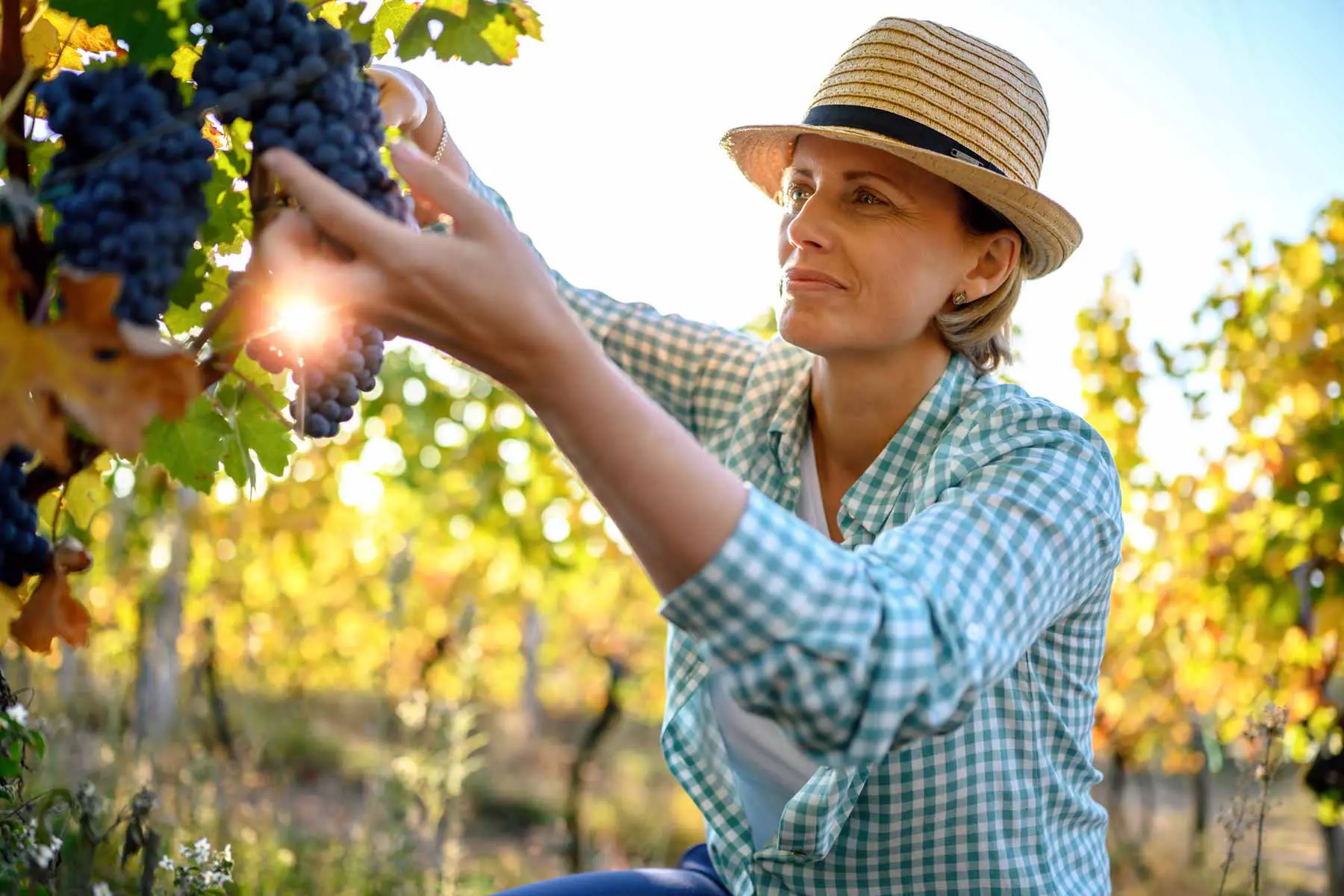
You might remember that our journey into the world of wine began back in our BEPPE days, long before WAYANA existed. Even then, we tried to support the brave people attempting to produce wine in Turkey’s complicated bureaucratic landscape by giving them space on our menu and helping their voices be heard.
What is now known as Asmadan was once called Kayalıtepe. Its founder, Turgay Hoşkal, once said that his plan to “escape Istanbul” backfired spectacularly: not only did he fail to escape, he also found himself carrying the weight of viticulture and winemaking on his shoulders. Eventually, he completed his lap in the relay race of wine and passed the baton to Asmadan. Asmadan still carries the Kayalıtepe name within its portfolio to keep that memory alive.
The Founding of Asmadan
If we look at the recent history of Turkish wine, we see that the sector began gaining momentum in the 1990s, accelerating steadily until around 2015. As this dynamic period approached its end, Asmadan stepped into the scene with its vineyards in Manisa. Next to the Köprübaşı vineyards, they also own olive groves and lavender fields.
In 2017, another chapter began: the Eceabat vineyards originally envisioned by Turgay Hoşkal were acquired by Asmadan, creating the foundation of today’s structure. And by “today’s Asmadan,” we’re not simply talking about a wine producer; we’re talking about a full-fledged oenotourism destination. Vineyards, hotel, restaurants, winery, cheese house, and a museum all come together in a single integrated complex.
The Vineyards
Asmadan manages roughly 600 dönüms of vineyards across Manisa and Eceabat. The Manisa vineyards form a mosaic of both local and international grape varieties. The Eceabat vineyards, acquired later, are planted predominantly with Cabernet Sauvignon. In addition to their own vineyards, Asmadan sources grapes from contracted growers in Tekirdağ and Bayramiç.
The Wines
Asmadan names its wine series with a strong sense of gratitude, honoring both the people who shaped the vineyards and those who continue to nurture them.
BAĞBAN Series Named after the growers who tend the contracted vineyards. “Bağban” means vineyard worker. All wines in this series come from vines over 50 years old. By international standards, vines older than 35 are considered “Old Vines,” and every wine here falls into that category. The series features four single-varietal wines: -Semillon -Sıdalan -Karasakız -Gamay Semillon and Gamay come from Güzelköy in Tekirdağ’s Şarköy district, while Karasakız and Sıdalan are sourced from Bayramiç in Çanakkale.
GÖNÜLDEN serisi
Eceabat’taki bağların kurucusu ve eski sahibi Turgay Hoşkal’ın eşine ithaf edilmiş. Bu seride Cabernet Sauvignon’dan bir blush ile Syrah’dan bir roze şarap yer alıyor.
VALS serisi
Vals adını taşıyan beyaz şarapların Sauvignon Blanc üzümleri Denizli Güney platosundan geliyor. Macabeo-Narince kupajı olan üçüncü beyaz şarap, Asmadan’ın Manisa bağlarının üzümlerinden yapılıyor.
KOR serisi
Kor serisi, meşe fıçıda olgunlaştırılmış şaraplardan oluşuyor. Bu serideki şaraplardan yalnızca birisi, blend, fıçıyla tanışmamış, diğerlerinin hepsinde uzun süreli fıçı kullanımı var.
FİGEN
Asmadan’ın şimdiki sahibinin kaybettiği eşinin anısına adlandırdıkları bir anı şarabı. Şaraphanenin bugünkü hale gelmesinde Figen Hanım’ın büyük emeği olduğunu söylüyor ekip arkadaşları.
Şarapları tablo halinde incelemek daha kolay:
| Seri | Öne çıkan özellik |
|---|---|
| BAĞBAN | Yaşlı asma şarapları |
| GÖNÜLDEN Series | Eceabat bağlarına ithaf |
| VALS Series | Beyaz şarap serisi |
| KOR Series | Meşe fıçı olgunlaştırması |
| FİGEN | Anı şarabı |
Önoturizm ile Gastronomi Turizmi Hakkında Birkaç Söz
Önoturizm ile gastronomi turizmi aynı şey değildir, ancak birbirini tamamlayan iki deneyimdir. Gastronomi turizmi, bir bölgenin mutfağını, yerel ürünlerini ve yemek kültürünü keşfetmeyi merkeze alırken; önoturizm odağına bağı, üzümü, şarabı ve bunların üretildiği kültürel çevreyi yerleştirir. Bir önoturizm deneyimi çoğu zaman bağ gezilerini, şaraphane ziyaretlerini, üretim süreçlerini, tadımları ve bunlara eşlik eden yerel mutfağı birlikte içerir. Başka bir deyişle gastronomi turizmi sofrada başlayan bir keşif sunarken, önoturizm o sofraya gelen şarabın hikâyesini üzüm bağından kadehe kadar izleme fırsatı verir.
Asmadan as an Oenotourism Destination
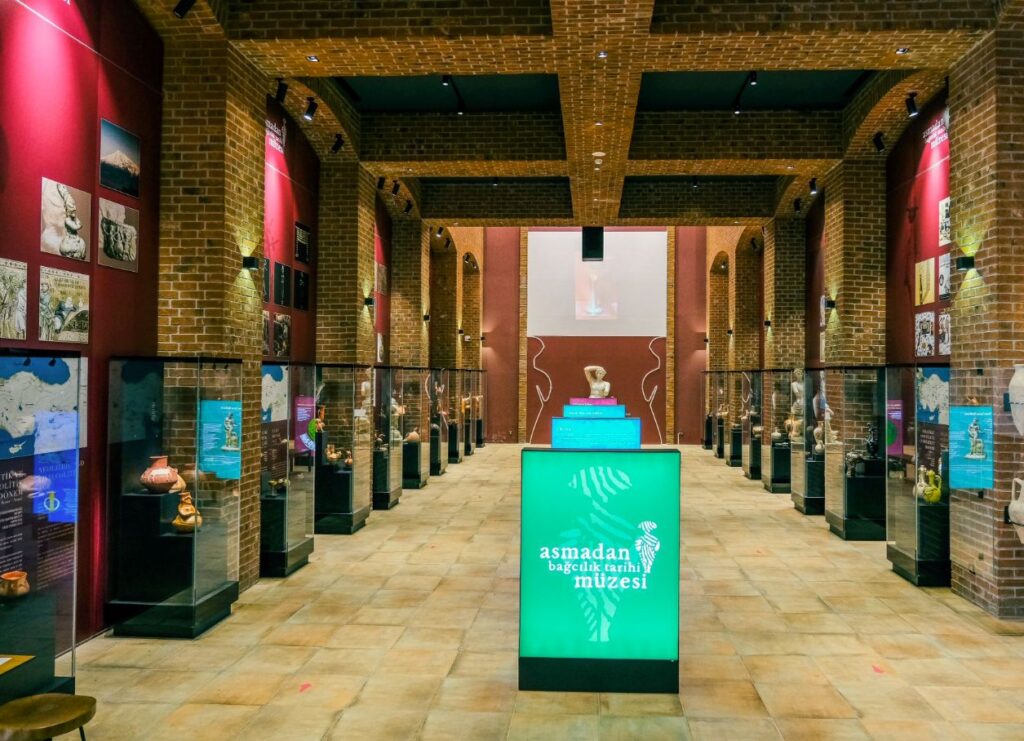
Asmadan, şato tipi üretim yaklaşımını Bengodi Butik Otel ile bütünleştirerek bir şarap turizmi kompleksi yaratmayı başarmış. Bu kompleksin en can alıcı parçası Asmadan Bağcılık Tarihi Müzesi.
Asmadan’ın sunduğu deneyim de tam bu nedenle yalnızca gastronomi turizmi olarak değil, önoturizmin Türkiye’deki başarılı örneklerinden biri olarak değerlendirilebilir. Bağlar, şaraphane, Bağcılık Tarihi Müzesi, konaklama, yerel mutfak ve tadım deneyimleri bir araya gelerek ziyaretçiye yalnızca bir öğün değil, bütüncül bir kültür yolculuğu sunar.
Bağları, şaraphaneyi, oteli ve restoranı bir arada olan şarap destinasyonları bulmanız çok kolay olmasa da mümkündür, ama bunların bir de müze içeren örneğini kolay kolay bulamazsınız. Asmadan’ı farklı kılan en önemli yanı bu.
The museum, operating under the authority of the Troy Museum, exists thanks to the dedication of Murat Yankı and the trust of Asmadan’s founding family. Compact yet rich, it delivers exactly what it promises: a journey into the past without overwhelming its visitors.
It hosts both genuine archaeological finds and replicas of wine-related objects from other museums. Because its focus is strictly the history of viticulture and winemaking, every artifact and every highlighted ancient site belongs to a lineage that left its mark on wine history.
Turkey does not have a strong track record in wine tourism. But it is clear that Anatolia’s extraordinary vinous heritage will play a major role in increasing the international visibility of Turkish wines. Considering that Anatolia is one of the primary regions where wild grapes evolved into cultivated varieties, the mission Asmadan’s museum fulfills becomes even more valuable.
Tadım Etkinliği Hakkında:
We are genuinely delighted to host Asmadan at ÜRETİCİLER WAYANA’DA on Sunday, 18 January.
The event has a distinct format: In the first part, we will taste seven Asmadan wines alongside seven tapas from the WAYANA kitchen. This segment will be presented together with Murat Yankı.
Etkinliğin ikinci bölümü olan açık tadımda da katılımcılarımız Asmadan’ın altı farklı şarabıyla daha tanışmış olacaklar. Bu bölüm aynı zamanda derin sohbetlere daldığımız bölüm. Eğer takviminiz uygunsa, 18 Ocak Pazar günü bekleriz.
Final Word
Asmadan, yalnızca şarap üreten bir işletme olmanın ötesine geçerek bağcılık tarihini, gastronomiyi, konaklamayı ve kültürel mirası aynı çatı altında buluşturan bütüncül bir deneyim sunuyor. Şarap turizminin geleceğinin yalnızca iyi şarap üretmekten değil, güçlü hikâyeler ve nitelikli deneyimler tasarlamaktan geçtiği düşünüldüğünde, Asmadan’ın Türkiye için dikkat çekici örneklerden biri olduğu rahatlıkla söylenebilir. Yolunuz Eceabat’a düştüğünde mutlaka uğrayın.
Türkiye’de yapılması zor işlerden birini yürüten şarap üreticileri hakkında daha geniş bilgi almak isterseniz, Türkiye’de Şarap Üreticileri: Antik Mirastan Modern Dönüşüme yazımızı inceleyebilirsiniz.
Aşağıdaki yazılar da şarap kültürüne farklı yönlerden bakmanızı sağlayabilir.
Küllerinden Doğan Bağlar:Pompeii’nin Şarap Kimliğini Yeniden İnşa Etmek