Editör Notu: Bu değerlendirme, 2025 yılının sonunda kaleme alınmış ve o dönemin koşullarını yansıtmaktadır. Sonraki yıllarda yayımlanan yeni veriler farklı eğilimler ortaya koyabilir; bu yazı ise 2025 şarap sektörü dönem kaydı olarak korunmuştur.
Artık yılın son günlerindeyiz. Bu satırları 26 Aralık 2025 Perşembe günü kaleme alıyorum. Geride bıraktığımız bir yıl boyunca WAYANA’nın da bir parçası olduğu şarap sektöründe yaşadıklarımızın kaydını tutmak, gelecek yıllardaki kayıtlarla karşılaştırmak açısından önem taşıyor. Bu yazıyı olup bitenleri yakından takip eden küçük bir işletmenin gözlemleri gibi değerlendirin lütfen. Şimdi 2025 şarap sektörü değerlendirmelerine göz atalım.
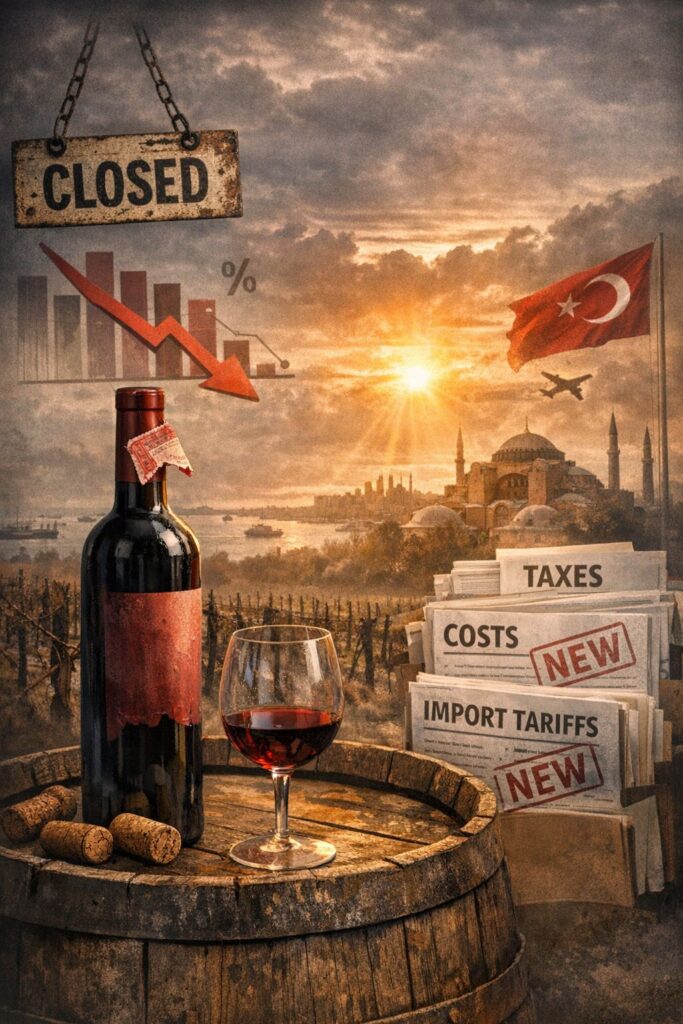
A Glance at the Global Landscape in 2025
Şarap tüketimi ve satışları açısından son iki yıldır dünyada büyüyen bir pazar yok. Uzun yıllardır arz fazlasına sahip olan sektör yeni bir denge noktası arıyor. Bu denge noktasına yakın olduğumuzu gösteren işaretler henüz görünmüyor. Bu dengenin oluşmasını geciktiren bazı etkenler var; 2025 yılı boyunca karşımıza çıkan. Bunların küresel özellikte olanlarını şöyle sıralayabiliriz:
Shifts in Consumer Preferences:
The rising popularity of alternative beverages, especially cocktails, continues to pull attention away from wine.
Low-Alcohol and Alcohol-Free Options:
Once a niche, this segment is now the fastest-growing across beverage categories.
Anti-Alcohol Campaigns:
Particularly in North America, anti-alcohol advocacy has intensified, unsurprising for a country carrying Prohibition in its historical memory.
Stagnation in Marketing:
The global wine industry is locked in internal debates, and those who call for transformation lack a shared roadmap, limiting progress.
- Advertising Restrictions: Most countries continue to tighten their regulations.
- Declining Profitability: Small producers, in particular, struggle to maintain financial viability, with more stepping away from production.
- Tariff Instability: Policies introduced during the Trump administration still unsettle European producers. Newly implemented UK tariffs toward the end of 2025 also began affecting consumption.
The Situation at Home
Turkey feels the effects of global dynamics, but also carries its own unique challenges:
Advertising and Promotion Ban:
Introduced in 2013 and tightened significantly since 2015, the ban has silenced a sector already suffering from weak capital accumulation.
Falling Purchasing Power:
Years of economic mismanagement have sharply eroded household income, reducing discretionary spending.
Soaring Production Costs:
Rapidly rising costs keep domestic wine prices high, while insufficient support has made imports more appealing. Policies favoring high-alcohol spirits have hurt both wine and rakı.
The Guarantee Requirement:
A globally unique system designed to protect future tax revenues has pushed many small producers out of business. Appeals before the Constitutional Court will determine what lies ahead.
What We Observed in the Market in 2025
With collaborations spanning over 150 producers, WAYANA has a wide view of the landscape. Key findings:
Decline in Producer Numbers:
The roughly 200 licensed wineries appear to have fallen to around 160.
Drop in Sales:
Producers report that their 2025 sales declined by about one-third compared to the previous year. Many compensated by reducing production volumes.
Tax Stamp (Bandrol) Supply Issues:
Difficulties in obtaining tax stamps have slowed an already strained sales cycle.
Operating Without Support:
With no state-backed strategy or coordinated promotional effort, exporters face foreign markets entirely on their own.
Unfair Competition:
Domestic bottle prices struggle to compete with high-alcohol imports. The fact that Turkey is the world’s top importer of Chivas Regal and the third-largest importer of Johnnie Walker speaks for itself.
2025’ten Geleceğe Kalan Dersler
Bu bölümde kısa maddeler hâlinde şunlar özetlenebilir:
- Deneyim ekonomisinin avantajı belirginleşti.
- Şarap turizminin önemi anlaşılmaya başlandı.
- Yerel üzümlerin geleceği şekillendireceği konusunda kanaat oluştuğu gözlendi.
- Dijital görünürlüğün var olmanın temel koşulu olduğu anlaşıldı.
- Uluslararası iş birliklerinin sektörel güçlenme açısından kaçınılmaz olduğu kabul edildi.
What to Expect in 2026
- As Turkey attempts to recover from years of misaligned economic policy, the burden falls directly on its citizens. Basic necessities like housing, food, and education now claim a larger share of household budgets.
- No improvement is expected in the regulations governing production, sales, or communication.
- Complaints about high prices will continue, and producers face serious risks regarding long-term economic sustainability.
- Daha önceki yıllarda düzenlenen ve sektörün bir araya gelmesini sağlayan şarap etkinlikleri artık yapılamıyor. Az sayıda firmanın “Grand Tasting” gibi başlıklarla şarap profesyonellerine ulaşmaya çalıştıklarını görüyoruz. Bu devam edecek.
- Öte yandan, yepyeni üzümlerle şarap denemesi yapılması konusundaki gayret ve heyecan devam ediyor.
- From time to time, we still hear of a newcomer obtaining a production license.
In Essence
2025 yılı şarap sektörünün yalnızca ekonomik değil, yapısal bir dönüşüm döneminde olduğunu gösterdi. Tüketici beklentileri değişirken üreticiler de yeni koşullara uyum sağlamaya çalıştı. Geriye dönüp bakıldığında, bu yıl sektörün geleceğini şekillendirecek pek çok eğilimin belirginleştiği bir dönüm noktası olarak hatırlanabilir.
Hiçbir şey sonsuza kadar kötüye gitmez. Elbette şarap sektörünün yönü de eninde sonunda yukarıya doğru dönecek. Ama sanki aşağıya doğru gideceğimiz yolumuz daha var gibi görünüyor.
The hope is that we manage to endure the road ahead without losing breath.
Bu yazımız ilginizi çektiyse, diğer yazılarımızın da üzerlerini tıklayarak göz atabilirsiniz.
A Century-Long Anatomy of Alcohol Policy: Bans or Economy?