The Bridge Between Taste, Smell, and the Brain
Şarap kültüründe duyusal analiz süreçlerini incelerken, kadehten yükselen her aromanın insan zihninde yarattığı etkileri modern nörobilim merceğinden okumak son derece büyüleyicidir.Kadehinizden bir yudum aldığımızda olan şey yalnızca sıvının damağa değmesi değildir. Burnumuzdan içeri giren kokular, dilimizde ayrışan beş temel tat, şarabın rengi, dokusu, hatta bulunduğumuz ortamın ışığı ve sesi… Bütün bu veriler beynimizde birleşir.
And the brain processes these signals not merely as sensory inputs but as fragments of meaning. It triggers memories. Compares them with expectations. Blends them with emotions.
That’s why what sets one wine apart from another isn’t always the tannin or the acidity; it’s the feeling that wine awakens in us.
And this is true not only for wine but for all experiences that center on the relationship between taste and emotion.
Now let’s hear from an expert working in this field.
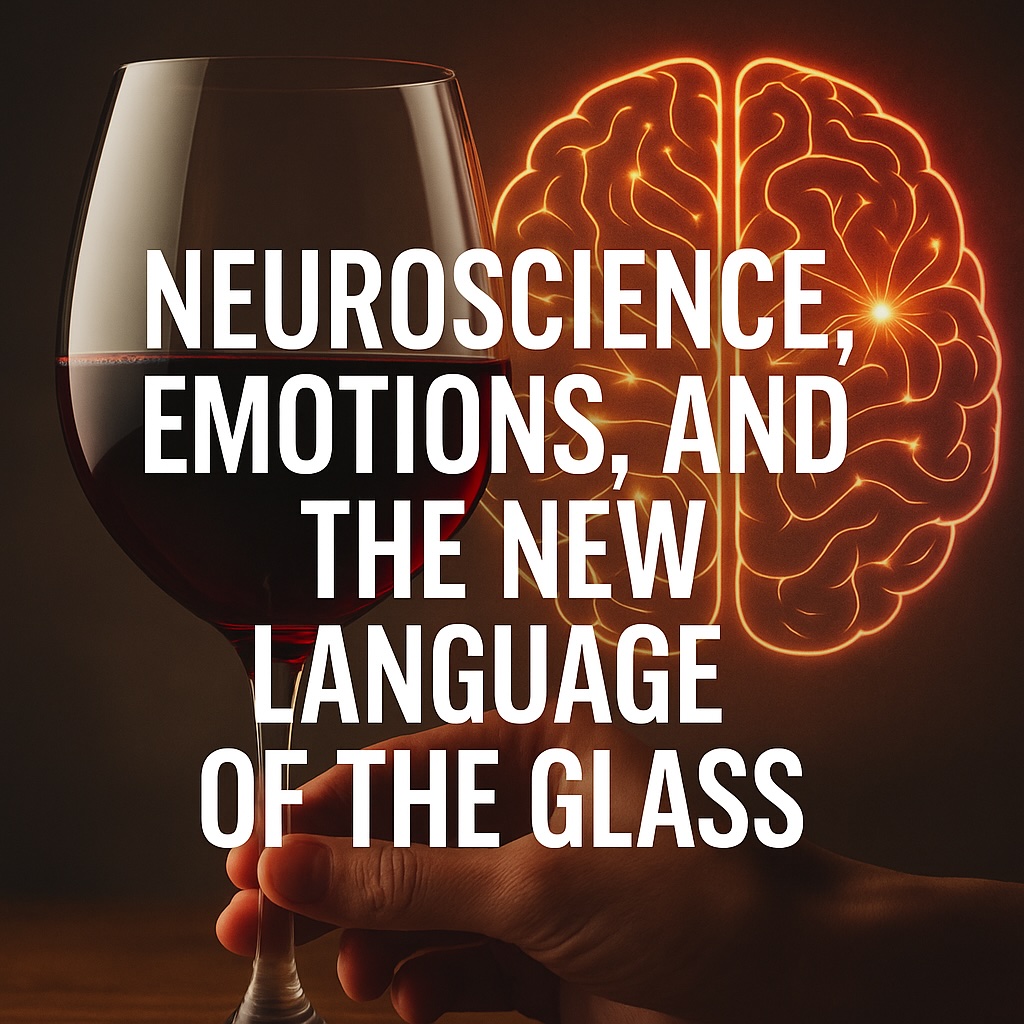
The Future of Wine Is in the Brain: Marco Baldocchi’s Neuroscientific Perspective
The wine world is undergoing a quiet revolution. This revolution isn’t about new grape varieties or production techniques… It’s about what wine makes us feel.
Wine Isn’t Tasted. It’s Felt.
According to neuromarketing specialist Marco Baldocchi, wine is not perceived in the brain like a chemical formula, but like a story. Thanks to consumer neuroscience, we can now measure people’s subconscious reactions to a bottle of wine or a label design. For instance:
- The word “Riserva” triggers a sense of luxury in some people.
- The color or font of a label evokes different associations in emotional memory.
- The same wine can be perceived completely differently under different lighting or music.
To sum up: the brain doesn’t evaluate the wine itself, but the emotional context around it.
Nörogastronomi Alanında Şarap Kültürü ve Duygu İlişkisi
In a study conducted by Pedroza & Herrell (2022), researchers didn’t just analyze taste impressions but also physiological reactions. These included facial microexpression analysis and skin conductance (GSR).
The results were striking:
Değersiz Şarap:
A wine that was technically “good” could be perceived as unremarkable if it didn’t spark an emotional response.
Değerli Şarap:
Conversely, a wine that created emotional engagement was often perceived as valuable, even if it carried technical flaws.
EEG (yani kafa derisine yerleştirilen elektrotlar yardımıyla beyindeki elektrik aktivitesinin ölçülmesi) çalışmalarında da beynin ilk 200 milisaniyede duygusal uyaranlara çok hızlı yanıt verdiği görülüyor. Güzel bir etiketle karşılaşılması, dokunaklı bir hikâye ya da ortamın hissedilmesi, şarapla ilişki kurmada çok belirleyici oluyor.
Wine as a Symphony: A Multisensory Experience
Experiments conducted by Charles Spence from Oxford demonstrate this clearly:
- When the same wine is tasted by similar groups while listening to cello, it is perceived as more “rich.” When accompanied by piano, it is perceived as “sharper.”
- Under red light, the wine tastes sweeter.
- Even the shape of the glass creates expectations before the first sip.
So wine is not only perceived on the palate, but through all the senses. That’s why environmental elements (light, music, scent) can be more influential than the wine itself.
The Power of Expectation: Price and Storytelling
In an experiment at Caltech, the same wine was served with different price tags. When participants believed the wine was more expensive, scans showed higher activation in the brain’s pleasure centers.
In other words, they weren’t just pretending — they actually enjoyed it more.
Similarly, storytelling-supported presentations make the wine experience far more powerful.
This effect is especially strong in consumers with little formal wine knowledge.
What Does This Mean in Practice?
Baldocchi’s team works with wineries to analyze how labels, ambiance, and storytelling are perceived. Let’s look at some of their key findings:
- Emotional response affects purchasing decisions more strongly than verbal preference.
- Visual elements like color, typography, and label shape influence emotional memory.
- Environmental factors like music, lighting, and scent deepen the connection with the brand.
In a Napa Valley case study, simply changing the music and lighting resulted in:
- A 36% increase in emotional engagement
- A 22% increase in dwell time
A New Wine Culture for a New Generation
New generation consumers (Millennials and Gen Z) are not looking for wine knowledge; they are seeking stories, atmosphere, and identity.
Örneğin şarap menüsünü, sıralama yapılan bir tablo gibi değil şiirsel yanını da gözeterek tasarlamalı, tadım etkinliklerini bir senaryo gibi kurgulamalı, şişeleri birer kimliğe büründürmeliyiz.
For example:
- Menus should not be designed like spreadsheets but like poetry.
- Tasting events should follow a narrative arc, not a technical sequence.
- Each bottle should be imbued with its own personality.
To keep seeing such approaches as luxury or fantasy is to fail to understand the expectations of today’s consumers.
Conclusion: Wine Is a Feeling
Don’t take the title above as a metaphor.
This is what neuroscience tells us.
- Wine isn’t evaluated in the mouth.
- It’s evaluated in the mind.
- And the mind is emotional.
Today’s consumer doesn’t just ask, “What are we drinking?”
They ask: “How will this make us feel?”
Because for the true wine lover, wine is not just something to be consumed — it’s something to be experienced.
Şarabın zihnimizle kurduğu bu nörobilimsel ortaklık, nörogastronominin sınırları ve kadehteki duygu durum analizleri ilginizi çekiyorsa, blogumuzdaki diğer derinlemesine araştırmalarımıza da göz atabilirsiniz:
Duyusal algının ve damağımızdaki aromatik kırılmaların, tıpkı parmak izi gibi her bireyin zihninde nasıl tamamen taklit edilemez ve özgün bir dünyayı şekillendirdiğini okumak için Damağımızla Parmak İzimizin Birbirinden Farkı Yok! manifestomuzu inceleyebilirsiniz.
Şarabın kadehteki o büyüleyici görsel kimliğinin ve renk tonlarının, antik çağlardan modern spektroskopi laboratuvarlarına kadar uzanan o büyük algısal evrimini görmek için Şarapta Renk Kavramının Tarihsel Seyri makalemize göz atabilirsiniz.
Doğru seçilmiş bir kadehin fiziksel formunun, şarabın sadece aromasını değil, beynimizin o kokulardan ve tatlardan aldığı hazzı nasıl dramatik bir şekilde manipüle ettiğini deneysel olarak okumak için How Glass Shape Changes Tasting rehberimizi ziyaret edebilirsiniz.
Şarap dünyasının didaktik ve elitist terimlerinden sıyrılıp, yeni başlayanların zihnindeki tüm karmaşık karmaşayı büyük bir yalınlıkla çözen temel bir başvuru eseri incelediğimiz Şarap 101: Temel Bir Şarap Kitabı İncelemesi yazımıza göz atabilirsiniz.