Kıbrıs, ülke gündemimizin neredeyse ayrılmaz bir parçasıdır, ama nadiren siyasi arenanın dışında kalan bir yanıyla gündem olur. Commandaria, UNESCO İnsanlığın Somut Olmayan Kültürel Mirası Temsilî Listesi’ne giren ikinci şarap geleneği olunca Kıbrıs, tam da bizim ilgi alanımız olan şarapla gündemimize oturuverdi. Kıbrıs’ın, geçmişi binlerce yıla uzanan Commandaria şarabı UNESCO’nun Somut Olmayan Kültürel Miras ünvanıyla ödüllendirilince biz de mercek altına alarak sizlerle tanıştırmak istedik. Bu ünvana sahip bir şarap daha var: Gürcistan’ın Qvevri olarak adlandırılan küpte şarap yapma tekniğiyle üretilen şaraplar. Wvevri, ayrı bir yazı konusu, bugünkü ilgi odağımız Kıbrıs’ın Commandaria şarabı.
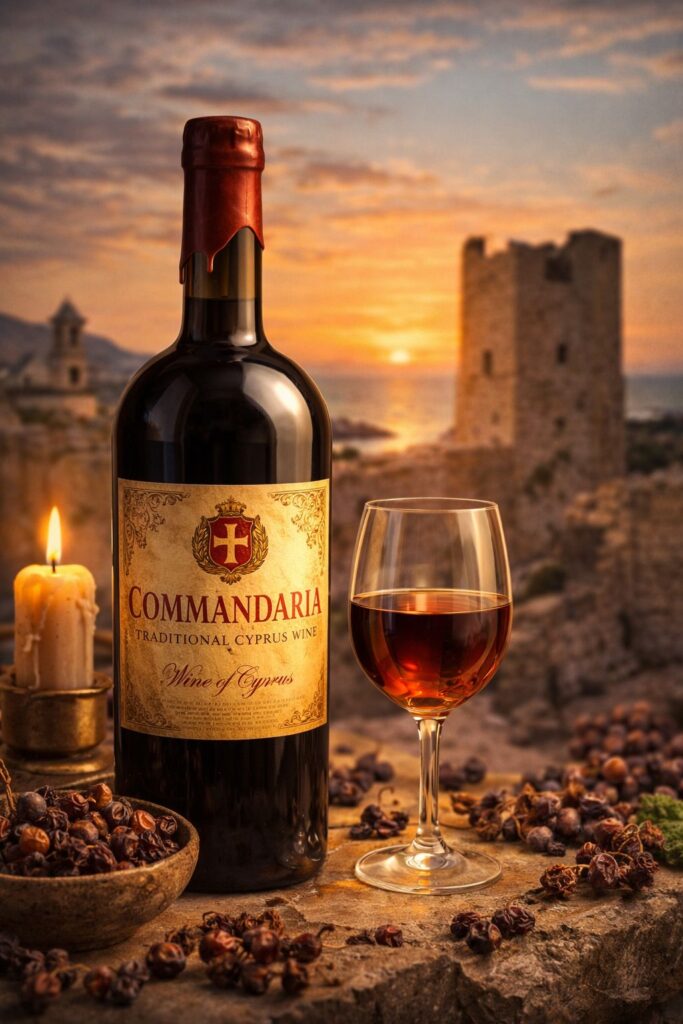
The Deep Past of Commandaria
The origins of Commandaria reach back to the earliest chapters of humanity’s relationship with wine. In the verses Homer wrote in the 8th century BCE, the term “Cypriot wine” seems to describe a sweet, dense drink produced in what we now call the Commandaria region. Archaeological finds from ancient Cypriot viticulture support this: grape pips, fermentation vessels and storage pits unearthed on the southern slopes of the Troodos Mountains all point to an unbroken production line stretching back millennia. Even the traditional method of sun-drying grapes aligns strikingly with ancient descriptions.
It’s also clear that wine on Cyprus was never just a commodity. Libations in festivals, religious rituals and the social life of the island all reveal the cultural weight of sweet wines. Sun-drying grapes to naturally concentrate their juice was considered a marker of value across the ancient Mediterranean, and Cyprus’ sweet wine was one of its most admired examples.
How the Medieval Era Shaped Its Modern Identity
Commandaria gained its defining identity in the medieval period, shaped by feudal structures introduced after the Crusades. In the 12th century, the Knights Templar and the Knights Hospitaller established a network of command posts around Kolossi. These posts were called “commanderies” in French. The name “Commandaria” comes directly from this system. The sweet wines produced on these estates quickly gained fame across Europe, travelling through ports and entering royal courts. Chroniclers claim that Richard the Lionheart called it “the wine of kings and the king of wines” at his wedding in 1191. Whether he actually said it is impossible to confirm, but history sometimes envies literature; a good line survives on its own momentum.
Some of Europe’s earliest wine-tasting competitions mention Commandaria by name. By the 13th century, this Cypriot sweet drink was already appreciated on the continent’s elite tables. Its golden hue, viscous body and intense aromatic profile set it apart from other sweet wines. And its fame wasn’t confined to aristocracy; it circulated widely in the commercial networks of the Eastern Mediterranean.
Cypriot Wines in the Ottoman Period
This long history continued without interruption under Ottoman rule. There is even a curious claim that Commandaria played a role in the island’s fate. According to 16th-century chronicles and palace notes, Cypriot sweet wines were highly prized at the Ottoman court during the reign of Selim II. Although official alcohol regulations in the empire were strict, special procurement for the palace kitchen always operated in its own category.
Some historians suggest that because Cyprus’ sweet wines were among the most profitable Venetian exports, capturing this trade was one of the economic motivations behind conquering the island. It remains a cautious interpretation, but its mere existence shows the strategic value Commandaria carried at the time. After Cyprus came under Ottoman rule in 1571, local viticulture continued without major disruption. Christian communities on the island preserved their methods of drying grapes, fermenting and storing the concentrated must. The sun-dried sweet wine remained a staple of household economies and regional trade.
Cypriot Wines under British Rule
During the British administration, Cypriot wine production entered another phase of commercial expansion. Some products gained popularity under unfortunate labels such as “Cypriot sherry,” but Commandaria remained a distinct, technically defined style. Cooperatives and quality-control systems established in the second half of the 20th century helped the wine gain international recognition without losing its traditional identity. Its PDO designation eventually cemented its place on the global wine map.
UNESCO Neden Bir Şarabı Koruma Altına Alır?
Bir şarap geleneğinin UNESCO İnsanlığın Somut Olmayan Kültürel Mirası Temsilî Listesi’ne girebilmesi için yalnızca eski olması yeterli değildir. Üretim bilgisinin yaşamaya devam etmesi, yerel topluluk tarafından benimsenmesi, günlük yaşamın ve kimliğin bir parçası olması ve gelecek kuşaklara aktarılmasının güvence altına alınması gerekir.
Bu nedenle UNESCO, aslında bir içeceği değil, insanların doğayla kurduğu binlerce yıllık ilişkiyi korur. Bağların nasıl yetiştirildiğini, üzümlerin nasıl işlendiğini, hangi bilgilerin ustadan çırağa aktarıldığını ve bu üretimin yerel kültürde nasıl bir anlam taşıdığını kayıt altına alır.
Commandaria’nın listeye kabul edilmesi de bu yaklaşımın bir sonucudur. Burada korunan şey yalnızca güneşte kurutulmuş üzümlerden yapılan tatlı bir şarap değil; Kıbrıs’ın belirli köylerinde yüzyıllardır sürdürülen üretim geleneği, yerel bilgi birikimi ve bu geleneğin toplumun kültürel kimliğindeki yeridir.
Commandaria’s UNESCO Moment
The year 2025 marked a turning point. Being added to UNESCO’s List of Intangible Cultural Heritage in December signified more than the preservation of a production technique: it recognized an entire rural culture, its rituals and its collective memory. The listing celebrates a way of life. Sun-drying racks of grapes, the cooperative rhythms of harvest season, families passing down viticultural knowledge across generations… all of these form the living fabric of this heritage.
Behind Commandaria’s successful nomination stands a cultural shift. In recent years, younger Cypriots have begun to see viticulture as a form of cultural continuity rather than a purely economic activity. These new producers combine traditional methods with contemporary technical understanding. Festivals, local events and educational programs in the villages keep Commandaria from becoming a relic; it continues as a living cultural product.
There is also a broader global context. When compared with earlier UNESCO-listed traditions like Georgia’s qvevri or Italy’s balsamico practices, Commandaria both resembles and diverges from them. It resembles them in the way a local agricultural practice becomes a cultural identity. It diverges in its uninterrupted continuity. As the Guinness records note, Commandaria is the world’s “oldest continuously produced wine name.” Very few wine styles can make such a claim.
Today, Commandaria’s place in global wine culture relies not on large-scale production but on its niche, value-driven identity. Chefs use it in gastronomic pairings, restaurants include it for its historical significance and curious consumers seek it out for its ancient methods. Its UNESCO listing will likely strengthen this position even further, stimulating cultural tourism, vineyard routes, local economies and the preservation of traditional knowledge.
Final Word
Commandaria is not just a drink from the past. It is a living emblem of Cyprus’ cultural continuity. With production knowledge stretching back to antiquity, a name shaped by medieval knights, practices that survived Ottoman and British rule and now UNESCO recognition, it stands as one of the most enduring examples of humanity’s agricultural heritage. It is now officially registered as a cultural memory product: a tradition sifted through centuries and the Mediterranean’s sweet, slightly cantankerous old sage.
Commandaria’nın UNESCO tarafından tanınması, yalnızca Kıbrıs için kazanılmış bir unvan değildir. Aynı zamanda şarabın bir tarım ürünü olmanın ötesinde, tarih, kültür, toplumsal hafıza ve yerel kimliğin taşıyıcısı olduğunu hatırlatan güçlü bir örnektir. Anadolu’nun binlerce yıllık bağcılık mirası düşünüldüğünde, bu gelişme bizim için de üzerinde düşünmeye değer önemli mesajlar içeriyor. Nitekim bunun yansımalarını kimi başka girişimlerimizde ve yazılarımızda bulabilirsiniz.
And despite the political climate’s aversion to wine, a shift is underway in Turkey’s tourism sector. Bureaucrats seem to be waking to the fact that tourism cannot thrive without embracing wine culture. Even with all the delays, Turkey still holds the potential to place a third wine tradition on the UNESCO list. One can only hope we wake from our long sleep before it becomes yet another missed opportunity.